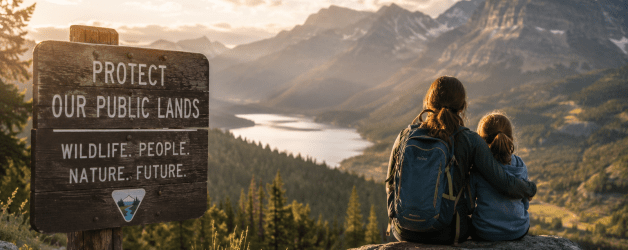
When Silence Disappears from the Wild
There are places in America where people still go to remember who they are.
Not shopping centers.
Not crowded attractions.
Not glowing screens demanding our attention every second of the day.
But forests. Marshes. Riverbanks. Desert trails. Places where the wind moves through pine trees like a prayer and the stars still feel close enough to touch.
For many people, nature is not simply recreation. It is restoration.
It is church.
That is why the recent decision to loosen hunting restrictions across dozens of National Park Service sites has struck such a deep emotional chord across the country.
In January, Interior Secretary Doug Burgum signed an order encouraging federal land managers to remove or justify restrictions on hunting and fishing across numerous federally managed lands. The changes affect various National Park Service units where hunting was already permitted in some form — including recreation areas, preserves, and seashores.
Supporters argue these changes expand access and preserve traditional outdoor activities. Critics worry they erode long-standing safety protections and fundamentally change the experience of public lands that belong to everyone.
And many Americans are asking a simple question:
What happens when the places we once escaped to for peace begin to feel unsafe?
At Lake Meredith in Texas, reports indicate hunters may now be permitted to process game in public restrooms. At Cape Cod National Seashore, hunting seasons may expand further into spring and summer. At other sites, restrictions on tree stands, retrieval vehicles, hunting dogs, and proximity to trails have been loosened or reconsidered.
These are not imaginary fears. They are real policy shifts.
But this conversation is about more than regulations.
It is about values.
For decades, America’s public lands represented something rare in modern life: common ground. Places where a child could hear owls at dusk. Where exhausted parents could sit beside a river and finally exhale. Where photographers wait in silence for first light over the mountains. Where wildlife still moves according to ancient rhythms untouched by politics and noise.
When we enter these places, we enter with an unspoken agreement:
that wild things deserve space to exist beyond human domination.
Conservation icon Jane Goodall once said:
“You cannot get through a single day without having an impact on the world around you. What you do makes a difference.”
And what we choose to protect — or fail to protect — says everything about who we are becoming.
This debate is often framed as hunters versus non-hunters, but that oversimplifies a deeply emotional issue.
Many ethical hunters care deeply about conservation. In fact, wildlife management and habitat protection in America have long included hunters, biologists, photographers, indigenous communities, scientists, and park advocates alike. Responsible hunting, when carefully regulated, has historically played a role in funding conservation efforts and maintaining ecological balance in some regions.
But even many supporters of hunting recognize that public lands require boundaries.
Safety matters.
Wildlife corridors matter.
Visitor experience matters.
And sacred quiet matters too.
Because nature is increasingly becoming the last refuge from a culture built on exhaustion.
People are burned out. Overstimulated. Lonely. Disconnected from the natural world.
And when someone walks into a national seashore, riverway, or preserve, they are not entering a battlefield between ideology and recreation. They are often entering a deeply personal sanctuary.
A grieving widow walking a trail at sunrise.
A veteran trying to calm PTSD through solitude.
A child seeing a fox in the wild for the first time.
A photographer waiting hours in silence for the moment fog lifts from a marsh.
These experiences are not small things.
They are healing.
Jane Goodall also warned:
“Only if we understand, can we care. Only if we care, will we help. Only if we help shall all be saved.”
Understanding begins with recognizing that public lands are not merely resources to be used. They are living ecosystems. They are classrooms. They are sanctuaries for both humans and wildlife.
And increasingly, they are disappearing.
Across America, untouched spaces shrink year after year beneath roads, subdivisions, noise, extraction, and political pressure. True silence has become rare. Darkness free from artificial light has become rare. Even the experience of hearing birdsong without interruption is becoming rare.
That is why people react so strongly when protections are loosened.
Not because they oppose tradition.
But because they fear losing one more piece of what still feels sacred.
There is also a larger ethical question quietly waiting beneath the headlines:
What kind of relationship do we want with the natural world?
One based primarily on control?
Or one based on coexistence?
The answer matters because future generations will inherit whatever version of nature we leave behind.
Will children grow up seeing wildlife primarily as targets and trophies?
Or as fellow living beings sharing a fragile planet?
Will public lands become louder, more mechanized, and more extractive?
Or will they remain places where people can still encounter awe?
A civilization reveals itself not through the power it holds over nature, but through the restraint it chooses to exercise.
The healthiest societies are not those that consume every wild place available to them.
They are the societies wise enough to leave some places gentler. Quieter. Protected.
Not everything valuable must be conquered to have meaning.
Some things deserve reverence.
And perhaps now, more than ever, we need places where both animals and people can still breathe freely beneath open skies.
Because once silence disappears from the wild, we may discover too late that something inside us disappeared with it.


