Posts tagged ‘#ConservationPhotography’
When a Lake Begins to Forget
A personal journey into the changing heart of Lake Velence

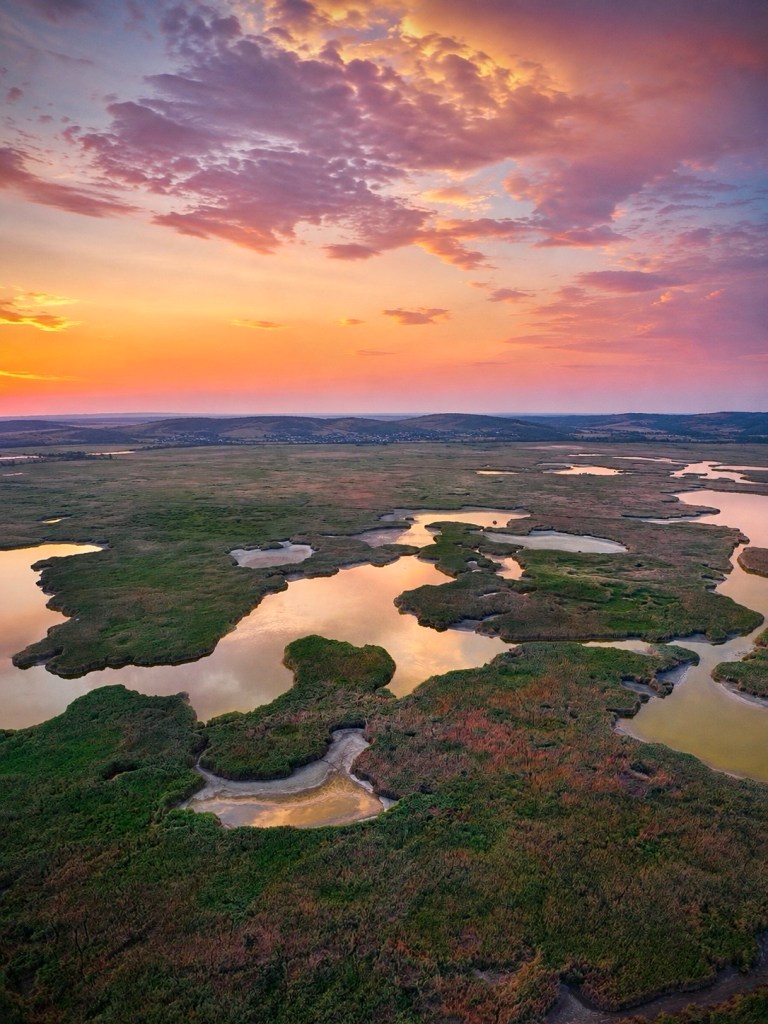
Lake Velence, summer 2026.
Where water once moved through the reeds, the lakebed now holds the memory of it.
There are places we visit.
And then there are places that somehow become part of us.
For generations of Hungarians, Lake Velence has been one of those places.
Children learned to swim in its warm, shallow water. Families spread blankets along its shores and stayed until the evening light turned gold. Fishermen pushed small wooden boats through the reeds before sunrise, returning to the same quiet corners their fathers—and sometimes their grandfathers—had known.
Birdwatchers came for another reason.
They came for the rustle in the reeds.
For the sudden beating of wings.
For herons standing motionless in the shallows and the extraordinary web of life supported by one of Hungary’s most familiar wetlands.
And people like me came simply because we loved it.
But this summer, I returned to Lake Velence and found myself looking at something I wasn’t prepared to see.
The lake seemed to be disappearing.
Not everywhere.
Not all at once.
That somehow made it more unsettling.
It was happening quietly.
Where Water Used to Be
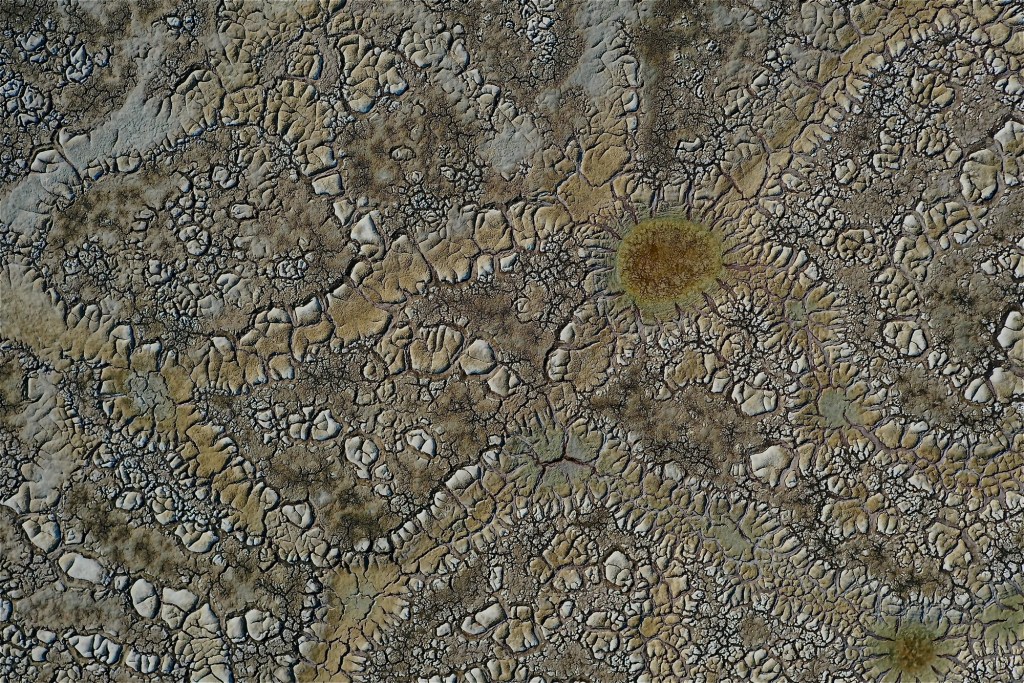
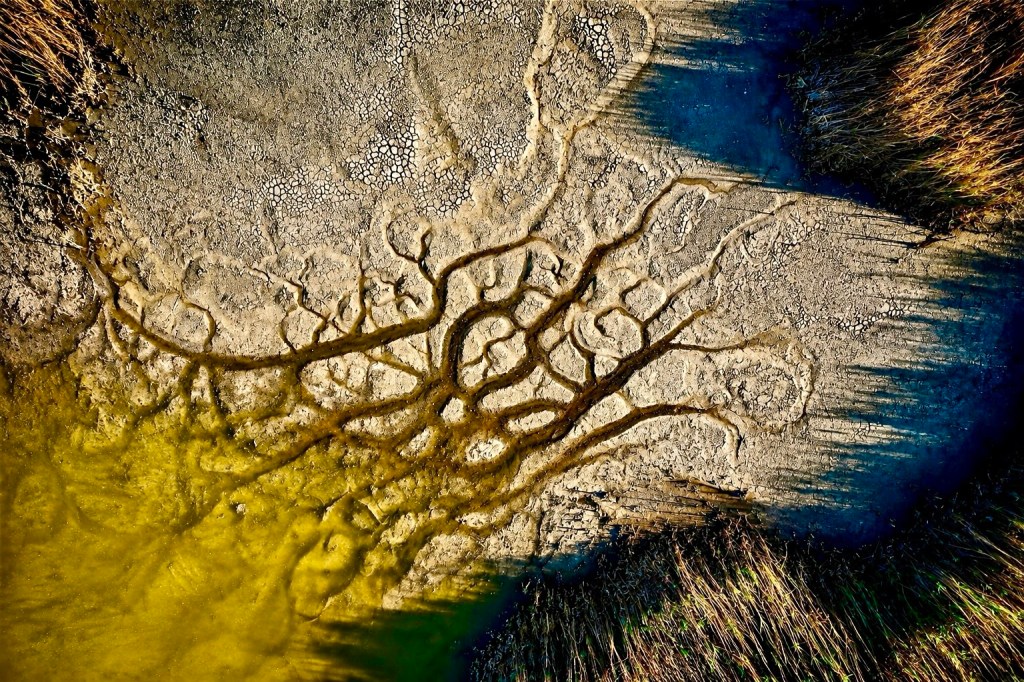
What looks like another planet is the floor of Lake Velence—water leaving behind a fragile mosaic of what once was.
The heat had been relentless.
The air itself seemed tired.
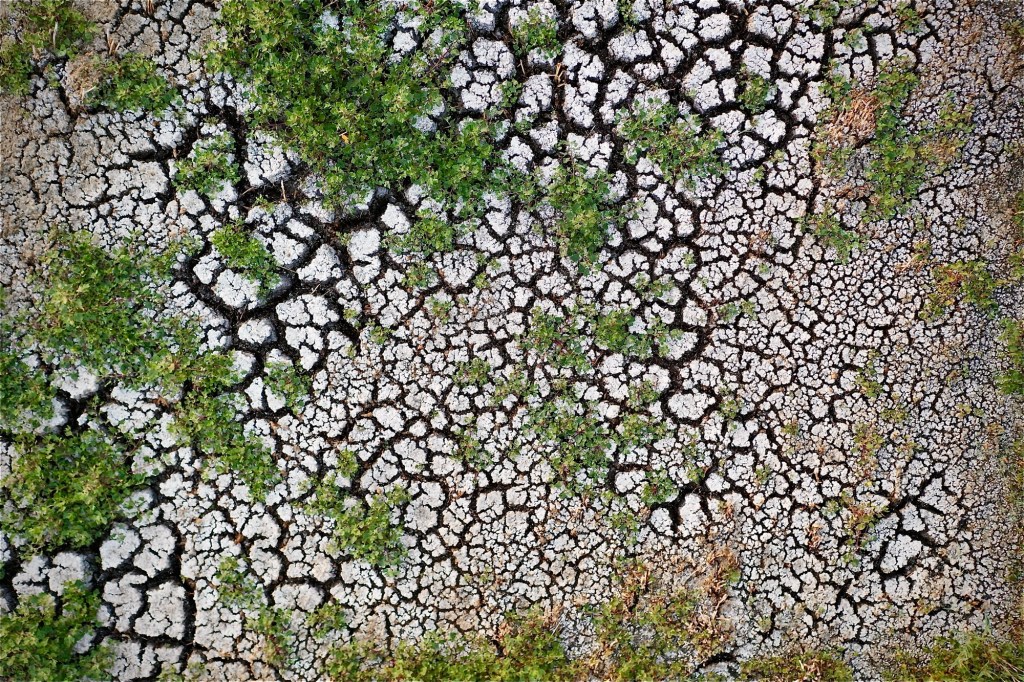
Walking toward the lake, I could smell the reeds warming beneath the sun and feel the dry earth under my feet. Where I expected water, there were stretches of exposed lakebed.
Mud had hardened.
Then cracked.
Then cracked again.
Patterns spread across the earth like an enormous mosaic.
At first, they were beautiful.
That is perhaps the most uncomfortable part of being a conservation photographer: sometimes environmental distress can be extraordinarily beautiful.
I found myself photographing textures that looked almost otherworldly.
Some resembled ancient maps.
Others looked like skin.
From above, small remaining pools of water appeared like cells viewed beneath a microscope. Narrow channels wound through the mud like arteries.
The photographer in me was fascinated.
The human being in me was deeply disturbed.
Because every beautiful pattern represented something missing.
Water.
Then I Found the Boats
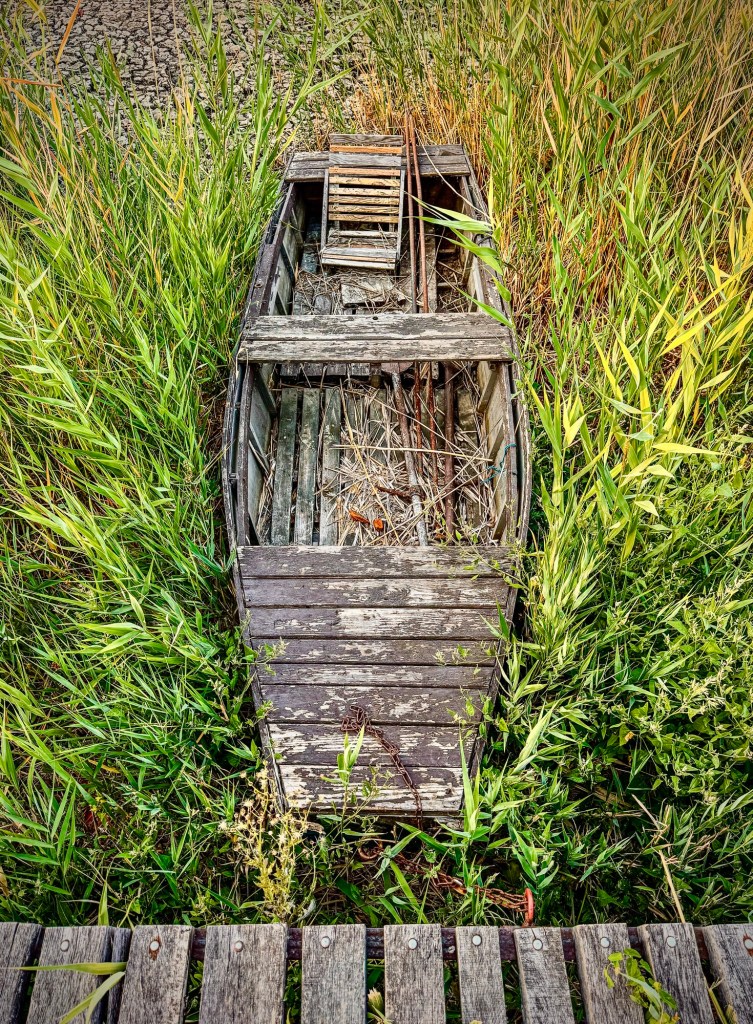
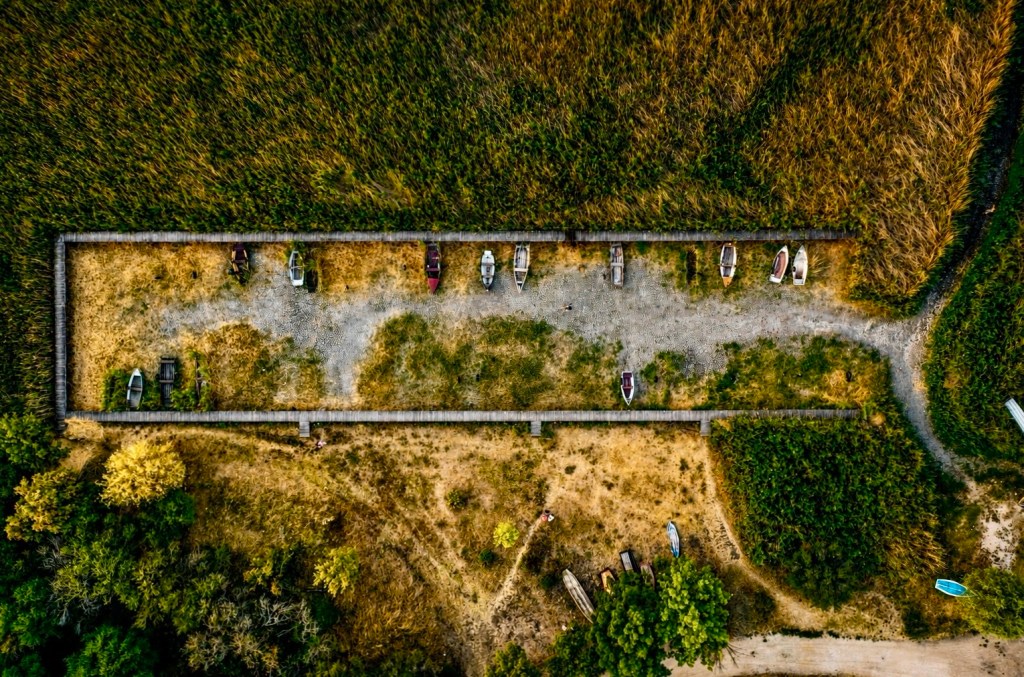
A boat without water is more than an abandoned boat. It is a reminder of the life that once moved through these reeds.
That was when the story changed for me.
Along the old shoreline were small wooden fishing boats.
Except they weren’t floating.
They were sitting in grass.
Some were surrounded by reeds.
Others rested beside cracked earth where water once reached them.
There was something almost unbearable about seeing a boat stranded on land.
A boat has a purpose.
It is meant to move.
To carry someone across water.
To rock gently against a dock.
To leave before sunrise with a fisherman and return later with stories.
These boats were waiting for water that was no longer there.
I stood looking at one of them for a long time.
And I began thinking about the fishermen.
Not as statistics.
As people.
People who know this lake differently than the rest of us.
They know where fish gather when the temperature changes. They recognize the wind before a storm. They know the hidden channels through the reeds.
Imagine knowing a lake that intimately and watching its shoreline retreat.
What do you tell your grandchildren?
“When I was your age, the water came all the way up here.”
At what point does a memory begin to sound like a legend?
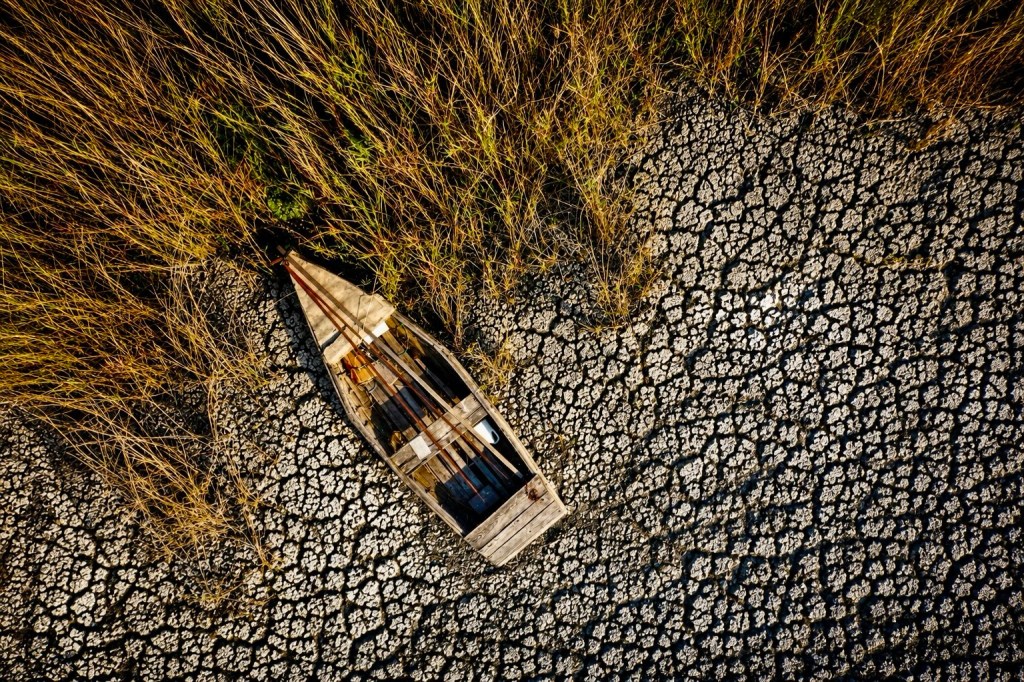
A boat built for water, resting on a lakebed that has forgotten how to hold it.
The Lake From Above
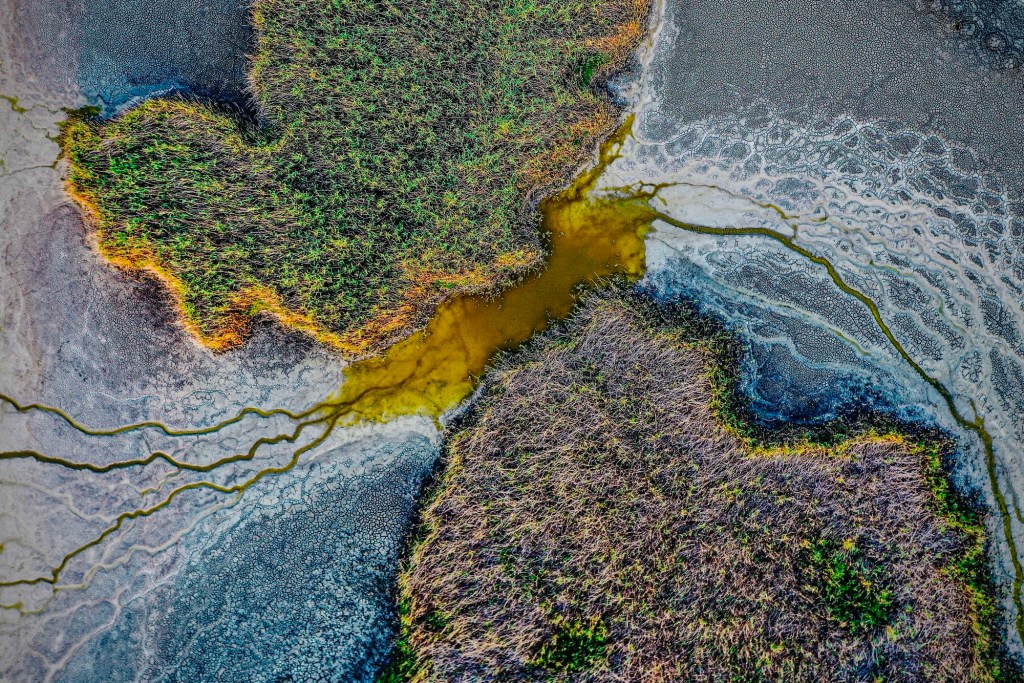
Then I launched my drone.
And everything changed again.
From the ground, drought is something you walk through.
From the sky, it becomes a story.
The landscape opened beneath me.
The remaining water separated into irregular pools surrounded by vast reed beds. Channels twisted between them. Pale mineral deposits traced the former edges of water.
And across the exposed lakebed were patterns so intricate that they hardly seemed natural.
I kept flying.
And I kept thinking:
How can something this beautiful also be a warning?
Perhaps nature does not separate beauty from suffering the way humans do.
Perhaps it simply responds.
Water retreats.
Plants adapt.
Birds move.
Fish search for deeper places.
Mud dries.
Seeds wait.
Nature does what it has always done.
It tries to survive.
A Lake With a Long Memory
Lake Velence is not simply a recreational lake.
It is a shallow, dynamic natural system whose water levels have fluctuated throughout its history. There have been dry periods before. There have been recoveries.
That history matters.
We should resist the temptation to look at one frightening summer and declare that the lake is dying forever.
Nature is more complicated than that.
But history should not become an excuse to look away, either.
Because today’s lake exists in a different world.
Hotter periods, evaporation, rainfall patterns, water management, surrounding development and human demand all intersect with the natural rhythms of a shallow lake.
The question is therefore not simply:
Has Lake Velence ever been low before?
It has.
The more important question is:
How resilient will Lake Velence be in the climate and landscape of the future?
That is a much harder question.
And perhaps the most important one.
What Happens to the Birds?

Standing among the reeds, I kept thinking about the creatures that cannot attend meetings or argue about water policy.
Wetlands are extraordinarily productive ecosystems.
To us, a patch of reeds may simply look like vegetation.
To a bird, it may be shelter.
A nesting site.
A hunting ground.
A nursery.
To insects, amphibians and fish, shallow water can represent an entire world.
Remove enough water and those relationships begin to change.
Some species move.
Some adapt.
Some cannot.
This is one reason conservation is rarely about saving one beautiful animal.
It is about protecting relationships.
Water.
Mud.
Reeds.
Fish.
Insects.
Birds.
People.
Pull hard enough on one thread and eventually the entire fabric changes.
Then It Rained
The following afternoon, something happened.
Rain.
Not enough to restore a lake.
Not remotely.
Just a brief summer shower.
But I couldn’t resist.
I drove back to the same place.
I wanted to know if anything had changed.
There was water again in some of the shallow channels.
Tiny ribbons of it.
The cracked earth reflected the sky.
And then evening came.
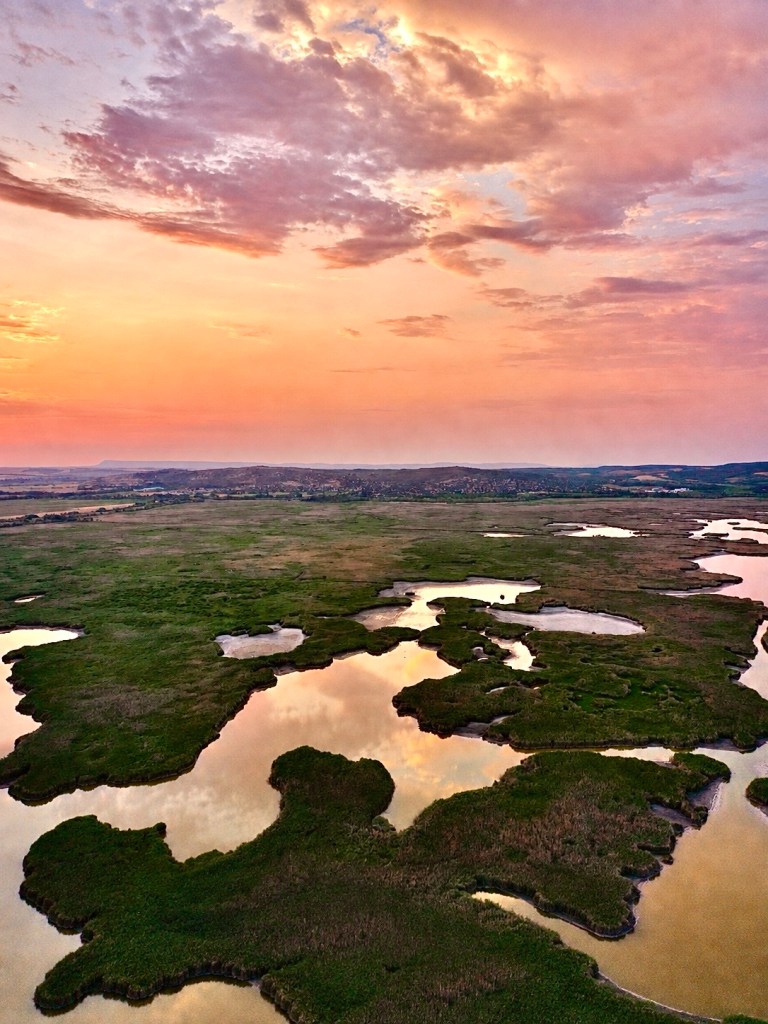
The clouds opened near the horizon and the entire landscape began to glow.
Pink.
Orange.
Gold.
The remaining water caught the light and carried it through the marsh.
I launched the drone again.
From above, Lake Velence no longer looked simply wounded.
For a few minutes, it looked luminous.
Alive.
And standing there, I was reminded of something I have learned repeatedly while photographing nature:
Resilience rarely announces itself loudly.
Sometimes it is a seed waiting underground.
Sometimes it is a bird returning.
Sometimes it is a tiny stream finding its way through cracked mud.
And sometimes it is a lake catching the last light of the day.
What Are We Willing to Notice?
Jane Goodall has spent much of her life reminding the world that hope is not passive.
Hope requires action.
I think that distinction matters enormously here.
Hope does not mean looking at Lake Velence and saying:
“It has recovered before. Everything will be fine.”
Hope means asking:
What can we do to give it the best possible chance to recover again?
And there is another idea I kept returning to, one that echoes through the work of Dr. Wayne Dyer:
Our attention matters.
What we choose to notice begins to shape what we value.
And what we value, we are far more likely to protect.
Perhaps that is one of photography’s quiet powers.
A photograph cannot refill a lake.
It cannot make rain fall.
It cannot write environmental policy.
But it can make someone stop.
Look.
Feel.
Ask a question.
And sometimes that is where change begins.
The Families Who Will Come After Us
I keep thinking about the children.
Not only the children playing beside Lake Velence today.
The ones who haven’t been born yet.
Will they swim here?
Will their parents bring towels and sandwiches and spend entire summer afternoons beside the water?
Will fishermen still push small boats through openings in the reeds before sunrise?
Will birdwatchers still raise binoculars when wings suddenly lift from the marsh?
Will photographers still stand here at sunset waiting for the sky to catch fire?
I don’t know.
None of us does.
But perhaps that uncertainty is exactly why this moment matters.
Conservation is ultimately an act of imagination.
We have to imagine a future we may never personally see.
And then care enough to protect it anyway.
Bearing Witness
I originally went to Lake Velence carrying cameras.
I thought I was going there to photograph a landscape.
Instead, the landscape gave me a story.
A story written in cracked mud.
In abandoned boats.
In reeds.
In tiny pools of remaining water.
In fishermen’s memories.
In birds searching the shallows.
And finally, after a brief summer rain, in a magnificent sunset reflected across a wounded landscape.
These photographs may look like abstract art.
Some resemble paintings.
Some resemble another planet.
But they are not abstractions.
They are Lake Velence.
Right now.
And this project has become something much more important to me than a collection of photographs.
It has become an act of witnessing.
Because perhaps the greatest danger isn’t that a landscape changes.
Nature has always changed.
Perhaps the greater danger is that change happens slowly enough that we become accustomed to it.
The shoreline moves a little farther away.
The boats sit a little longer in the grass.
The channels become a little narrower.
And eventually we forget where the water once was.
I don’t want to forget.
So I photographed it.
And I am sharing what I saw.
Because sometimes photography is about celebrating the extraordinary beauty of our planet.
And sometimes it is about standing beside something we love while it is changing and saying:
I see you.
You matter.
And your story deserves to be told.
— Zsuzsanna Luciano
Conservation Fine Art Photographer
Lake Velence, Hungary — Summer 2026
When Silence Disappears from the Wild
There are places in America where people still go to remember who they are.
Not shopping centers.
Not crowded attractions.
Not glowing screens demanding our attention every second of the day.
But forests. Marshes. Riverbanks. Desert trails. Places where the wind moves through pine trees like a prayer and the stars still feel close enough to touch.
For many people, nature is not simply recreation. It is restoration.
It is church.
That is why the recent decision to loosen hunting restrictions across dozens of National Park Service sites has struck such a deep emotional chord across the country.
In January, Interior Secretary Doug Burgum signed an order encouraging federal land managers to remove or justify restrictions on hunting and fishing across numerous federally managed lands. The changes affect various National Park Service units where hunting was already permitted in some form — including recreation areas, preserves, and seashores.
Supporters argue these changes expand access and preserve traditional outdoor activities. Critics worry they erode long-standing safety protections and fundamentally change the experience of public lands that belong to everyone.
And many Americans are asking a simple question:
What happens when the places we once escaped to for peace begin to feel unsafe?
At Lake Meredith in Texas, reports indicate hunters may now be permitted to process game in public restrooms. At Cape Cod National Seashore, hunting seasons may expand further into spring and summer. At other sites, restrictions on tree stands, retrieval vehicles, hunting dogs, and proximity to trails have been loosened or reconsidered.
These are not imaginary fears. They are real policy shifts.
But this conversation is about more than regulations.
It is about values.
For decades, America’s public lands represented something rare in modern life: common ground. Places where a child could hear owls at dusk. Where exhausted parents could sit beside a river and finally exhale. Where photographers wait in silence for first light over the mountains. Where wildlife still moves according to ancient rhythms untouched by politics and noise.
When we enter these places, we enter with an unspoken agreement:
that wild things deserve space to exist beyond human domination.
Conservation icon Jane Goodall once said:
“You cannot get through a single day without having an impact on the world around you. What you do makes a difference.”
And what we choose to protect — or fail to protect — says everything about who we are becoming.
This debate is often framed as hunters versus non-hunters, but that oversimplifies a deeply emotional issue.
Many ethical hunters care deeply about conservation. In fact, wildlife management and habitat protection in America have long included hunters, biologists, photographers, indigenous communities, scientists, and park advocates alike. Responsible hunting, when carefully regulated, has historically played a role in funding conservation efforts and maintaining ecological balance in some regions.
But even many supporters of hunting recognize that public lands require boundaries.
Safety matters.
Wildlife corridors matter.
Visitor experience matters.
And sacred quiet matters too.
Because nature is increasingly becoming the last refuge from a culture built on exhaustion.
People are burned out. Overstimulated. Lonely. Disconnected from the natural world.
And when someone walks into a national seashore, riverway, or preserve, they are not entering a battlefield between ideology and recreation. They are often entering a deeply personal sanctuary.
A grieving widow walking a trail at sunrise.
A veteran trying to calm PTSD through solitude.
A child seeing a fox in the wild for the first time.
A photographer waiting hours in silence for the moment fog lifts from a marsh.
These experiences are not small things.
They are healing.
Jane Goodall also warned:
“Only if we understand, can we care. Only if we care, will we help. Only if we help shall all be saved.”
Understanding begins with recognizing that public lands are not merely resources to be used. They are living ecosystems. They are classrooms. They are sanctuaries for both humans and wildlife.
And increasingly, they are disappearing.
Across America, untouched spaces shrink year after year beneath roads, subdivisions, noise, extraction, and political pressure. True silence has become rare. Darkness free from artificial light has become rare. Even the experience of hearing birdsong without interruption is becoming rare.
That is why people react so strongly when protections are loosened.
Not because they oppose tradition.
But because they fear losing one more piece of what still feels sacred.
There is also a larger ethical question quietly waiting beneath the headlines:
What kind of relationship do we want with the natural world?
One based primarily on control?
Or one based on coexistence?
The answer matters because future generations will inherit whatever version of nature we leave behind.
Will children grow up seeing wildlife primarily as targets and trophies?
Or as fellow living beings sharing a fragile planet?
Will public lands become louder, more mechanized, and more extractive?
Or will they remain places where people can still encounter awe?
A civilization reveals itself not through the power it holds over nature, but through the restraint it chooses to exercise.
The healthiest societies are not those that consume every wild place available to them.
They are the societies wise enough to leave some places gentler. Quieter. Protected.
Not everything valuable must be conquered to have meaning.
Some things deserve reverence.
And perhaps now, more than ever, we need places where both animals and people can still breathe freely beneath open skies.
Because once silence disappears from the wild, we may discover too late that something inside us disappeared with it.
January Milestones, Gallery News & Upcoming Shows
Fine Art & Conservation Photography by Zsuzsanna Luciano Master Photographer
January was a big month — and I’m excited to share what’s been happening and what’s ahead!
Celebrating a Major Milestone
I’m thrilled to share that in January I received my Master Photographer degree from Professional Photographers of America (PPA) in Nashville. This has been a long-term goal and a deeply meaningful moment in my photographic journey. I’m incredibly grateful for the support, encouragement, and community that helped make this possible.
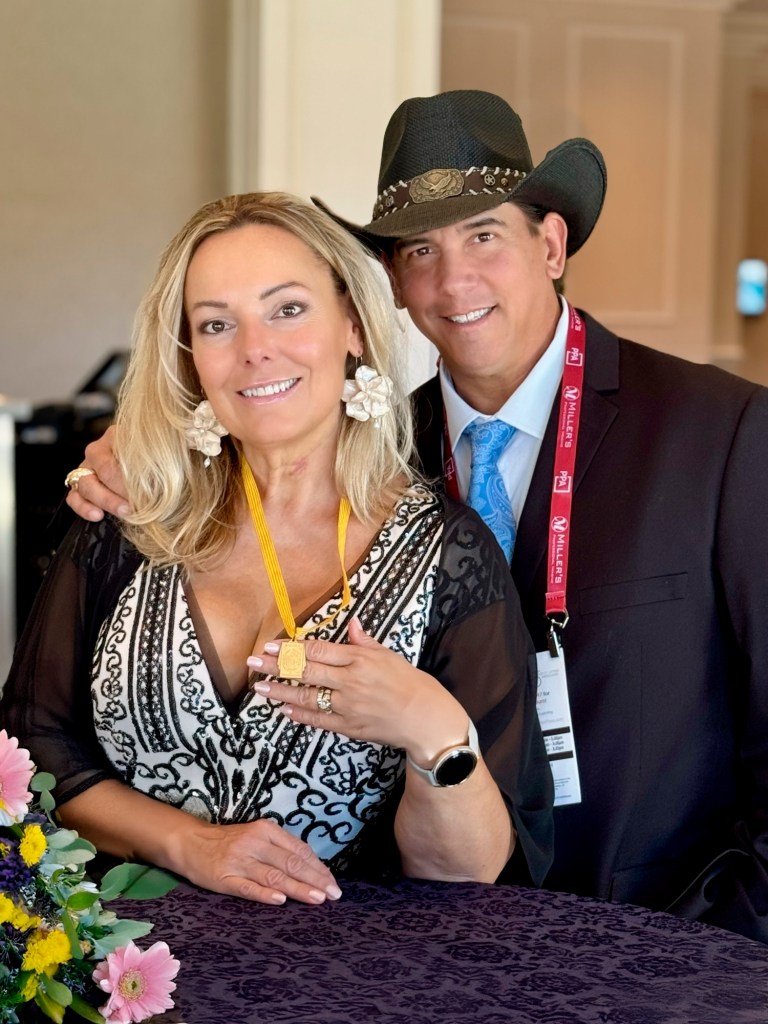
Grateful doesn’t even begin to cover it. This moment represents years of growth, perseverance, and the incredible people who supported me along the way.
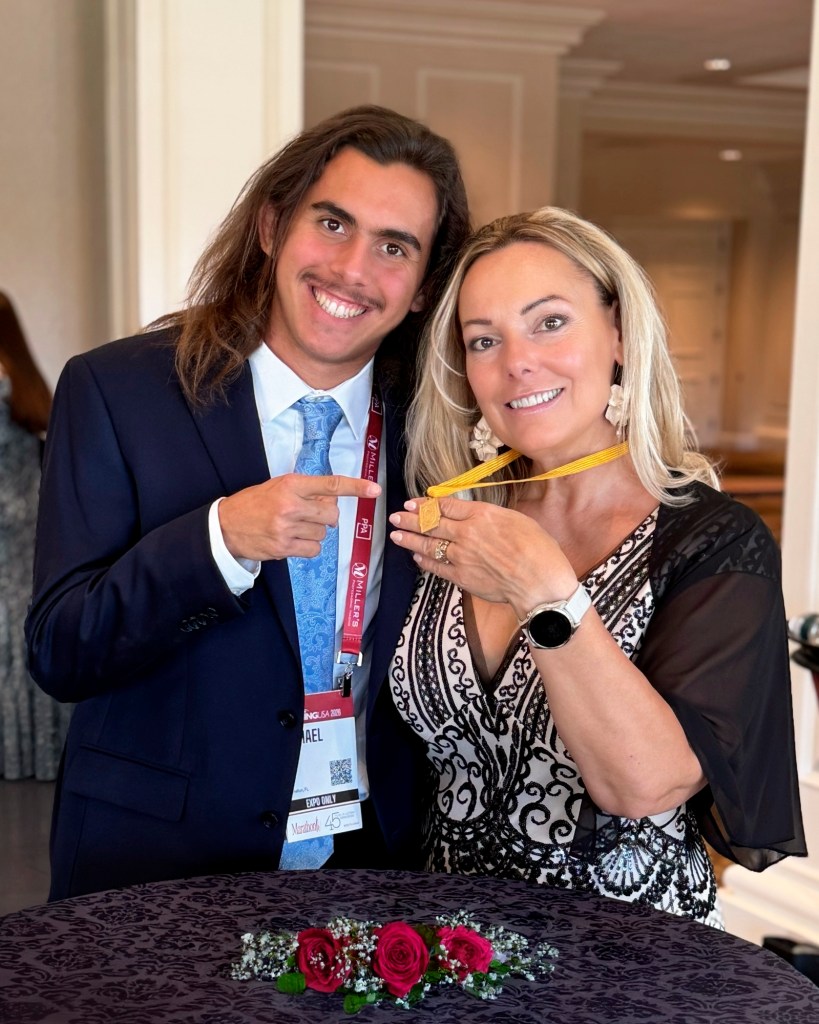
This moment is about more than a medal — it’s about the people who believed in me, supported me, and celebrated right alongside me.
Looking ahead, I plan to bring the artistry and craft behind this achievement into every image I create and every teaching experience I offer.
Gallery News — Dunnellon, Florida
I’m also delighted to announce that I’ve joined Rainbow Springs Art Gallery in Dunnellon, FL. My work is now part of their permanent display, and I’m honored to be represented by such a wonderful local gallery.
Coming soon: beginning March 5, I’ll be teaching a photography class right at the gallery! This is a chance for you to dive deeper into the art of photography, refine your skills, and explore creative expression. I’ll share registration details and more information soon — I’d love to see you there.
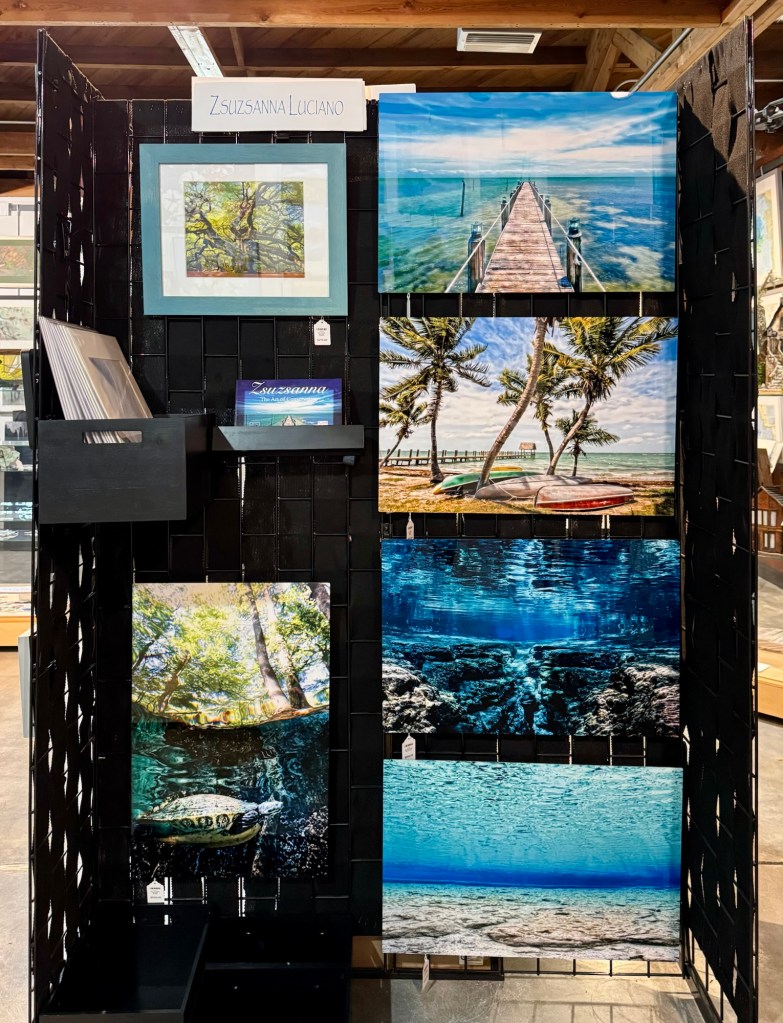
Where art, nature, and storytelling meet.
Where You Can Find Me & My Work
Here’s my February & March show schedule — I hope to see you at one of these art festivals and events!
Jan 31–Feb 1, 2026 — 51st Annual Mount Dora Art Festival
Feb 7–8, 2026 — 38th Annual Downtown Sarasota Art Festival
Feb 14–15, 2026 — 20th Anniversary Coconut Point Art Festival
Feb 20, 2026 — New Artist Reception at Rainbow Springs Art Gallery
Feb 21–22, 2026 — 60th Key West Arts & Crafts Festival
Feb 28–Mar 1, 2026 — 38th Annual Las Olas Art Fair Part II
Mar 7–8, 2026 — 36th Annual Art Fest by the Sea
Mar 14–15, 2026 — 4th Annual Downtown Sarasota Fine Art & Craft Fair
I’ll also be sharing reminders and behind-the-scenes moments on social media — follow along for updates, visuals, and more.
Thank You for Being Here
Your support means the world to me. Whether you’ve subscribed, visited a show, sent a kind message, or followed along on social media — thank you for being part of this creative journey.
If you have questions about the gallery, upcoming teaching opportunities, events, or my photography, I’d love to hear from you!
Connect With Me
Chasing Stars and Stories: A Door County Night Under the Milky Way
by a Fine Art Conservation Photographer on the Road
Last night felt like a page torn straight from a dream.
Our little traveling trio—Mike, our son, and I—has been weaving a life full of art, nature, and motion. Weekends are spent showcasing my fine art photography at juried festivals, but weekdays? They’re for wonder. We wander, we search, we listen—for places that speak not only to the lens but to the soul. And Door County, Wisconsin, spoke in poetry.
All day, we had biked along winding trails, hiked rugged forest paths, and breathed in the wild air curling off Lake Michigan’s shore. I’d already filled my mind with compositions—fragments of roots, glimmers of water through trees, the play of light on old wood. But nothing prepared me for what the night had in store.
It was Mike’s idea, of course. “Let’s shoot the lighthouse with the Milky Way,” he said. I immediately reached for my PhotoPills app. I had exactly 57 minutes before the moonrise would wash the stars away. It was a race against time and light.
Back to the campground—gear check, layers on. Quick dinner, quicker frozen custard (because… priorities). Then we drove through the twilight to our secret spot, a little spit of land reaching out toward a forgotten island, where the lighthouse stood like a sentinel under the stars.
The air was crisp. The parking lot was silent. Our breath puffed clouds into the inky night. With each step across the narrow land bridge, waves whispered on both sides. The lake breathed in sync with us. The sky stretched endlessly overhead—dark and glittering, as if the universe was watching.
When we arrived, I instinctively knew the spot. The Milky Way curled right over the lighthouse like it had always belonged there. While I set up the panoramic composition, my fingers felt the chill, but my heart raced. Every frame was a story. The long exposure pulled starlight into the sensor like memory being etched into glass.
Then—magic. The moon began its gentle rise, spilling golden light across the lake in a shimmering ribbon. A path of light, just for us. I followed it down the shoreline, capturing reflections, silhouettes, the glowing bridge between earth and sky. Around every corner was another frame I had to make. It was one of those rare nights where nature gave everything, and asked only that you notice.
Eventually, it was time to go. My body ached. My eyes were dry. But I was filled to the brim. I knew morning meant another journey—another festival, another crowd, another long drive. But the light of the stars had already burned themselves into my soul. And the hush of the water? That’s a sound I’ll carry with me always.
This is why we travel. This is why I photograph. To catch those flickering moments when the world reminds us that we belong to it—and not the other way around.
Until the next story under the stars,
✨📸
—Zsuzsanna Luciano
Csillagok és Történetek Nyomában: Egy Éjszaka Door Countyban a Tejút Alatt
Zsuzsanna, fine art conservation photographer
Tegnap este olyan volt, mint egy álomból tépett lap.
Kis utazó triónk—Mike, a fiunk és én—egy művészetben, természetben és mozgásban gazdag életet sző. A hétvégéket a fine art fotográfiám bemutatásával töltjük a válogatott fesztiválokon, de a hétköznapok? Azok a csodáké. Barangolunk, keresünk, hallgatunk—olyan helyeket, amelyek nemcsak a lencsét, hanem a lelket is megszólítják. Door County, Wisconsin, pedig költészetben szólt.
Egész nap kerékpároztunk kanyargós ösvényeken, túráztunk zord erdei utakon, és beszívva a vad levegőt a Michigan-tó partjáról. Már tele volt a fejem kompozíciókkal—gyökerek töredékei, vízcsillanások a fák között, a fény játéka a régi fán. De semmi sem készített fel arra, amit az este tartogatott.
Természetesen Mike ötlete volt. „Fényképezzük le a világítótornyot a Tejút alatt,” mondta. Azonnal elővettem a PhotoPills alkalmazásomat. Pontosan 57 percem volt, mielőtt a holdfelkelte elmosta volna a csillagokat. Versenyfutás volt az idővel és a fénnyel.
Vissza a kempingbe—felszerelés ellenőrzés, rétegek fel. Gyors vacsora, még gyorsabb fagyasztott puding (mert… prioritások). Aztán a twilighton át hajtottunk a titkos helyünkre, egy kis földnyelvre, amely egy elfeledett sziget felé nyújtózott, ahol a világítótorony állt, mint egy őr a csillagok alatt.
A levegő friss volt. A parkoló csendes. A leheletünk felhőket fújt az inkább fekete éjszakába. Minden lépéssel a keskeny földhídon, a hullámok suttogtak mindkét oldalon. A tó lélegzete szinkronban volt a miénkkel. Az ég végtelenül nyúlt fölöttünk—sötét és csillogó, mintha az univerzum figyelne.
Amikor megérkeztünk, ösztönösen tudtam, hogy hol vagyunk. A Tejút éppen a világítótorony fölé kanyarodott, mintha mindig is ott lett volna. Míg beállítottam a panoráma kompozíciót, az ujjaim érezték a hideget, de a szívem dobogott. Minden egyes felvétel egy történet volt. A hosszú expozíció a csillagfényeket a szenzorba vonta, mint egy emlék, ami üvegbe vésődik.
Aztán—varázslat. A hold szelíden emelkedni kezdett, arany fényt öntve a tóra egy csillogó szalag formájában. Egy fényút, csak nekünk. Követtem a part mentén, rögzítve a visszatükröződéseket, sziluetteket, a föld és az ég közötti fénylő hidat. Minden sarkon egy újabb felvétel várt rám. Olyan ritka éjszaka volt ez, ahol a természet mindent adott, és csak azt kérte, hogy vegyük észre.
Végül elérkezett az idő a távozásra. A testem fájt. A szemeim szárazak voltak. De tele voltam. Tudtam, hogy a reggel újabb utat jelent—újabb fesztivált, újabb tömeget, újabb hosszú utat. De a csillagok fénye már belenehezedett a lelkembe. És a víz csöndje? Az egy olyan hang, amit mindig magammal hordozok.
Ezért utazunk. Ezért fényképezem. Hogy elkapjam azokat a pislákoló pillanatokat, amikor a világ emlékeztet arra, hogy hozzá tartozunk—és nem fordítva.
A következő történetig a csillagok alatt,
✨📸
—Zsuzsanna
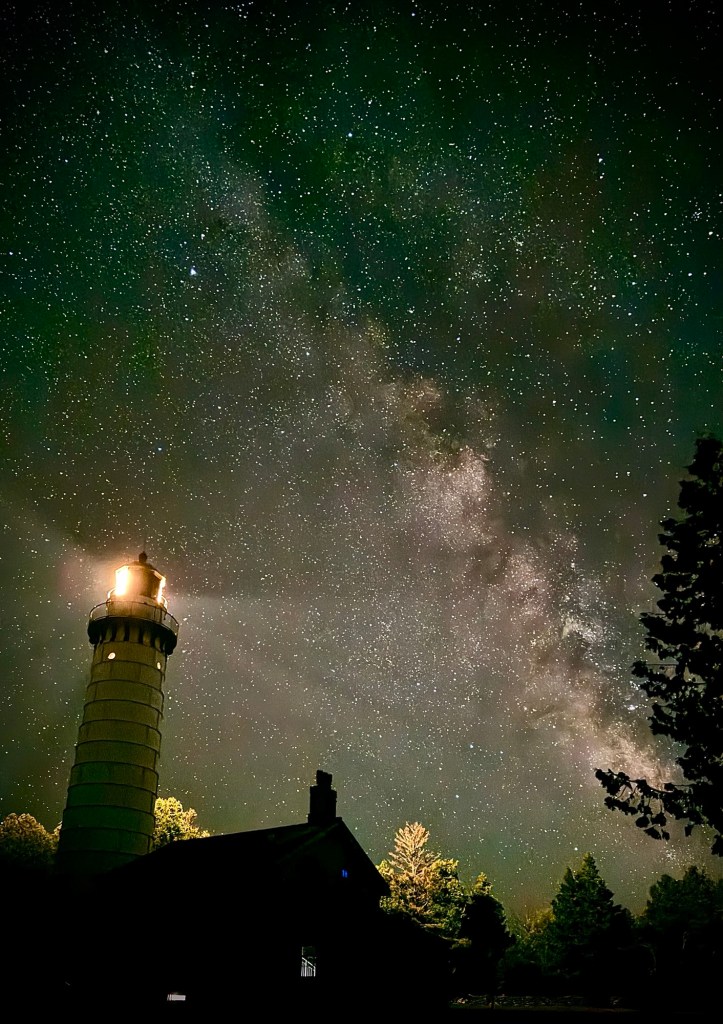
“The lighthouse stood still, cradled by stars, as the Milky Way arched overhead—guiding more than ships, it lit a path straight to the soul.”


