Posts tagged ‘Photography’
When a Lake Begins to Forget
A personal journey into the changing heart of Lake Velence

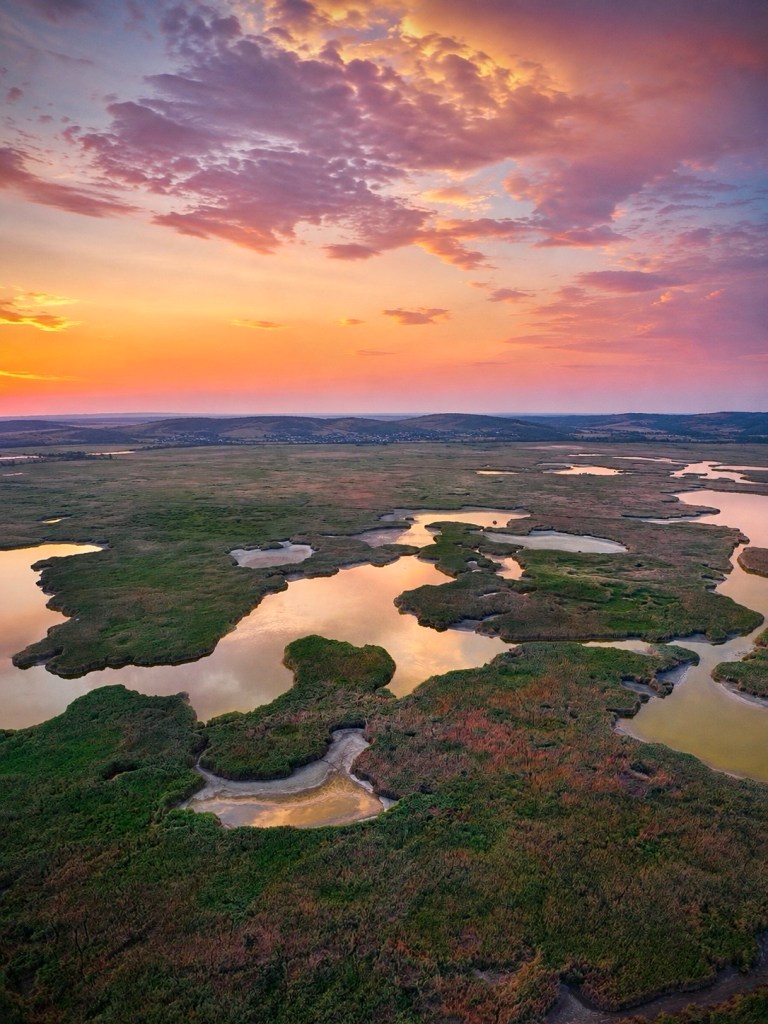
Lake Velence, summer 2026.
Where water once moved through the reeds, the lakebed now holds the memory of it.
There are places we visit.
And then there are places that somehow become part of us.
For generations of Hungarians, Lake Velence has been one of those places.
Children learned to swim in its warm, shallow water. Families spread blankets along its shores and stayed until the evening light turned gold. Fishermen pushed small wooden boats through the reeds before sunrise, returning to the same quiet corners their fathers—and sometimes their grandfathers—had known.
Birdwatchers came for another reason.
They came for the rustle in the reeds.
For the sudden beating of wings.
For herons standing motionless in the shallows and the extraordinary web of life supported by one of Hungary’s most familiar wetlands.
And people like me came simply because we loved it.
But this summer, I returned to Lake Velence and found myself looking at something I wasn’t prepared to see.
The lake seemed to be disappearing.
Not everywhere.
Not all at once.
That somehow made it more unsettling.
It was happening quietly.
Where Water Used to Be
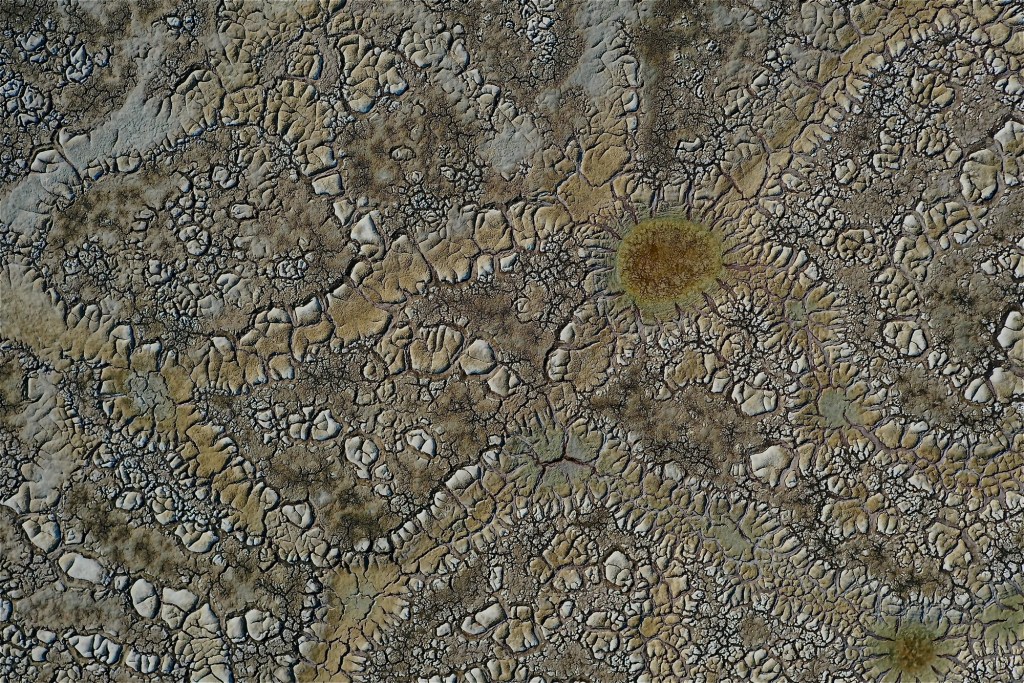
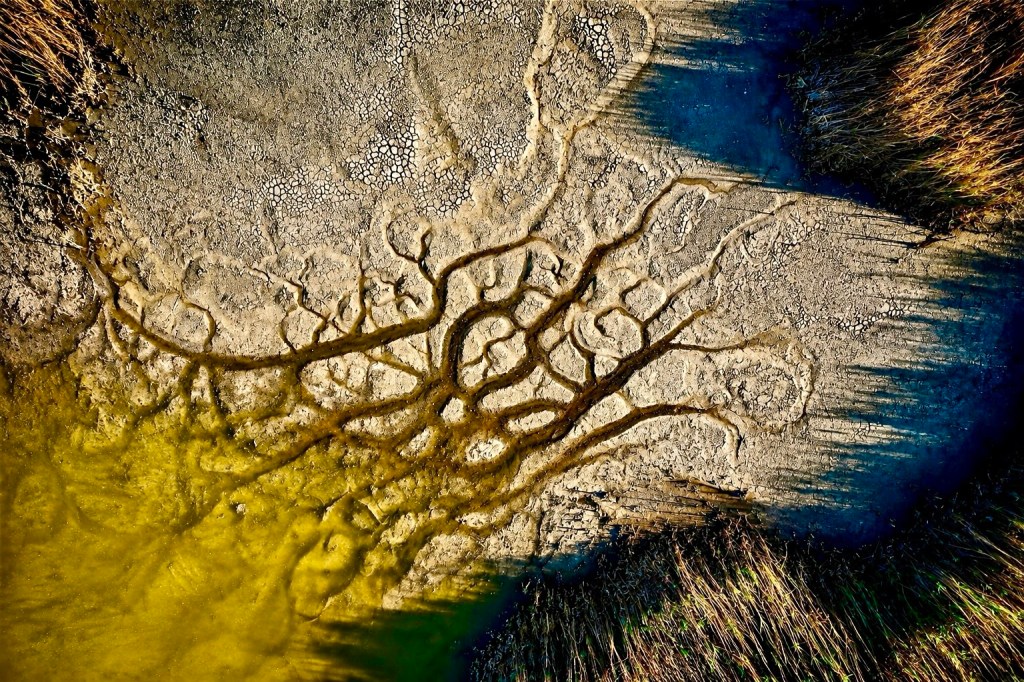
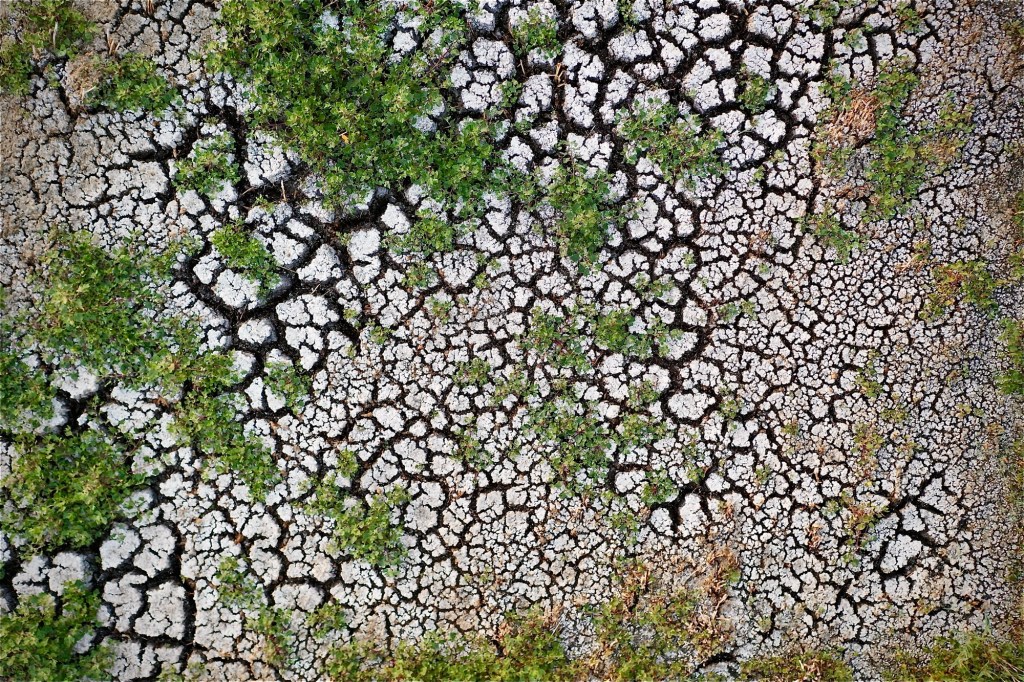
What looks like another planet is the floor of Lake Velence—water leaving behind a fragile mosaic of what once was.
The heat had been relentless.
The air itself seemed tired.
Walking toward the lake, I could smell the reeds warming beneath the sun and feel the dry earth under my feet. Where I expected water, there were stretches of exposed lakebed.
Mud had hardened.
Then cracked.
Then cracked again.
Patterns spread across the earth like an enormous mosaic.
At first, they were beautiful.
That is perhaps the most uncomfortable part of being a conservation photographer: sometimes environmental distress can be extraordinarily beautiful.
I found myself photographing textures that looked almost otherworldly.
Some resembled ancient maps.
Others looked like skin.
From above, small remaining pools of water appeared like cells viewed beneath a microscope. Narrow channels wound through the mud like arteries.
The photographer in me was fascinated.
The human being in me was deeply disturbed.
Because every beautiful pattern represented something missing.
Water.
Then I Found the Boats
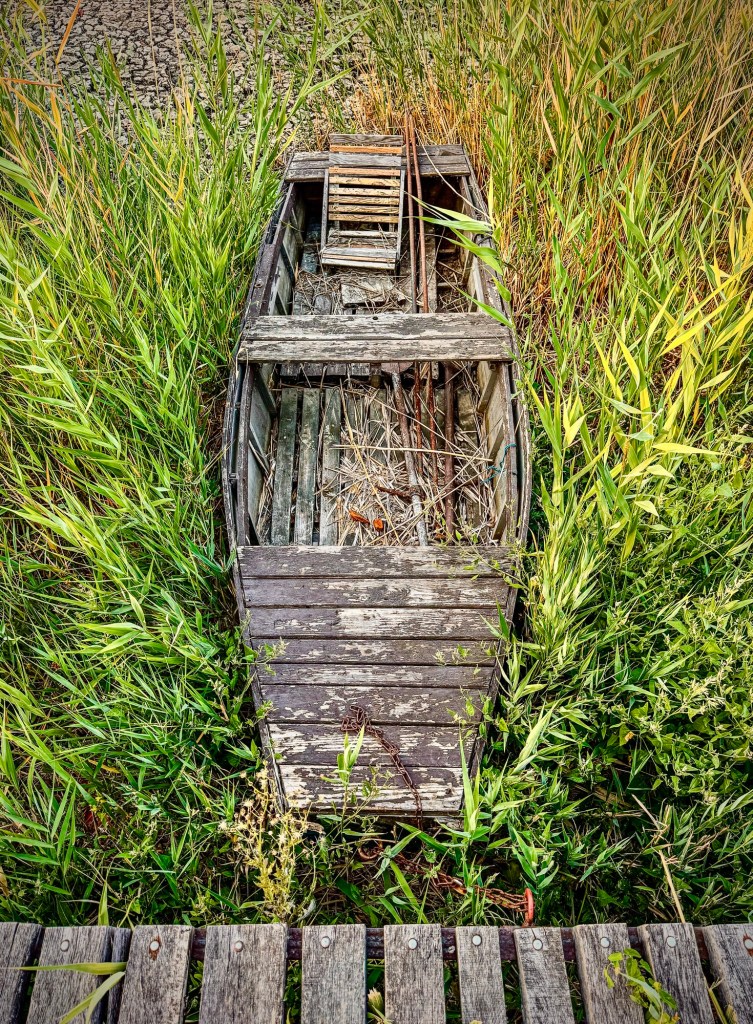
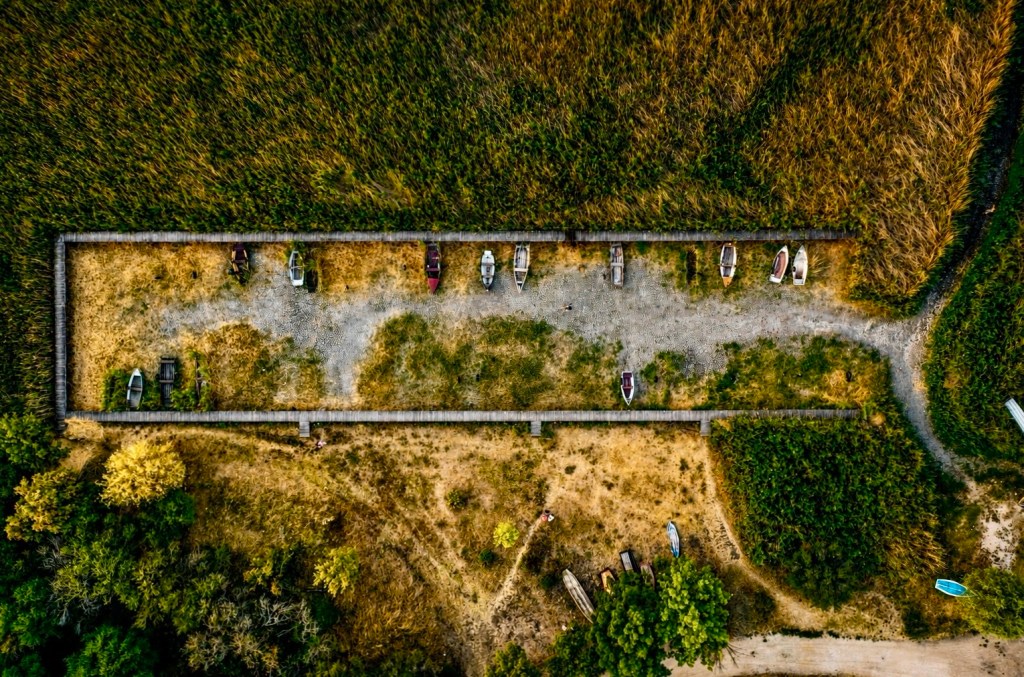
A boat without water is more than an abandoned boat. It is a reminder of the life that once moved through these reeds.
That was when the story changed for me.
Along the old shoreline were small wooden fishing boats.
Except they weren’t floating.
They were sitting in grass.
Some were surrounded by reeds.
Others rested beside cracked earth where water once reached them.
There was something almost unbearable about seeing a boat stranded on land.
A boat has a purpose.
It is meant to move.
To carry someone across water.
To rock gently against a dock.
To leave before sunrise with a fisherman and return later with stories.
These boats were waiting for water that was no longer there.
I stood looking at one of them for a long time.
And I began thinking about the fishermen.
Not as statistics.
As people.
People who know this lake differently than the rest of us.
They know where fish gather when the temperature changes. They recognize the wind before a storm. They know the hidden channels through the reeds.
Imagine knowing a lake that intimately and watching its shoreline retreat.
What do you tell your grandchildren?
“When I was your age, the water came all the way up here.”
At what point does a memory begin to sound like a legend?
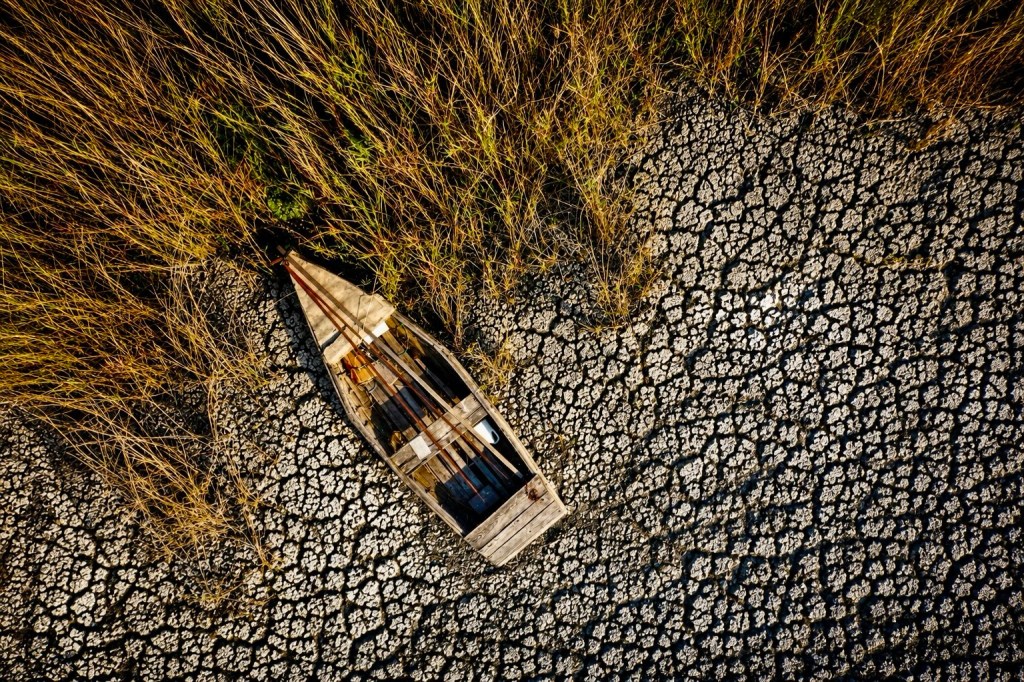
A boat built for water, resting on a lakebed that has forgotten how to hold it.
The Lake From Above
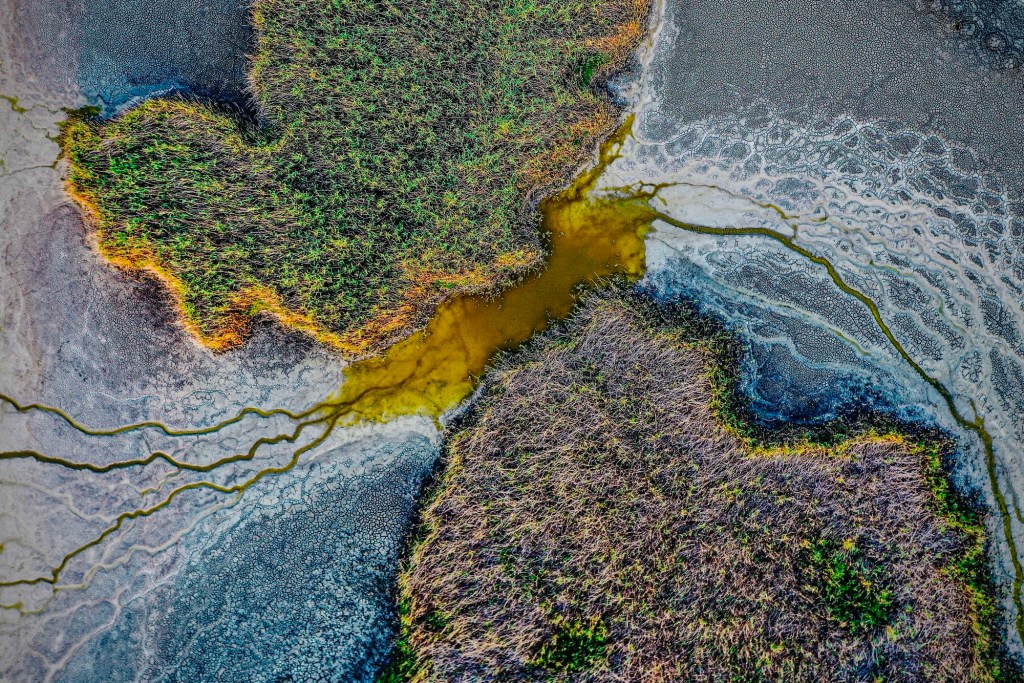
Then I launched my drone.
And everything changed again.
From the ground, drought is something you walk through.
From the sky, it becomes a story.
The landscape opened beneath me.
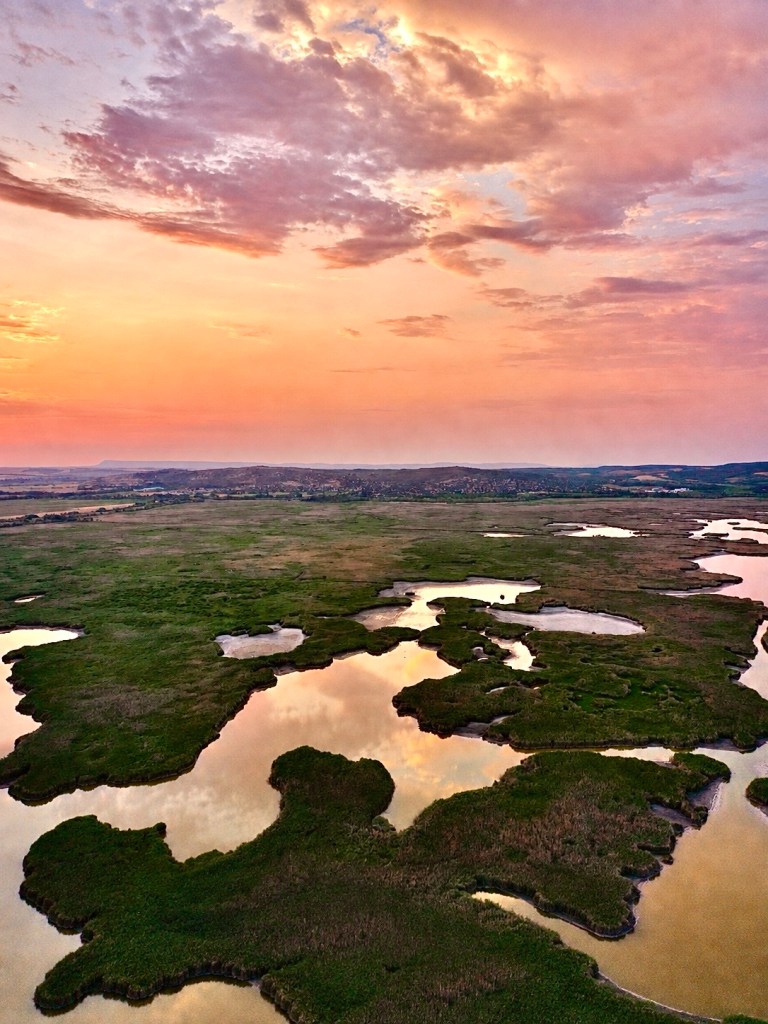
The remaining water separated into irregular pools surrounded by vast reed beds. Channels twisted between them. Pale mineral deposits traced the former edges of water.
And across the exposed lakebed were patterns so intricate that they hardly seemed natural.
I kept flying.
And I kept thinking:
How can something this beautiful also be a warning?
Perhaps nature does not separate beauty from suffering the way humans do.
Perhaps it simply responds.
Water retreats.
Plants adapt.
Birds move.
Fish search for deeper places.
Mud dries.
Seeds wait.
Nature does what it has always done.
It tries to survive.
A Lake With a Long Memory
Lake Velence is not simply a recreational lake.
It is a shallow, dynamic natural system whose water levels have fluctuated throughout its history. There have been dry periods before. There have been recoveries.
That history matters.
We should resist the temptation to look at one frightening summer and declare that the lake is dying forever.
Nature is more complicated than that.
But history should not become an excuse to look away, either.
Because today’s lake exists in a different world.
Hotter periods, evaporation, rainfall patterns, water management, surrounding development and human demand all intersect with the natural rhythms of a shallow lake.
The question is therefore not simply:
Has Lake Velence ever been low before?
It has.
The more important question is:
How resilient will Lake Velence be in the climate and landscape of the future?
That is a much harder question.
And perhaps the most important one.
What Happens to the Birds?

Standing among the reeds, I kept thinking about the creatures that cannot attend meetings or argue about water policy.
Wetlands are extraordinarily productive ecosystems.
To us, a patch of reeds may simply look like vegetation.
To a bird, it may be shelter.
A nesting site.
A hunting ground.
A nursery.
To insects, amphibians and fish, shallow water can represent an entire world.
Remove enough water and those relationships begin to change.
Some species move.
Some adapt.
Some cannot.
This is one reason conservation is rarely about saving one beautiful animal.
It is about protecting relationships.
Water.
Mud.
Reeds.
Fish.
Insects.
Birds.
People.
Pull hard enough on one thread and eventually the entire fabric changes.
Then It Rained
The following afternoon, something happened.
Rain.
Not enough to restore a lake.
Not remotely.
Just a brief summer shower.
But I couldn’t resist.
I drove back to the same place.
I wanted to know if anything had changed.
There was water again in some of the shallow channels.
Tiny ribbons of it.
The cracked earth reflected the sky.
And then evening came.
The clouds opened near the horizon and the entire landscape began to glow.
Pink.
Orange.
Gold.
The remaining water caught the light and carried it through the marsh.
I launched the drone again.
From above, Lake Velence no longer looked simply wounded.
For a few minutes, it looked luminous.
Alive.
And standing there, I was reminded of something I have learned repeatedly while photographing nature:
Resilience rarely announces itself loudly.
Sometimes it is a seed waiting underground.
Sometimes it is a bird returning.
Sometimes it is a tiny stream finding its way through cracked mud.
And sometimes it is a lake catching the last light of the day.
What Are We Willing to Notice?
Jane Goodall has spent much of her life reminding the world that hope is not passive.
Hope requires action.
I think that distinction matters enormously here.
Hope does not mean looking at Lake Velence and saying:
“It has recovered before. Everything will be fine.”
Hope means asking:
What can we do to give it the best possible chance to recover again?
And there is another idea I kept returning to, one that echoes through the work of Dr. Wayne Dyer:
Our attention matters.
What we choose to notice begins to shape what we value.
And what we value, we are far more likely to protect.
Perhaps that is one of photography’s quiet powers.
A photograph cannot refill a lake.
It cannot make rain fall.
It cannot write environmental policy.
But it can make someone stop.
Look.
Feel.
Ask a question.
And sometimes that is where change begins.
The Families Who Will Come After Us
I keep thinking about the children.
Not only the children playing beside Lake Velence today.
The ones who haven’t been born yet.
Will they swim here?
Will their parents bring towels and sandwiches and spend entire summer afternoons beside the water?
Will fishermen still push small boats through openings in the reeds before sunrise?
Will birdwatchers still raise binoculars when wings suddenly lift from the marsh?
Will photographers still stand here at sunset waiting for the sky to catch fire?
I don’t know.
None of us does.
But perhaps that uncertainty is exactly why this moment matters.
Conservation is ultimately an act of imagination.
We have to imagine a future we may never personally see.
And then care enough to protect it anyway.
Bearing Witness
I originally went to Lake Velence carrying cameras.
I thought I was going there to photograph a landscape.
Instead, the landscape gave me a story.
A story written in cracked mud.
In abandoned boats.
In reeds.
In tiny pools of remaining water.
In fishermen’s memories.
In birds searching the shallows.
And finally, after a brief summer rain, in a magnificent sunset reflected across a wounded landscape.
These photographs may look like abstract art.
Some resemble paintings.
Some resemble another planet.
But they are not abstractions.
They are Lake Velence.
Right now.
And this project has become something much more important to me than a collection of photographs.
It has become an act of witnessing.
Because perhaps the greatest danger isn’t that a landscape changes.
Nature has always changed.
Perhaps the greater danger is that change happens slowly enough that we become accustomed to it.
The shoreline moves a little farther away.
The boats sit a little longer in the grass.
The channels become a little narrower.
And eventually we forget where the water once was.
I don’t want to forget.
So I photographed it.
And I am sharing what I saw.
Because sometimes photography is about celebrating the extraordinary beauty of our planet.
And sometimes it is about standing beside something we love while it is changing and saying:
I see you.
You matter.
And your story deserves to be told.
— Zsuzsanna Luciano
Conservation Fine Art Photographer
Lake Velence, Hungary — Summer 2026
Three Final Merits & a Lifelong Dream: I’m Now a PPA Master Photographer
I’m thrilled (and a little stunned) to finally type these words:
Professional Photographers of America (PPA) has awarded me the Master of Photography degree.
This degree represents the highest level of image-making excellence that PPA recognizes, and it was completed by the last three Merits I earned this year for my night-sky images:
Beacon of the Infinite Echoes of Eternity Ethereal Descent
In January 2026, at Imaging USA in Nashville, TN, PPA President Mark Campbell, M.Photog.Hon.M.Photog.Cr., CPP, API will officially present the degree. I’ll be walking across that stage carrying not just a medallion, but nearly two decades of hard work, travel, late nights, and faith in the power of photography.
What the Master of Photography Degree Means
The Master of Photography degree is an achievement of the highest caliber. It means the artist has met the standards of excellence set by PPA, earning Merits through image excellence, advanced education, and service to the profession.
For me, this degree says:
My images have consistently met a national standard of craftsmanship and storytelling. I’ve invested deeply in education, competition, and the community of photographers who push each other to grow. My work in conservation-focused fine art is recognized among a select group of photographers committed to elevating the craft.
It’s an honor to see Luciano alongside other Masters and to know that these images—born under dark skies and in wild places—have carried me there.
The Three Merit Images That Completed the Journey
Each of these black-and-white nightscapes earned a Merit in the 2025 PPA Merit Image Review, and together they completed my requirements for the Master Photographer degree.
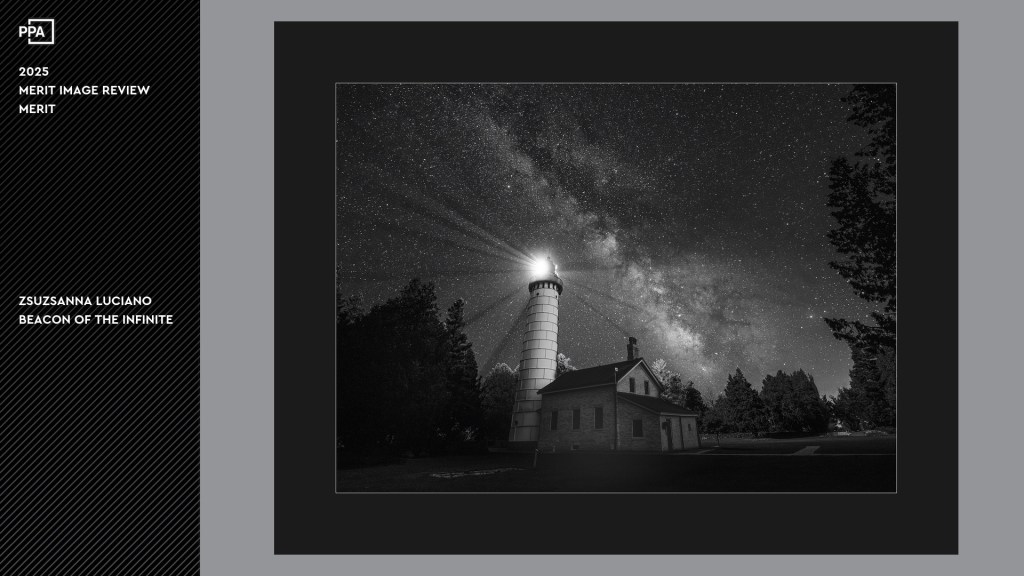
⭐ Beacon of the Infinite
A lighthouse in Door County, its beam cutting into the Milky Way like a prayer made of light.
This image captures what I feel during my midnight sessions on the shoreline: the sense that we are tiny, yet deeply connected to something far larger and more mysterious than ourselves.
⭐ Echoes of Eternity
Photographed in Yellowstone’s Grand Canyon, where the waterfall roars through the heart of the earth while the Milky Way rises silently above.
The contrast between that tremendous sound and the stillness of the stars made the scene feel timeless—like the land itself was remembering.

⭐ Ethereal Descent
Silky, long-exposure waterfalls pouring through the frame under a canopy of stars.
Water becomes mist, motion becomes sculpture, and the night sky crowns it all. This piece feels like a bridge between earth and sky, gravity and grace.

These three images aren’t just photographs; they are the distilled essence of years of seeking out dark skies, driving thousands of miles with my family, and refusing to let go of a dream—even when I was sore, exhausted, or doubting myself.
A Personal Milestone in a Bigger Story
If you’ve followed my work, you know my heart is in conservation photography—using art to help people fall in love with the wild world so fiercely that they feel compelled to protect it.
Earning the PPA Master of Photography degree doesn’t change that mission; it strengthens it. It tells galleries, collectors, and conservation partners that this work stands on a foundation of professional excellence as well as passion.
To my husband and son, who’ve camped, driven, hiked, and stayed up through many freezing, mosquito-filled nights so I could chase starlight—this degree belongs to you, too.
To my collectors, festival visitors, and fellow photographers—thank you for believing in this path with me.
Who Is PPA?
For those who don’t know, Professional Photographers of America (PPA) is the largest and longest-standing nonprofit photography trade association in the world. Founded in 1868, PPA now supports over 35,000 professionals with education, resources, and advocacy—always working to bridge the gap between photographers and the people we serve.
I’m proud to be part of that community and even prouder to carry the title Master Photographer within it.
Thank you for celebrating this milestone with me.
The next chapter is already forming under the stars—and I can’t wait to share what comes next.
– Zsuzsanna Luciano
Master Photographer
“Imagine: Where the City Meets the Stars”
Reflections from the 60th Space Coast Art Festival
This past weekend at the 60th Space Coast Art Festival, I experienced one of those moments that fill your heart with gratitude and reaffirm why you create in the first place. My photograph “Imagine” — a Chicago cityscape crowned by the Milky Way — was selected by the jury for final judging, and on Sunday morning, I learned it had received an Award of Merit.

Zsuzsanna Luciano smiles while holding her “Award of Merit” ribbon toward the camera, standing in front of her artwork “Imagine” — a striking photograph of Chicago’s Cloud Gate (“The Bean”) beneath the Milky Way. The reflection of the sky and city buildings shimmers across the glossy surface, symbolizing the harmony between urban light and the star-filled night.
To say I was overjoyed would be an understatement. But beyond the recognition, what truly moved me was the reaction of people who stopped in front of the piece. Many stood in silence. Some whispered “Is that real?” Others smiled and said, “I’ve never seen stars like that.”
And that — right there — is why I created Imagine.
A Dialogue Between Earth and Sky
I have always believed that the night sky speaks a language of connection. Every star, every faint wisp of cosmic light, is a reminder of how small we are and how magnificent the universe is. It humbles us, inspires us, and invites us to look beyond the boundaries of our everyday lives.
Photographing the Milky Way over a city like Chicago is not an easy task — it’s both a technical challenge and a metaphorical one. Cities pulse with energy, noise, and light, while the Milky Way thrives in silence and darkness. To bring them together is to imagine balance — harmony between human creation and the timeless expanse of the cosmos.
That’s what Imagine represents to me: a bridge between the modern world and the eternal sky.
The Vanishing Darkness
Sadly, true darkness is disappearing. Over 80% of people in the world live under light-polluted skies. Many children grow up never seeing the Milky Way at all — never experiencing that quiet awe that has guided dreamers, artists, and explorers since the dawn of time.
Light pollution doesn’t just steal our stars. It disrupts ecosystems, confuses migratory birds, affects nocturnal animals, and even impacts our own circadian rhythms. The glow of artificial light has slowly dimmed one of the oldest forms of human connection — our relationship with the night sky.
But it doesn’t have to be this way. With awareness and simple changes — shielding outdoor lights, using warmer tones, turning off unnecessary illumination — we can preserve our right to starlight.
Why I Keep Looking Up
Every time I photograph the night, whether in Yellowstone, the Tetons, or along the shores of Lake Michigan, I feel the same childlike wonder I felt the first time I saw the Milky Way. It’s not just about the photograph — it’s about the experience. Standing in the dark, hearing the whisper of the wind, feeling the rhythm of the earth beneath your feet — it reminds you that you belong to something infinite.
That feeling is what I hope to share through my work. When someone looks at Imagine, I want them to feel that connection — to remember that we are all part of the same universe, stitched together by light that has traveled thousands of years to reach us.
Gratitude and Hope
I am deeply grateful to the Space Coast Art Festival jury for recognizing Imagine with an Award of Merit, and to every person who stopped to look up — both at my photograph and, hopefully, at the real night sky when they went home.
May we continue to protect the beauty of darkness, celebrate the light of the stars, and never stop imagining a world where both can coexist.
✨
— Zsuzsanna Luciano
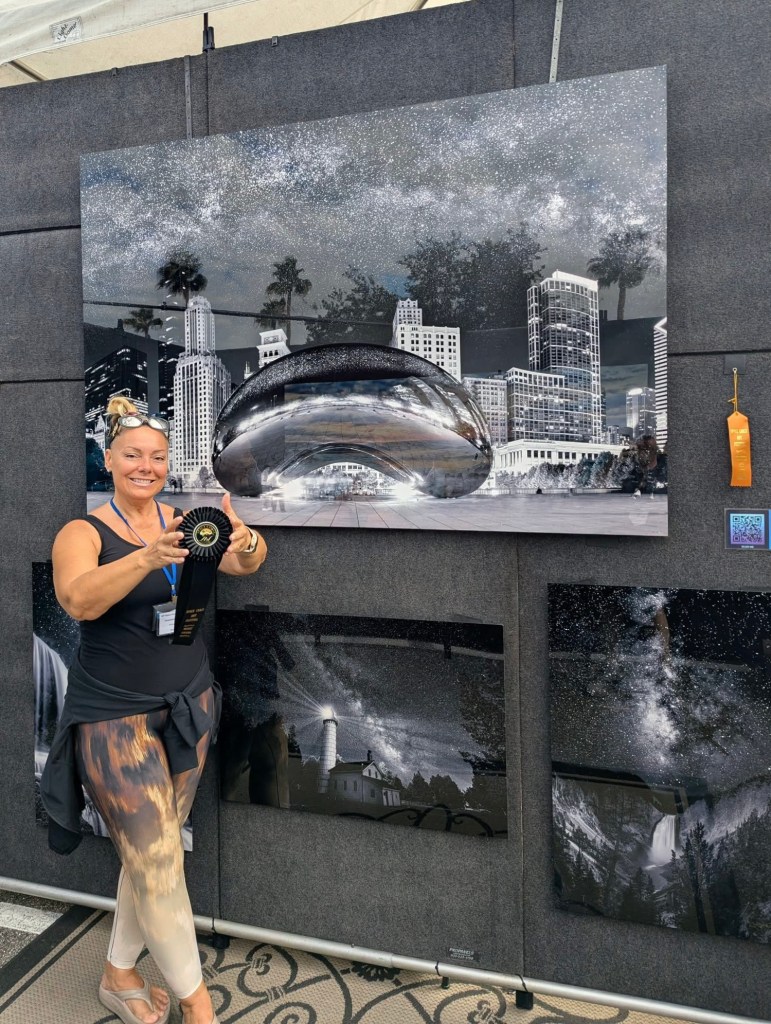
Zsuzsanna Luciano stands smiling in front of her art display at the 60th Space Coast Art Festival, proudly holding her Award of Merit ribbon. Behind her hangs her large photographic artwork titled “Imagine,” depicting Chicago’s Cloud Gate (“The Bean”) under a stunning Milky Way sky, symbolizing the union of city lights and starlight. Additional night-sky and waterfall photographs are displayed below, all printed on glossy aluminum panels within her booth.
Florida’s Black Bears in October: A Season of Urgency and Abundance
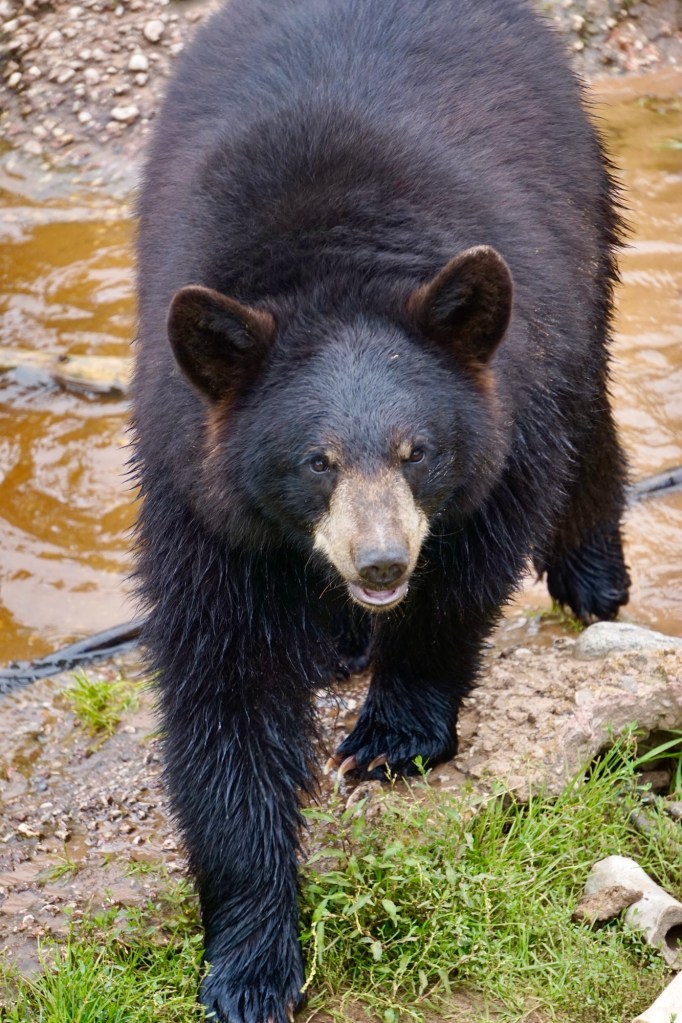
“The golden light of fall catches the sheen of a bear’s coat — a reminder that even in Florida’s warmth, nature prepares for change.”
October in Florida is a month of transition—not only for people trading swimsuits for light jackets, but for the state’s black bears, who enter a season of intense preparation. As the air turns slightly cooler and the daylight shortens, these wild residents of Florida’s forests, hammocks, and swamps shift their focus entirely to one thing: food.
Feeding for the Future
Unlike their northern relatives, Florida black bears don’t face months of deep snow or a long, frozen winter. Still, they instinctively prepare for leaner times by entering a phase called hyperphagia—a biological frenzy of eating. During October, a bear’s day is ruled by its stomach. They spend up to 20 hours foraging, searching tirelessly for high-calorie foods to build fat reserves that will sustain them through the cooler months when natural food becomes scarce.
In Florida’s oak and palmetto forests, acorns become the prized treasure. Bears crunch through the underbrush searching for patches of fallen nuts, sometimes traveling miles between feeding spots. They also feast on saw palmetto berries, wild grapes, beautyberries, and the last persimmons of the season. Opportunistic and highly adaptable, a bear will also dig for grubs, raid anthills, or peel bark for beetle larvae. Every calorie counts.
Solitary Wanderers with Overlapping Paths
Florida black bears are mostly solitary by nature, but during this time, their paths cross more often than usual. When food is abundant, multiple bears may feed in the same area with a quiet tolerance for each other. You can almost sense an unspoken truce—a mutual understanding that October’s bounty won’t last forever.
Mothers with cubs often stay close to reliable feeding zones, teaching their young where to find seasonal foods and how to prepare for the coming months. Young males, on the other hand, begin wandering farther—sometimes covering dozens of miles—to establish their own ranges. This seasonal wandering often brings bears closer to human communities, especially in suburban areas where trash cans and fruit trees mimic easy natural meals.

“Florida’s bears are excellent climbers — they’ll scale trees to escape danger, nap in the canopy, or scout for ripe fruit.”
The Conservation Challenge
For wildlife biologists and conservationists, October is a reminder of how crucial natural food sources are to the bears’ survival. When forests produce good mast crops—especially acorns and palmetto berries—bears stay deep in the woods. But in poor crop years, they’re more likely to follow their noses into neighborhoods. This is when education and coexistence matter most.
Securing garbage, removing bird feeders, and harvesting fruit from backyard trees may seem small, but they’re acts of conservation. Every human choice that keeps bears wild and wary helps preserve not only their safety but also the delicate balance of Florida’s wild spaces.
A Quiet Pause Before Winter
By late October, as the bear’s body grows heavier and their fur thickens, the pace begins to slow. In some northern parts of the state, they’ll retreat to sheltered dens—under fallen logs, in dense thickets, or beneath the roots of old trees. In the subtropics, where winter is mild, many remain active year-round, emerging on warm days to forage or explore. But even there, a calm descends over the forests—a sense that the rush of the season has passed.
Florida’s black bears remind us that even in the heat of the South, the rhythms of nature endure. Their October dance of hunger and preparation is as old as the land itself—a story of resilience, adaptation, and the quiet intelligence of wild creatures who still find a way to thrive in a rapidly changing world.
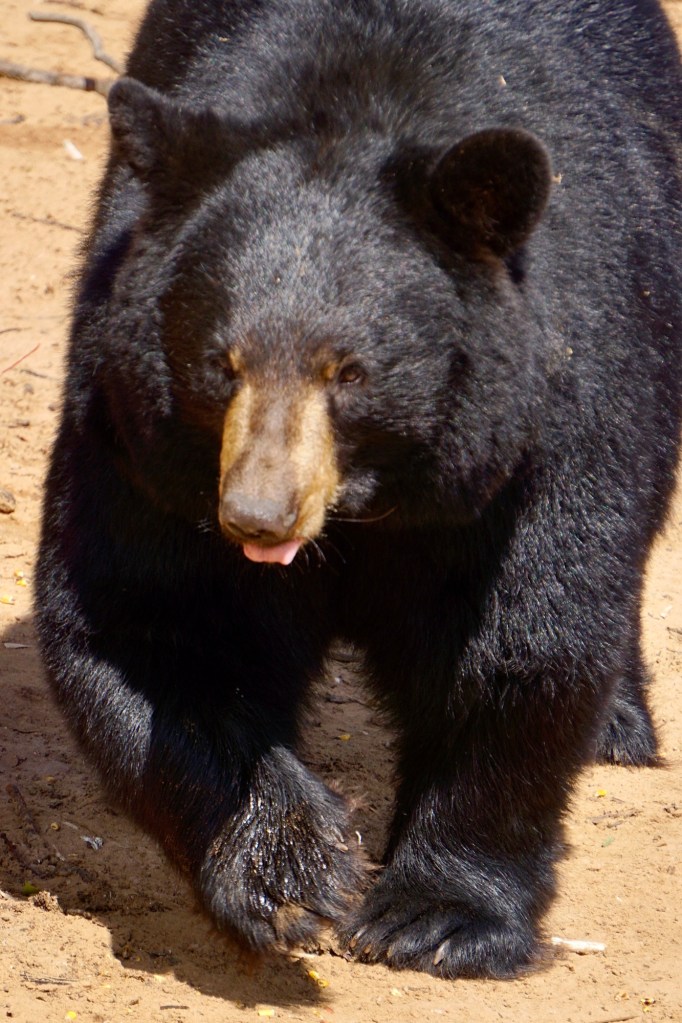
“A Florida black bear on the move — October’s mission: eat, explore, repeat.”
When Art Speaks for the Soul
By Zsuzsanna Luciano
There’s a moment every artist knows too well — the quiet pause after you share a new creation, waiting to see how it’s received.
That moment came to me recently after finishing my latest piece, Where the Earth Dreams the Stars.
It’s a black-and-white long-exposure image — a waterfall cascading beneath the Milky Way, where motion meets stillness and the Earth seems to dream of infinity.
I poured everything into it. Even through illness and exhaustion, I sat at my computer, shaping light and shadow until it felt like breath — like prayer. When I finally finished, I felt peace. Creation itself was the reward.
And then came feedback.
My husband, who has always been honest and grounded, said he preferred color. He reminded me that some of my color images had sold better or received recognition in competitions. His words weren’t cruel — just honest. But still, they stung a little.
As artists, we sometimes forget how vulnerable it feels to create something straight from the soul and then place it before the world — or even before the people we love most.
It’s not just an image; it’s a heartbeat made visible.
But that morning, instead of letting discouragement take root, I reminded myself of something simple but true:
This piece came through me, not just from me. It was a whisper from the Creator, expressed through my lens.
So when someone critiques the work, they’re really critiquing the divine conversation I merely recorded.
And how could I feel bad about that?
Art is subjective. What moves one person may leave another untouched. But when art flows from a place of truth, it always finds the hearts that are meant to see it.
Later, when the competition results came back and neither of my entries received a merit, I smiled. Not because I didn’t care — but because I realized I no longer needed validation to feel complete.
I had already won the moment I created something honest.
That’s the quiet liberation of being an artist: knowing that your worth isn’t measured in ribbons or likes, but in the courage it takes to reveal your soul.
So today, I celebrate not just the image, but the conversation it started — between me, my art, my husband, and something far greater than both of us.
Because in the end, creation itself is an act of faith.
And faith, like art, doesn’t always need to be understood — only felt.
🕊️ Artist’s Note
Where the Earth Dreams the Stars is now available as a limited-edition fine art print on Chromaluxe aluminum.
It’s a reminder that even in darkness, light finds a way to flow — and that creation, in all its forms, is the most divine conversation we can have.
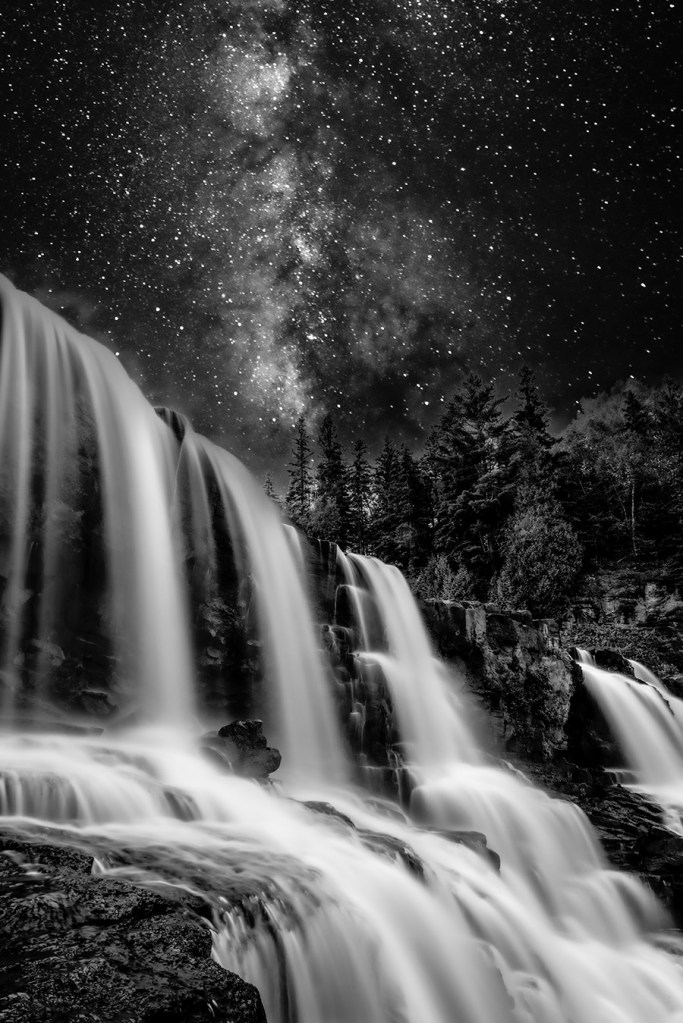
A long-exposure photograph capturing the silent dialogue between motion and stillness — between Earth and infinity.
Honored to Receive Best in Photography at the Magnificent Mile Art Fair
6/21/25
I am thrilled to share that I was awarded Best in Photography at the Magnificent Mile Art Fair, hosted by Amdur Production in the iconic downtown Chicago! This recognition fills my heart with gratitude, especially as I stand shoulder to shoulder with such a talented group of artists who inspire me daily.
Being part of this vibrant community is truly humbling. Each artist brings their unique perspective and creativity, making the experience incredibly enriching. I feel honored to be recognized in a space that celebrates artistic expression and innovation.
The Importance of Art and Nature
Art serves as a powerful connection between us and the natural world. With every photograph I take, I aim to capture the beauty and fragility of our environment. It’s essential to remind ourselves of this connection and the importance of preserving it for future generations.
As artists, we have a responsibility to convey these messages through our work. Nature’s beauty is not just something to be appreciated but also a call to action. We must educate the younger generations about the significance of protecting our planet, teaching them to take only what they need and to cherish the resources around them.
Empowering Future Generations
By fostering a deep appreciation for art and nature, we can ignite a passion within young minds to become stewards of our environment. Our role as artists extends beyond creating; we are also storytellers and mentors. Through our art, we can instill values of conservation, sustainability, and respect for nature.
As I reflect on this recent achievement, I am more motivated than ever to continue using my photography to advocate for the natural world. Each photograph is a reminder of the beauty we must protect and the narrative we must share.
Thank you to everyone who has supported me on this journey, and to Amdur Production for creating such a meaningful platform for artists. Here’s to celebrating art, nature, and the vital connection between the two. Let’s continue to inspire, educate, and make a difference together!
In conclusion, I hope my journey encourages you to connect with both art and nature. Let’s work together to foster a world where future generations can thrive in a healthy, sustainable environment.
Stay inspired!
Zsuzsanna Luciano
IG/LucianoPhotography
http://www.zsuzsannaluciano.com


