Posts tagged ‘#ProtectWhatYouLove’
This Is My Backyard
Today I drove into downtown Dunnellon for ordinary reasons.
The post office.
My family doctor.
Groceries at Walmart.
Nothing about the day suggested disaster.
And yet, before I even parked, I saw the smoke.
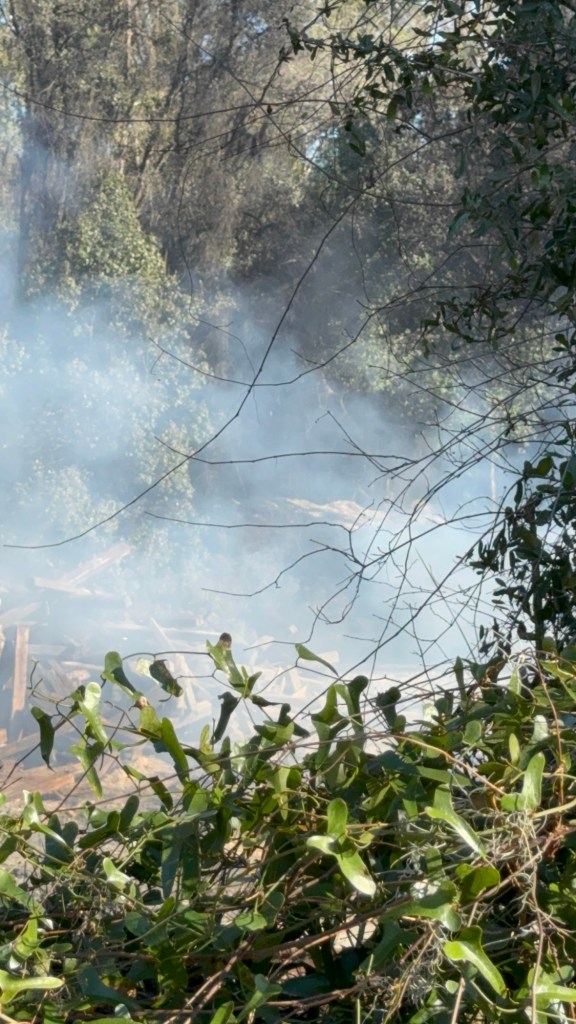
Smoke drifting through the trees. Even from a distance, it burned the eyes and followed me indoors.
By the time I reached the doctor’s office, I could smell it. The air burned my eyes. It followed me indoors. This was not something happening “somewhere else.”
After the post office, I drove closer.
I parked near the smoke and saw several trucks from Hull’s Environmental Services. A woman stood nearby. I asked questions. She was kind. Focused. Doing her job. I took photographs, though branches blocked much of the view.
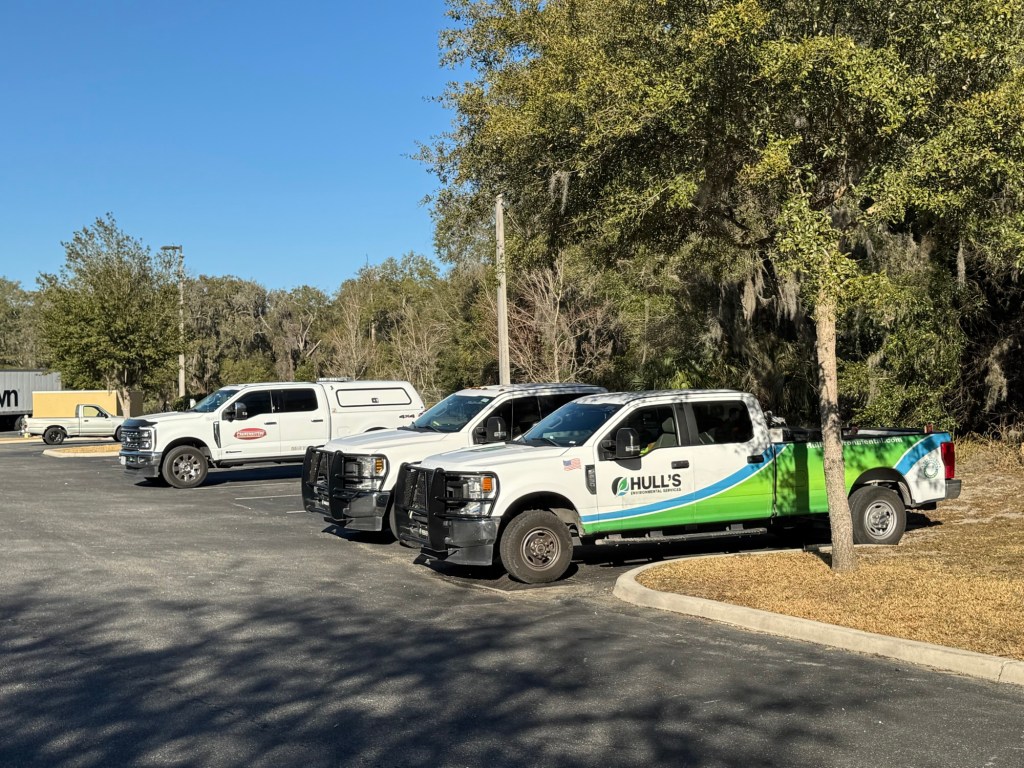
Cleanup begins at the edge of Dunnellon. Environmental response vehicles staged near the site where treated railroad ties burned—and where far more remain.
I went back to my car and gathered what I had—water bottles and a six-pack of Coke—and brought them to the workers. Cleanup work is exhausting. Care matters. She showed me where to place them, on a bench already holding donated drinks. Others had felt the same concern.
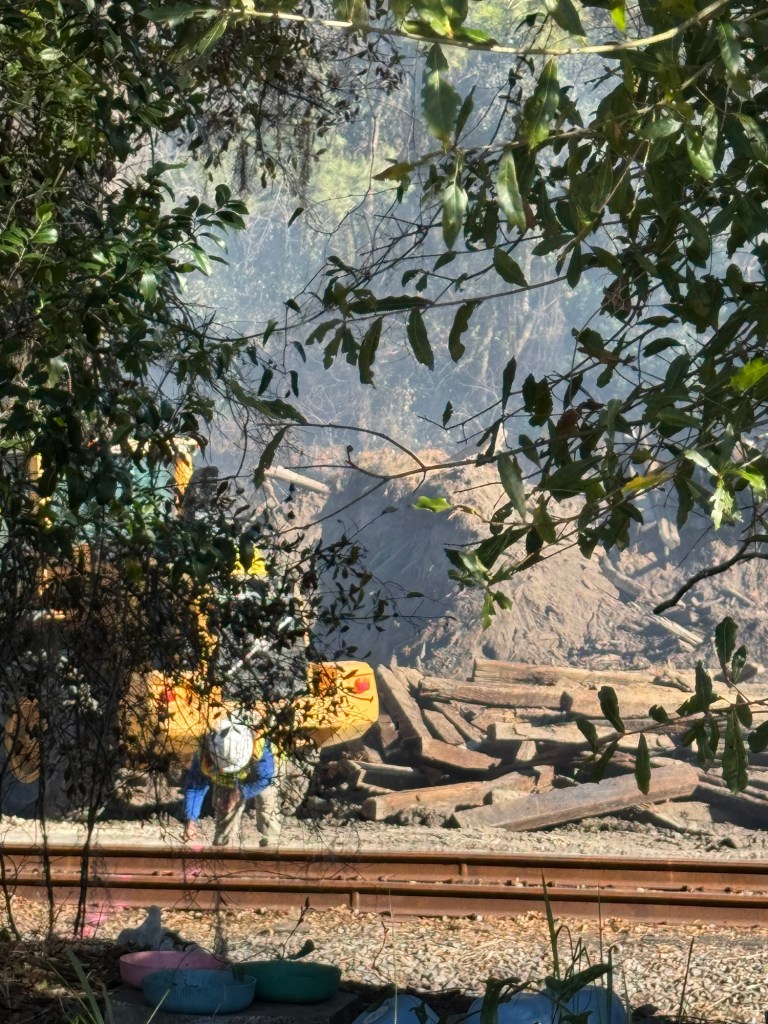
Crews working among smoke, debris, and railroad ties. A reminder that cleanup is difficult, dangerous, and human.
I asked if I could photograph from a little closer.
“Yes,” she said. “I’ll take you there so you don’t get hurt.”
She led me to the edge of the woods. There was a slope leading down toward the railroad. She warned me not to get closer than fifteen feet. As I climbed down, I turned to reassure her that I understood.
She was gone.
I stood there alone, with the rising smoke.
And then I saw it.
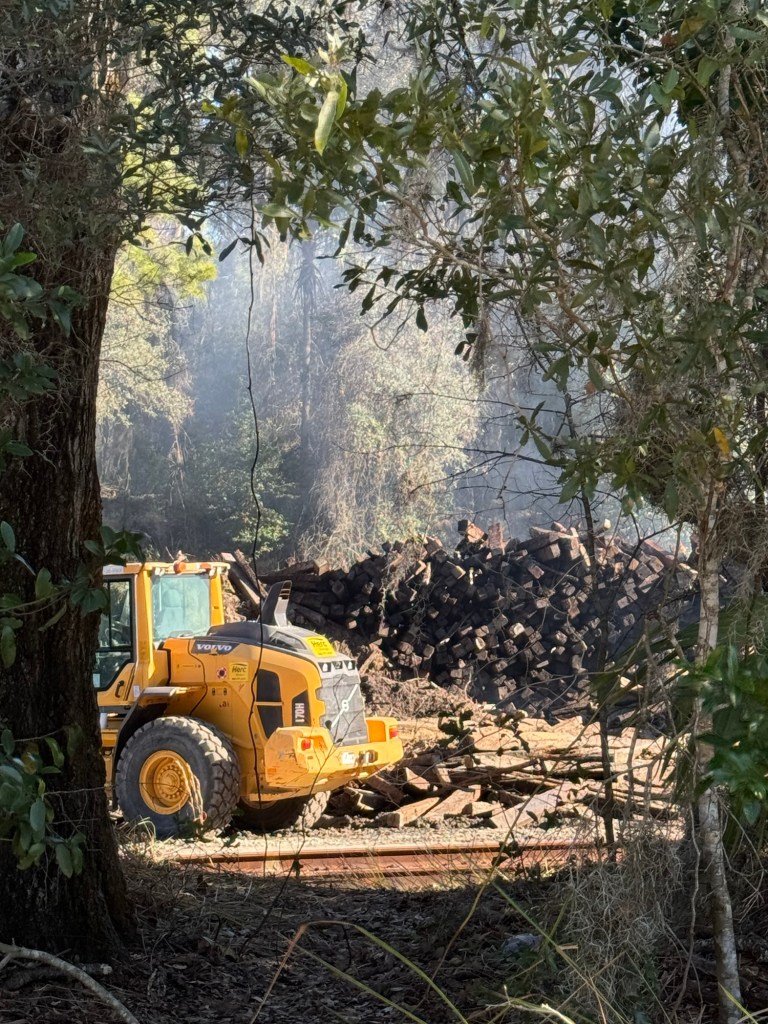
Untouched by fire, yet still infused with toxic preservatives. These piles remain.
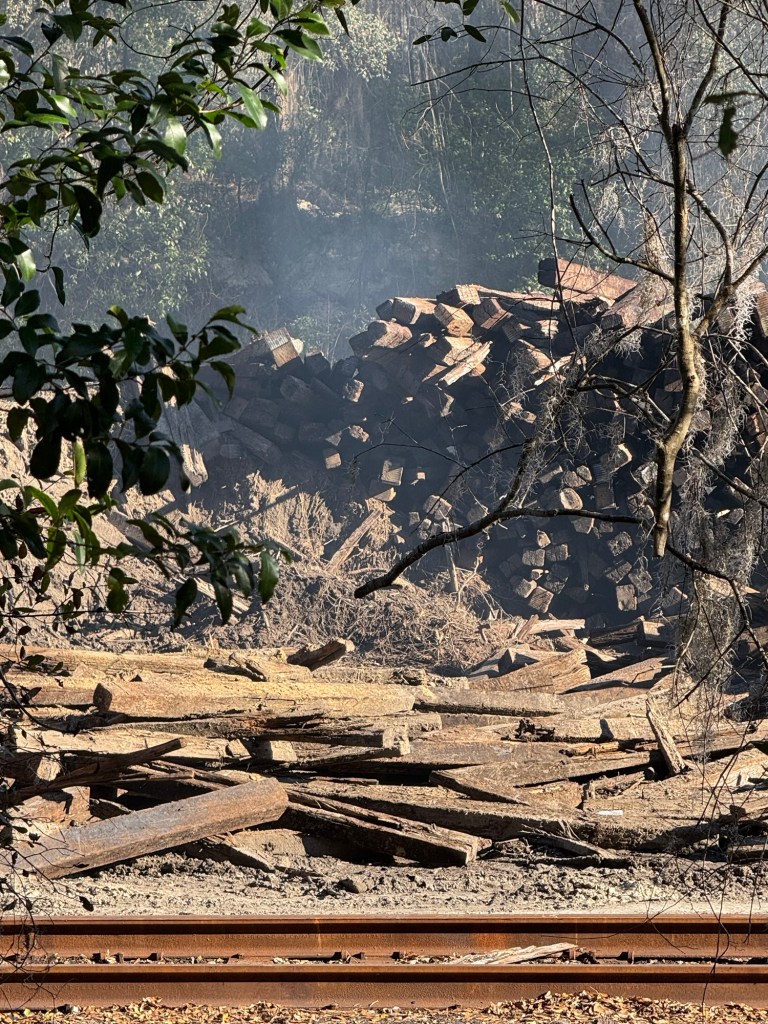
One of many piles of treated railroad ties. Some burned. Many did not.
Not just burned debris—but mountains.
Piles of railroad ties that had not burned.
Still intact.
Still toxic.
Still dangerous.
They sat there quietly, waiting.
If the fire this weekend felt catastrophic, then understand this: what remains is far worse. Multiply that destruction by ten. That is how much treated wood—wood infused with creosote and other toxic chemicals—is still sitting there.
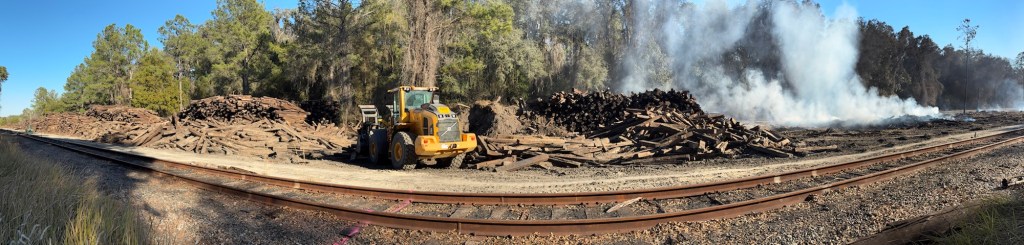
Scale matters. If the weekend fire felt catastrophic, this shows what still remains.
And as I took photographs, anger rose—not reckless anger, but the kind that comes from realizing something deeply wrong has been allowed to exist.
Because this is my town.
This is my backyard.
Rainbow Springs State Park lies just beyond this site. The Rainbow River flows there. Wildlife depends on it. And beneath it all is the aquifer that provides drinking water for our community.
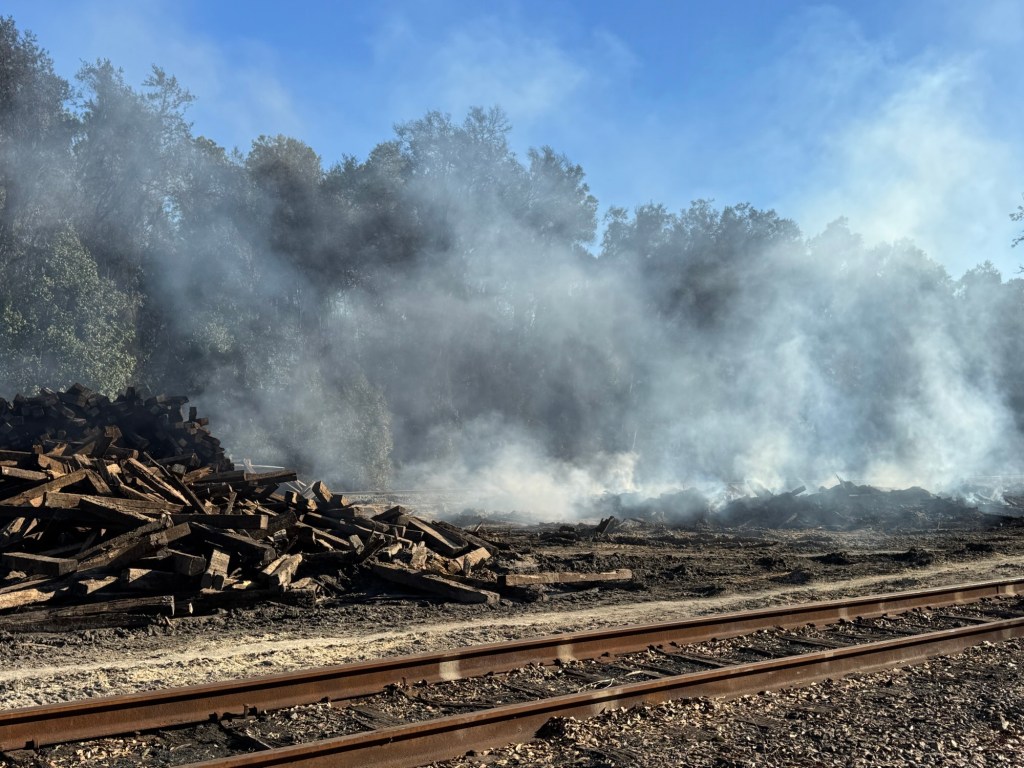
The fire has passed here. Its effects have not.
Toxins do not respect fences.
They do not stay where they are placed.
They seep. They move. They accumulate.
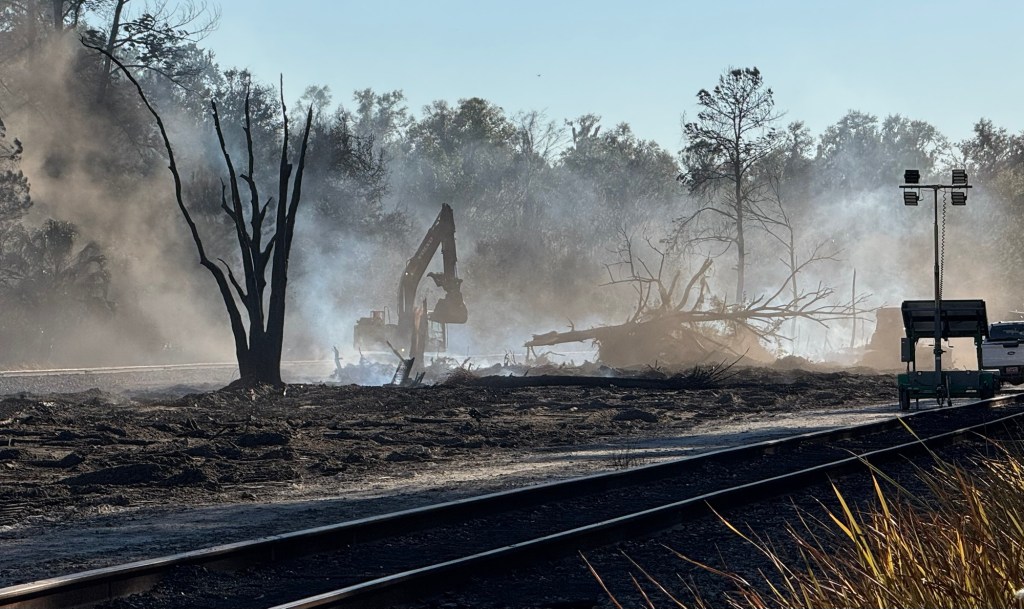
A landscape altered in a matter of days. Recovery will take far longer
So I ask the questions that must be asked.
Who is going to clean this up?
Where will this material be taken?
How will it be handled safely—when it is toxic no matter where it goes?
How long will it take for the surrounding land to recover?
When will contaminants appear in well water—five years, twenty, fifty?
Can we safely swim in the springs again?
What about the communities southeast of this site—downwind, downstream?
Environmental disasters rarely announce themselves all at once. More often, they unfold quietly. Years later, patterns emerge—illnesses, losses—without clear answers because no one wanted to connect the dots.
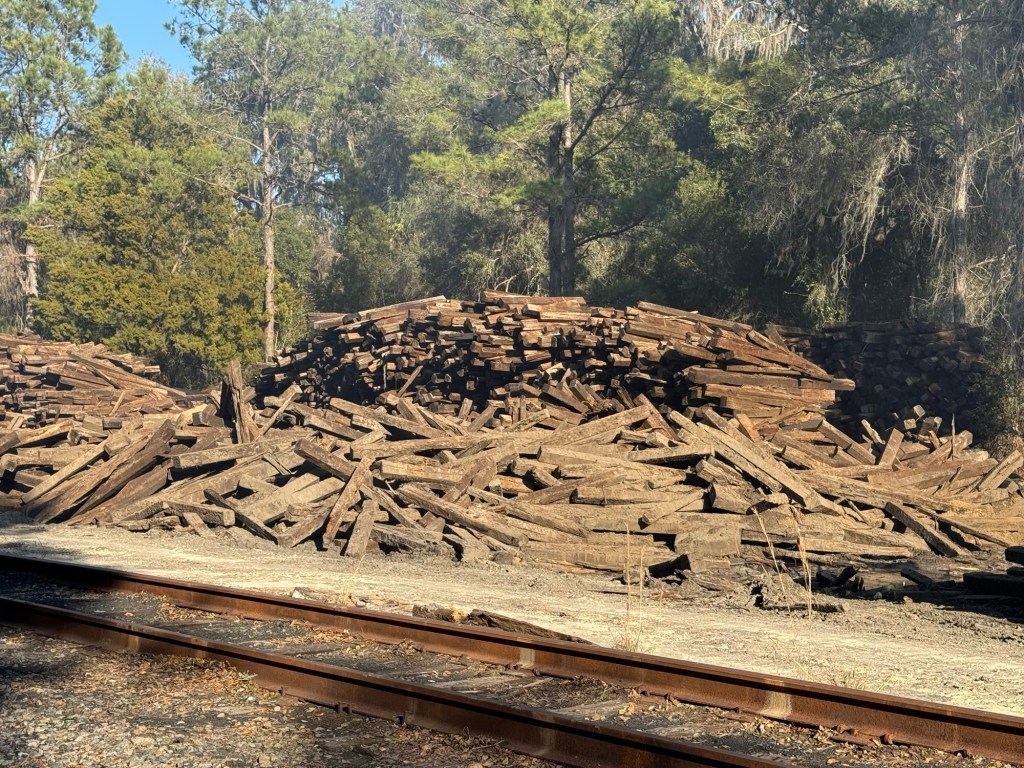
More treated railroad ties. Quiet. Waiting.
This is why silence is dangerous.
This is not about panic.
It is about responsibility.
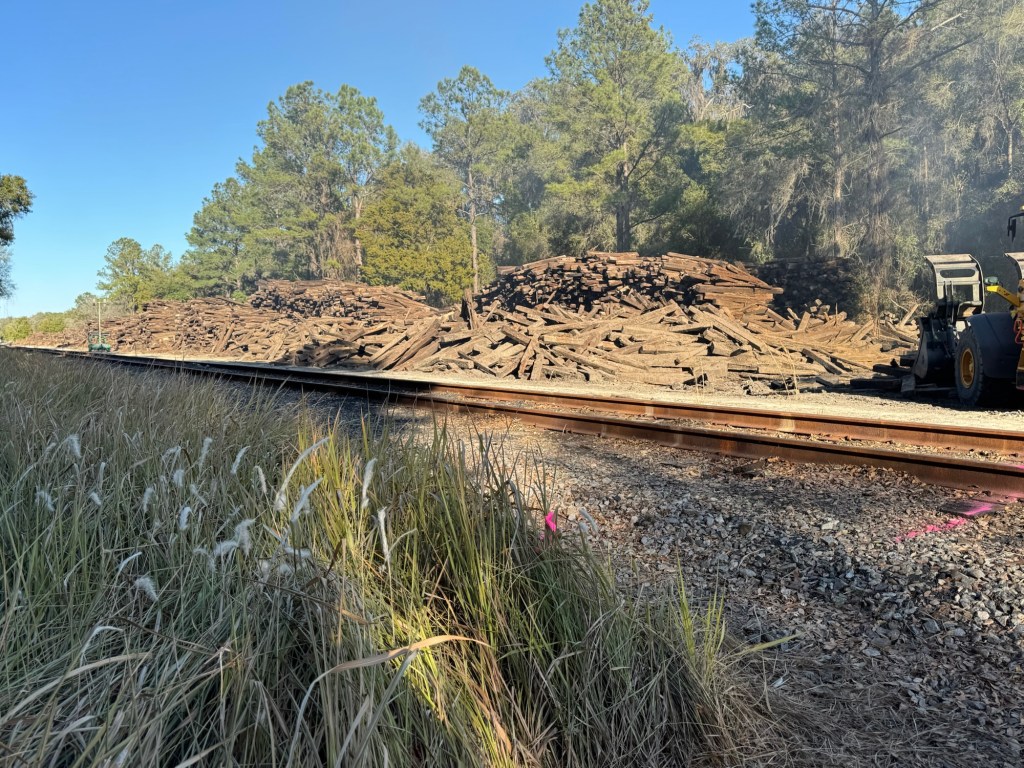
This site sits near forest, river, and aquifer. What happens here does not stay here.
Someone decided that treated railroad ties could be stored here—on the edge of a forest, beside a river, above an aquifer. That decision affects all of us. It affects our children. It affects our grandchildren.
To the people of Dunnellon: this is a moment to wake up—not in fear, but in awareness.
We have the right to ask questions.
We have the responsibility to demand transparency.
We have the ability to protect what sustains us.
Hope does not mean looking away.
Hope means standing still long enough to see what is truly there.
I will continue to document what I witness.
I will continue to ask difficult questions.
And I will continue to believe that this land, this water, this life is worth defending.
Because this is not just a place.
It is home.
All photographs © Zsuzsanna Luciano. Captured on site in Dunnellon, Florida.
Chasing Stars and Stories: A Door County Night Under the Milky Way
by a Fine Art Conservation Photographer on the Road
Last night felt like a page torn straight from a dream.
Our little traveling trio—Mike, our son, and I—has been weaving a life full of art, nature, and motion. Weekends are spent showcasing my fine art photography at juried festivals, but weekdays? They’re for wonder. We wander, we search, we listen—for places that speak not only to the lens but to the soul. And Door County, Wisconsin, spoke in poetry.
All day, we had biked along winding trails, hiked rugged forest paths, and breathed in the wild air curling off Lake Michigan’s shore. I’d already filled my mind with compositions—fragments of roots, glimmers of water through trees, the play of light on old wood. But nothing prepared me for what the night had in store.
It was Mike’s idea, of course. “Let’s shoot the lighthouse with the Milky Way,” he said. I immediately reached for my PhotoPills app. I had exactly 57 minutes before the moonrise would wash the stars away. It was a race against time and light.
Back to the campground—gear check, layers on. Quick dinner, quicker frozen custard (because… priorities). Then we drove through the twilight to our secret spot, a little spit of land reaching out toward a forgotten island, where the lighthouse stood like a sentinel under the stars.
The air was crisp. The parking lot was silent. Our breath puffed clouds into the inky night. With each step across the narrow land bridge, waves whispered on both sides. The lake breathed in sync with us. The sky stretched endlessly overhead—dark and glittering, as if the universe was watching.
When we arrived, I instinctively knew the spot. The Milky Way curled right over the lighthouse like it had always belonged there. While I set up the panoramic composition, my fingers felt the chill, but my heart raced. Every frame was a story. The long exposure pulled starlight into the sensor like memory being etched into glass.
Then—magic. The moon began its gentle rise, spilling golden light across the lake in a shimmering ribbon. A path of light, just for us. I followed it down the shoreline, capturing reflections, silhouettes, the glowing bridge between earth and sky. Around every corner was another frame I had to make. It was one of those rare nights where nature gave everything, and asked only that you notice.
Eventually, it was time to go. My body ached. My eyes were dry. But I was filled to the brim. I knew morning meant another journey—another festival, another crowd, another long drive. But the light of the stars had already burned themselves into my soul. And the hush of the water? That’s a sound I’ll carry with me always.
This is why we travel. This is why I photograph. To catch those flickering moments when the world reminds us that we belong to it—and not the other way around.
Until the next story under the stars,
✨📸
—Zsuzsanna Luciano
Csillagok és Történetek Nyomában: Egy Éjszaka Door Countyban a Tejút Alatt
Zsuzsanna, fine art conservation photographer
Tegnap este olyan volt, mint egy álomból tépett lap.
Kis utazó triónk—Mike, a fiunk és én—egy művészetben, természetben és mozgásban gazdag életet sző. A hétvégéket a fine art fotográfiám bemutatásával töltjük a válogatott fesztiválokon, de a hétköznapok? Azok a csodáké. Barangolunk, keresünk, hallgatunk—olyan helyeket, amelyek nemcsak a lencsét, hanem a lelket is megszólítják. Door County, Wisconsin, pedig költészetben szólt.
Egész nap kerékpároztunk kanyargós ösvényeken, túráztunk zord erdei utakon, és beszívva a vad levegőt a Michigan-tó partjáról. Már tele volt a fejem kompozíciókkal—gyökerek töredékei, vízcsillanások a fák között, a fény játéka a régi fán. De semmi sem készített fel arra, amit az este tartogatott.
Természetesen Mike ötlete volt. „Fényképezzük le a világítótornyot a Tejút alatt,” mondta. Azonnal elővettem a PhotoPills alkalmazásomat. Pontosan 57 percem volt, mielőtt a holdfelkelte elmosta volna a csillagokat. Versenyfutás volt az idővel és a fénnyel.
Vissza a kempingbe—felszerelés ellenőrzés, rétegek fel. Gyors vacsora, még gyorsabb fagyasztott puding (mert… prioritások). Aztán a twilighton át hajtottunk a titkos helyünkre, egy kis földnyelvre, amely egy elfeledett sziget felé nyújtózott, ahol a világítótorony állt, mint egy őr a csillagok alatt.
A levegő friss volt. A parkoló csendes. A leheletünk felhőket fújt az inkább fekete éjszakába. Minden lépéssel a keskeny földhídon, a hullámok suttogtak mindkét oldalon. A tó lélegzete szinkronban volt a miénkkel. Az ég végtelenül nyúlt fölöttünk—sötét és csillogó, mintha az univerzum figyelne.
Amikor megérkeztünk, ösztönösen tudtam, hogy hol vagyunk. A Tejút éppen a világítótorony fölé kanyarodott, mintha mindig is ott lett volna. Míg beállítottam a panoráma kompozíciót, az ujjaim érezték a hideget, de a szívem dobogott. Minden egyes felvétel egy történet volt. A hosszú expozíció a csillagfényeket a szenzorba vonta, mint egy emlék, ami üvegbe vésődik.
Aztán—varázslat. A hold szelíden emelkedni kezdett, arany fényt öntve a tóra egy csillogó szalag formájában. Egy fényút, csak nekünk. Követtem a part mentén, rögzítve a visszatükröződéseket, sziluetteket, a föld és az ég közötti fénylő hidat. Minden sarkon egy újabb felvétel várt rám. Olyan ritka éjszaka volt ez, ahol a természet mindent adott, és csak azt kérte, hogy vegyük észre.
Végül elérkezett az idő a távozásra. A testem fájt. A szemeim szárazak voltak. De tele voltam. Tudtam, hogy a reggel újabb utat jelent—újabb fesztivált, újabb tömeget, újabb hosszú utat. De a csillagok fénye már belenehezedett a lelkembe. És a víz csöndje? Az egy olyan hang, amit mindig magammal hordozok.
Ezért utazunk. Ezért fényképezem. Hogy elkapjam azokat a pislákoló pillanatokat, amikor a világ emlékeztet arra, hogy hozzá tartozunk—és nem fordítva.
A következő történetig a csillagok alatt,
✨📸
—Zsuzsanna
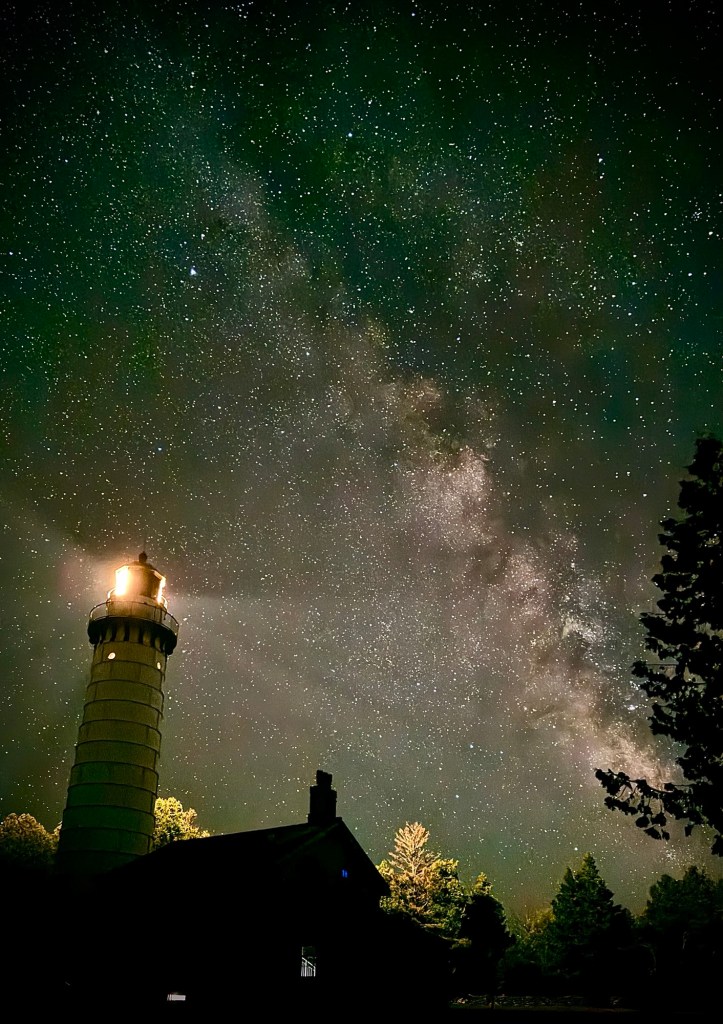
“The lighthouse stood still, cradled by stars, as the Milky Way arched overhead—guiding more than ships, it lit a path straight to the soul.”

 Luciano Photography