Posts tagged ‘#EnvironmentalConservation’
This Is My Backyard
Today I drove into downtown Dunnellon for ordinary reasons.
The post office.
My family doctor.
Groceries at Walmart.
Nothing about the day suggested disaster.
And yet, before I even parked, I saw the smoke.
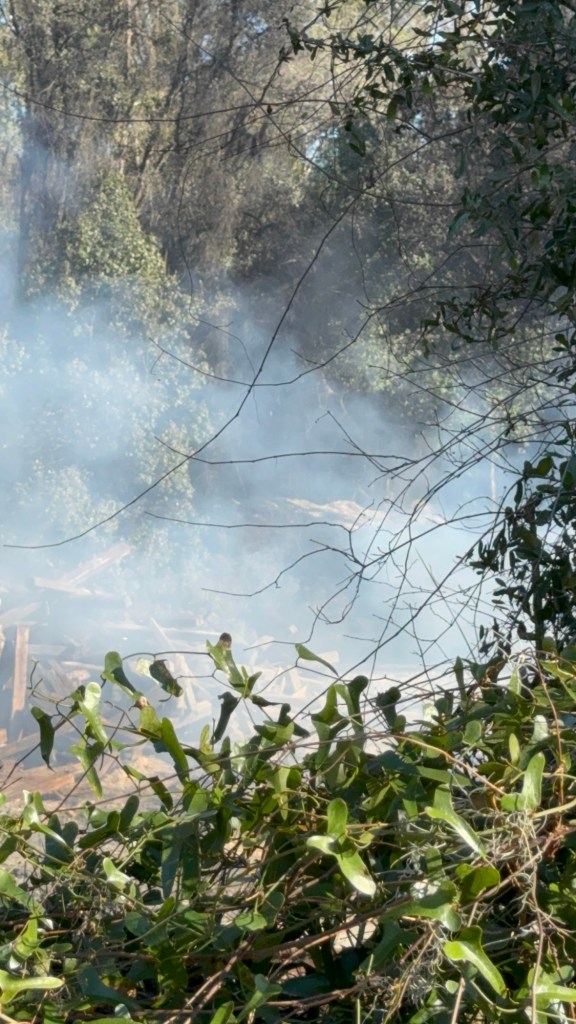
Smoke drifting through the trees. Even from a distance, it burned the eyes and followed me indoors.
By the time I reached the doctor’s office, I could smell it. The air burned my eyes. It followed me indoors. This was not something happening “somewhere else.”
After the post office, I drove closer.
I parked near the smoke and saw several trucks from Hull’s Environmental Services. A woman stood nearby. I asked questions. She was kind. Focused. Doing her job. I took photographs, though branches blocked much of the view.
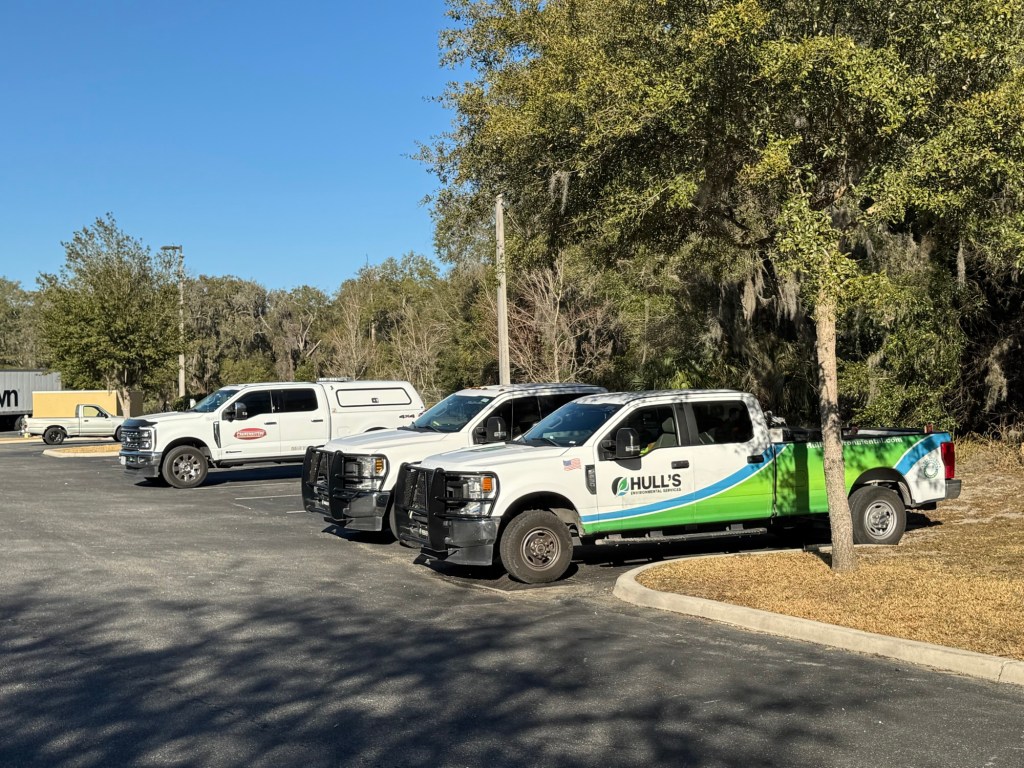
Cleanup begins at the edge of Dunnellon. Environmental response vehicles staged near the site where treated railroad ties burned—and where far more remain.
I went back to my car and gathered what I had—water bottles and a six-pack of Coke—and brought them to the workers. Cleanup work is exhausting. Care matters. She showed me where to place them, on a bench already holding donated drinks. Others had felt the same concern.
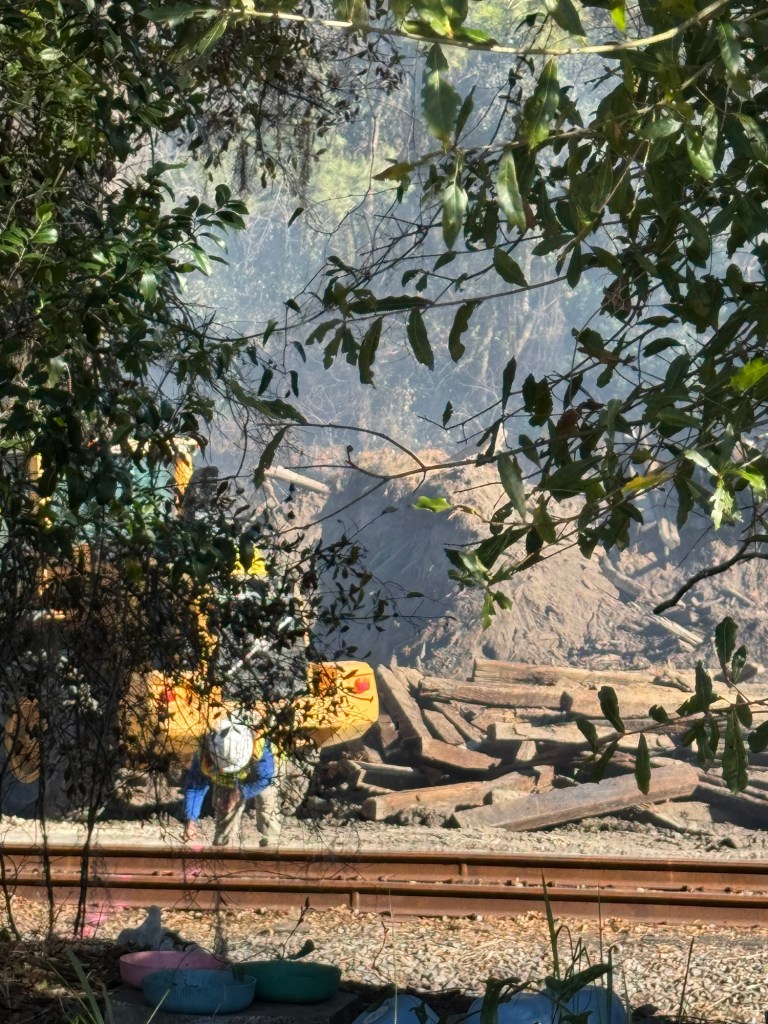
Crews working among smoke, debris, and railroad ties. A reminder that cleanup is difficult, dangerous, and human.
I asked if I could photograph from a little closer.
“Yes,” she said. “I’ll take you there so you don’t get hurt.”
She led me to the edge of the woods. There was a slope leading down toward the railroad. She warned me not to get closer than fifteen feet. As I climbed down, I turned to reassure her that I understood.
She was gone.
I stood there alone, with the rising smoke.
And then I saw it.
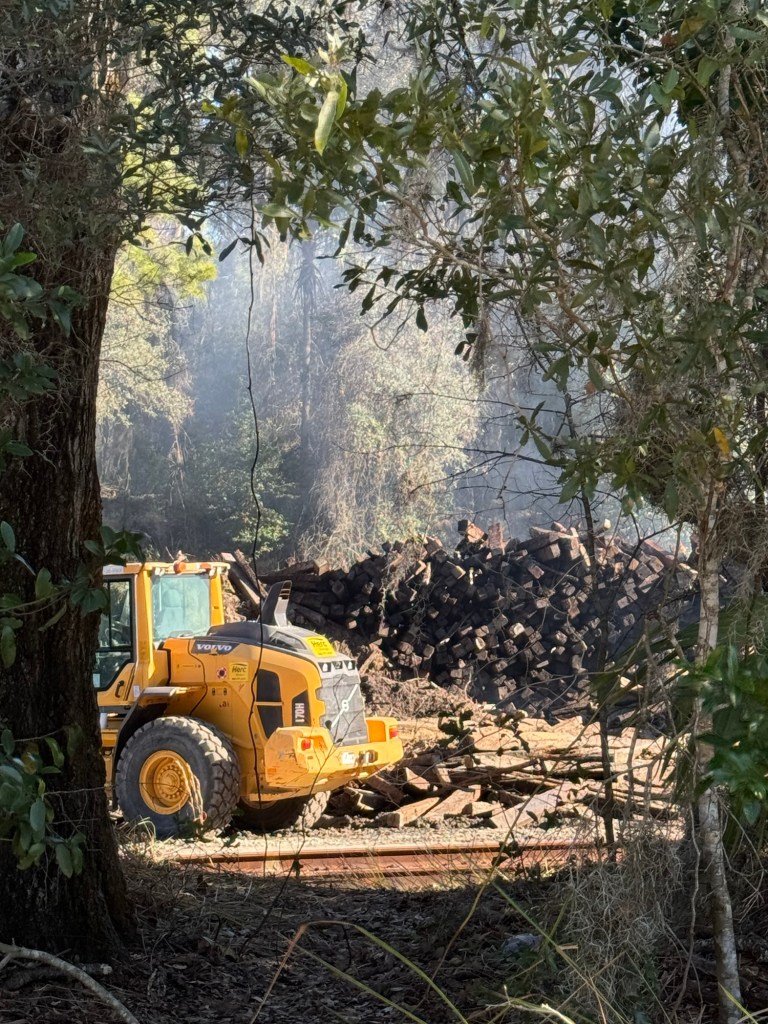
Untouched by fire, yet still infused with toxic preservatives. These piles remain.
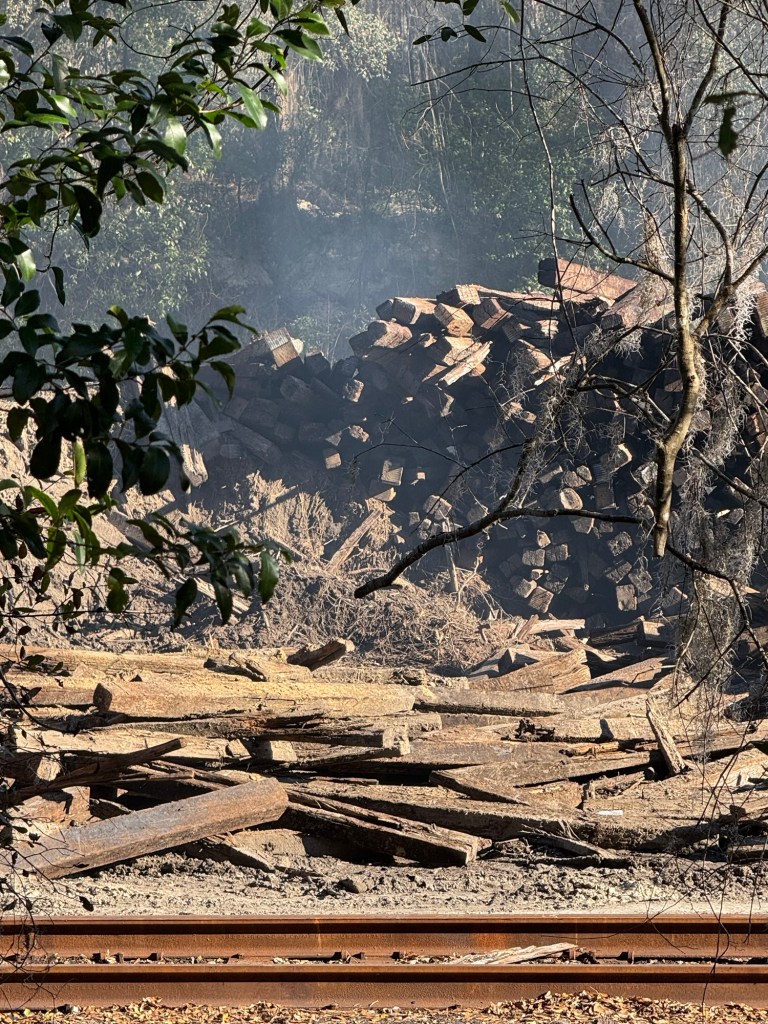
One of many piles of treated railroad ties. Some burned. Many did not.
Not just burned debris—but mountains.
Piles of railroad ties that had not burned.
Still intact.
Still toxic.
Still dangerous.
They sat there quietly, waiting.
If the fire this weekend felt catastrophic, then understand this: what remains is far worse. Multiply that destruction by ten. That is how much treated wood—wood infused with creosote and other toxic chemicals—is still sitting there.
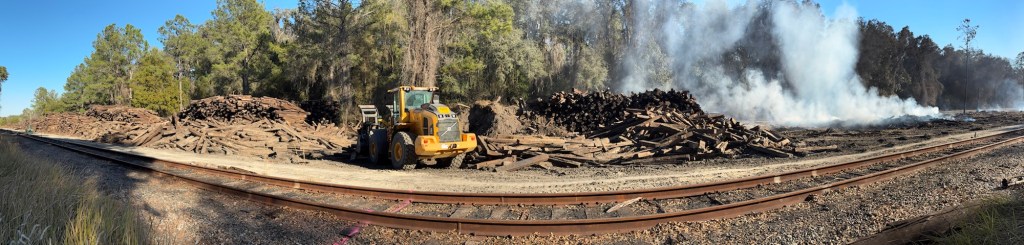
Scale matters. If the weekend fire felt catastrophic, this shows what still remains.
And as I took photographs, anger rose—not reckless anger, but the kind that comes from realizing something deeply wrong has been allowed to exist.
Because this is my town.
This is my backyard.
Rainbow Springs State Park lies just beyond this site. The Rainbow River flows there. Wildlife depends on it. And beneath it all is the aquifer that provides drinking water for our community.
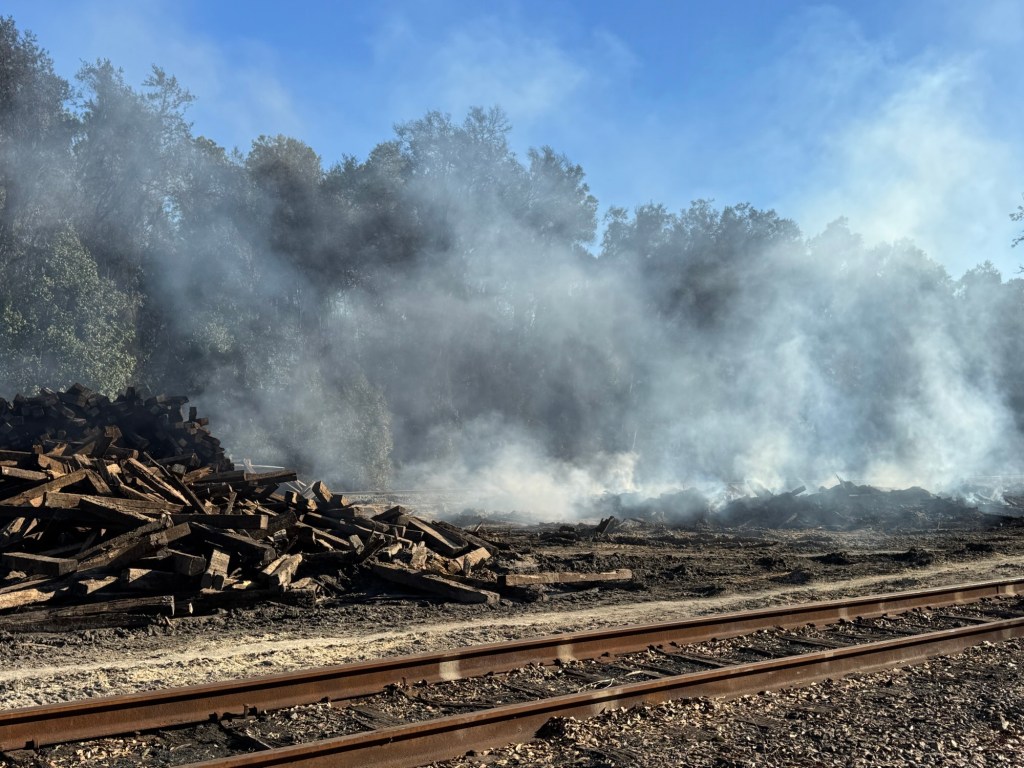
The fire has passed here. Its effects have not.
Toxins do not respect fences.
They do not stay where they are placed.
They seep. They move. They accumulate.
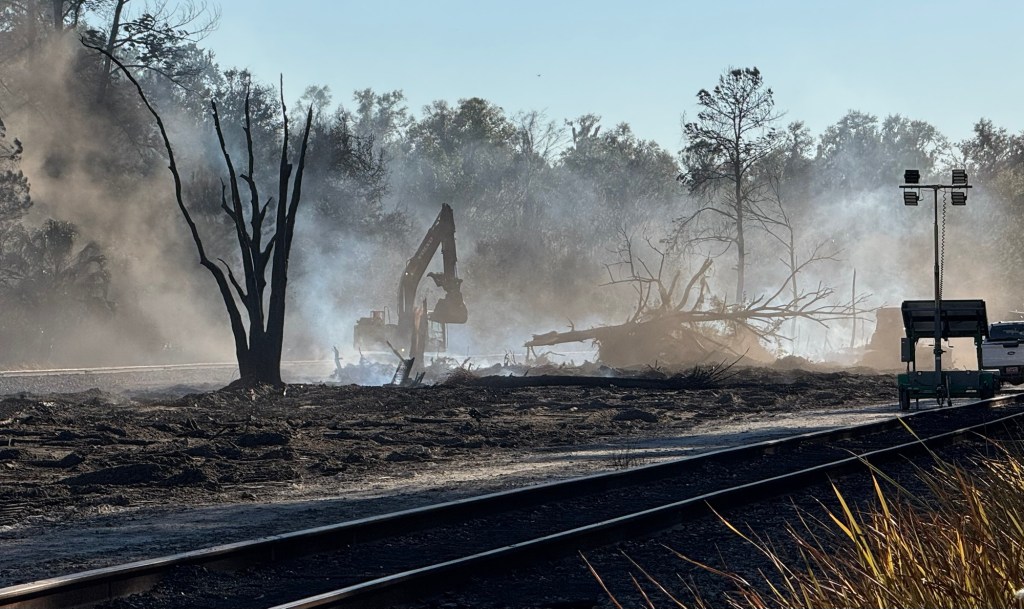
A landscape altered in a matter of days. Recovery will take far longer
So I ask the questions that must be asked.
Who is going to clean this up?
Where will this material be taken?
How will it be handled safely—when it is toxic no matter where it goes?
How long will it take for the surrounding land to recover?
When will contaminants appear in well water—five years, twenty, fifty?
Can we safely swim in the springs again?
What about the communities southeast of this site—downwind, downstream?
Environmental disasters rarely announce themselves all at once. More often, they unfold quietly. Years later, patterns emerge—illnesses, losses—without clear answers because no one wanted to connect the dots.
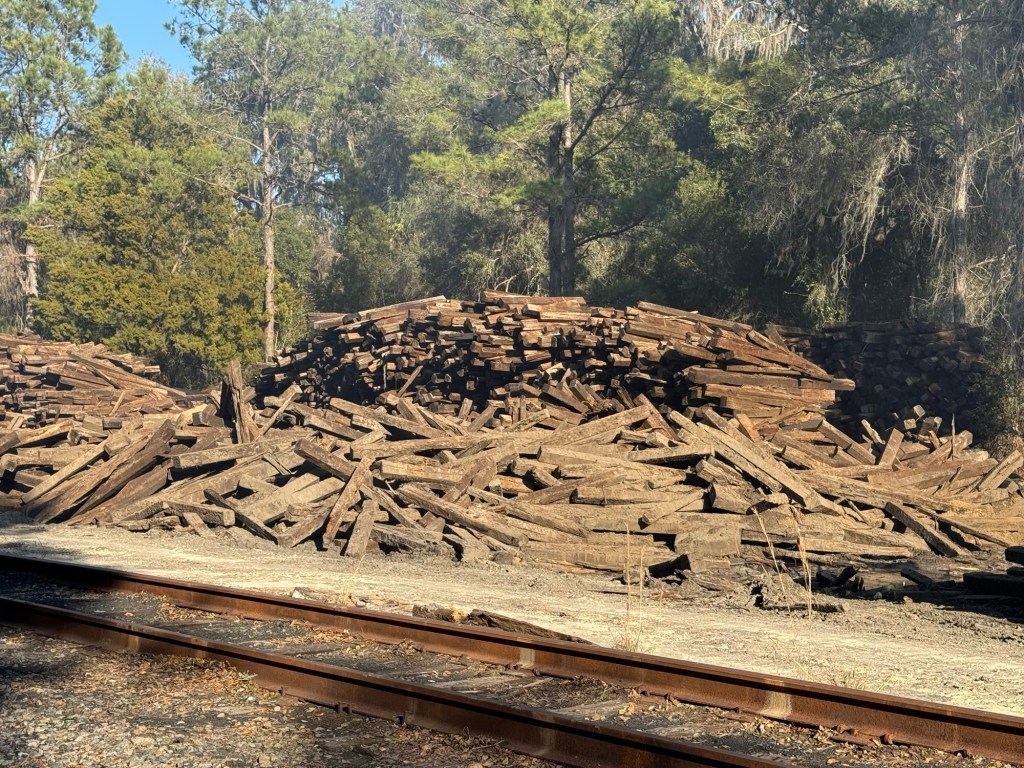
More treated railroad ties. Quiet. Waiting.
This is why silence is dangerous.
This is not about panic.
It is about responsibility.
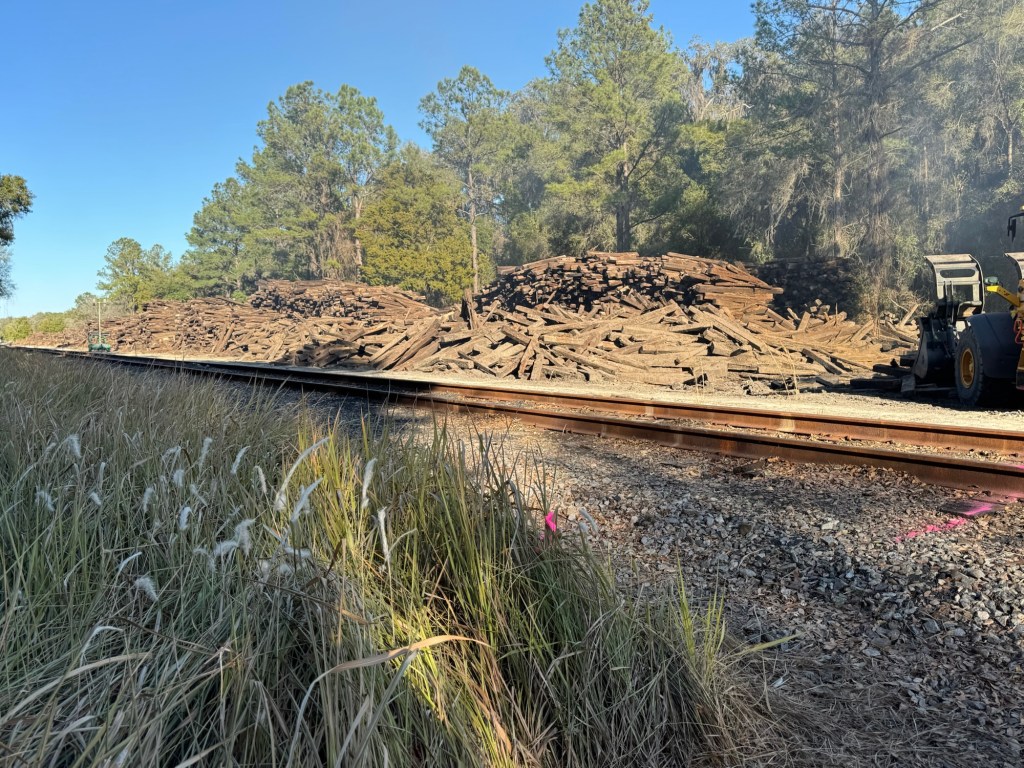
This site sits near forest, river, and aquifer. What happens here does not stay here.
Someone decided that treated railroad ties could be stored here—on the edge of a forest, beside a river, above an aquifer. That decision affects all of us. It affects our children. It affects our grandchildren.
To the people of Dunnellon: this is a moment to wake up—not in fear, but in awareness.
We have the right to ask questions.
We have the responsibility to demand transparency.
We have the ability to protect what sustains us.
Hope does not mean looking away.
Hope means standing still long enough to see what is truly there.
I will continue to document what I witness.
I will continue to ask difficult questions.
And I will continue to believe that this land, this water, this life is worth defending.
Because this is not just a place.
It is home.
All photographs © Zsuzsanna Luciano. Captured on site in Dunnellon, Florida.

 Luciano Photography