Posts from the ‘Fresh News!’ Category
Florida’s Black Bears in October: A Season of Urgency and Abundance
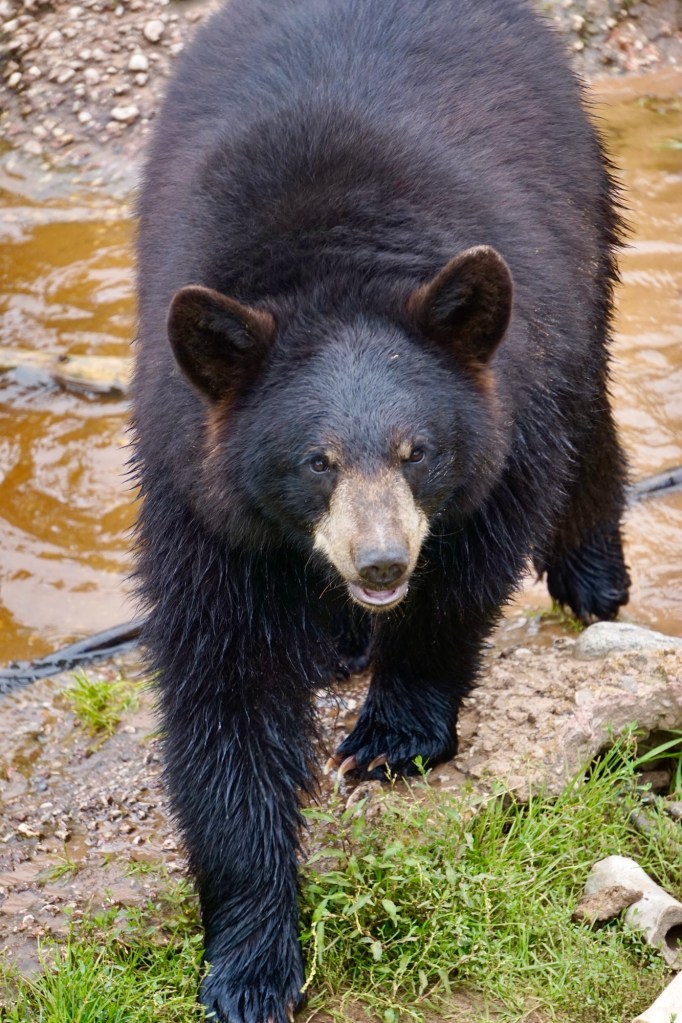
“The golden light of fall catches the sheen of a bear’s coat — a reminder that even in Florida’s warmth, nature prepares for change.”
October in Florida is a month of transition—not only for people trading swimsuits for light jackets, but for the state’s black bears, who enter a season of intense preparation. As the air turns slightly cooler and the daylight shortens, these wild residents of Florida’s forests, hammocks, and swamps shift their focus entirely to one thing: food.
Feeding for the Future
Unlike their northern relatives, Florida black bears don’t face months of deep snow or a long, frozen winter. Still, they instinctively prepare for leaner times by entering a phase called hyperphagia—a biological frenzy of eating. During October, a bear’s day is ruled by its stomach. They spend up to 20 hours foraging, searching tirelessly for high-calorie foods to build fat reserves that will sustain them through the cooler months when natural food becomes scarce.
In Florida’s oak and palmetto forests, acorns become the prized treasure. Bears crunch through the underbrush searching for patches of fallen nuts, sometimes traveling miles between feeding spots. They also feast on saw palmetto berries, wild grapes, beautyberries, and the last persimmons of the season. Opportunistic and highly adaptable, a bear will also dig for grubs, raid anthills, or peel bark for beetle larvae. Every calorie counts.
Solitary Wanderers with Overlapping Paths
Florida black bears are mostly solitary by nature, but during this time, their paths cross more often than usual. When food is abundant, multiple bears may feed in the same area with a quiet tolerance for each other. You can almost sense an unspoken truce—a mutual understanding that October’s bounty won’t last forever.
Mothers with cubs often stay close to reliable feeding zones, teaching their young where to find seasonal foods and how to prepare for the coming months. Young males, on the other hand, begin wandering farther—sometimes covering dozens of miles—to establish their own ranges. This seasonal wandering often brings bears closer to human communities, especially in suburban areas where trash cans and fruit trees mimic easy natural meals.

“Florida’s bears are excellent climbers — they’ll scale trees to escape danger, nap in the canopy, or scout for ripe fruit.”
The Conservation Challenge
For wildlife biologists and conservationists, October is a reminder of how crucial natural food sources are to the bears’ survival. When forests produce good mast crops—especially acorns and palmetto berries—bears stay deep in the woods. But in poor crop years, they’re more likely to follow their noses into neighborhoods. This is when education and coexistence matter most.
Securing garbage, removing bird feeders, and harvesting fruit from backyard trees may seem small, but they’re acts of conservation. Every human choice that keeps bears wild and wary helps preserve not only their safety but also the delicate balance of Florida’s wild spaces.
A Quiet Pause Before Winter
By late October, as the bear’s body grows heavier and their fur thickens, the pace begins to slow. In some northern parts of the state, they’ll retreat to sheltered dens—under fallen logs, in dense thickets, or beneath the roots of old trees. In the subtropics, where winter is mild, many remain active year-round, emerging on warm days to forage or explore. But even there, a calm descends over the forests—a sense that the rush of the season has passed.
Florida’s black bears remind us that even in the heat of the South, the rhythms of nature endure. Their October dance of hunger and preparation is as old as the land itself—a story of resilience, adaptation, and the quiet intelligence of wild creatures who still find a way to thrive in a rapidly changing world.
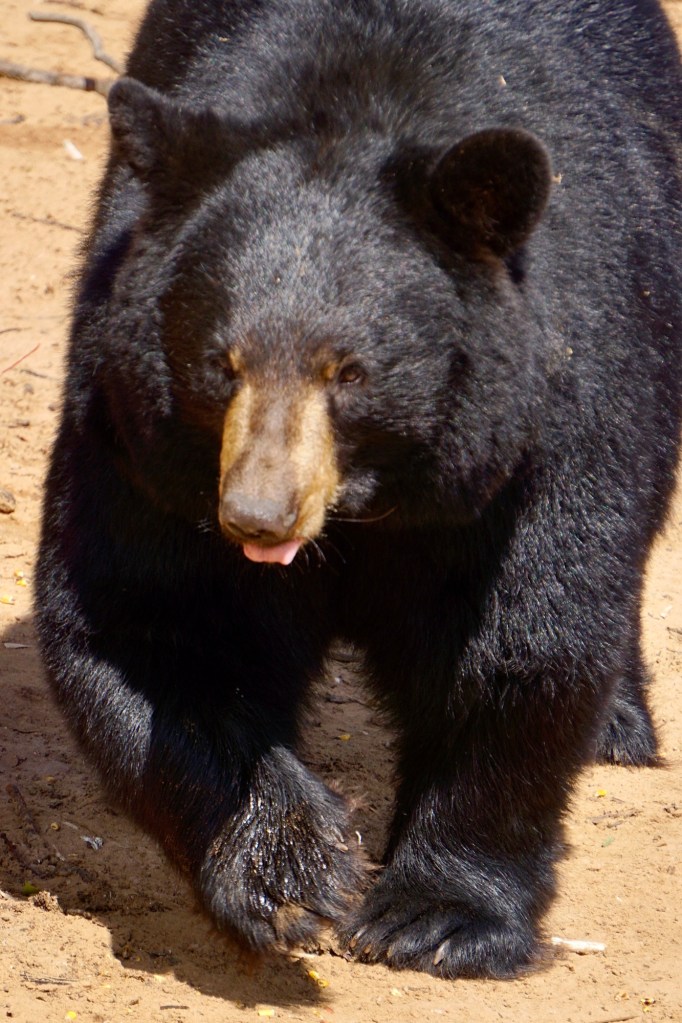
“A Florida black bear on the move — October’s mission: eat, explore, repeat.”
When Art Speaks for the Soul
By Zsuzsanna Luciano
There’s a moment every artist knows too well — the quiet pause after you share a new creation, waiting to see how it’s received.
That moment came to me recently after finishing my latest piece, Where the Earth Dreams the Stars.
It’s a black-and-white long-exposure image — a waterfall cascading beneath the Milky Way, where motion meets stillness and the Earth seems to dream of infinity.
I poured everything into it. Even through illness and exhaustion, I sat at my computer, shaping light and shadow until it felt like breath — like prayer. When I finally finished, I felt peace. Creation itself was the reward.
And then came feedback.
My husband, who has always been honest and grounded, said he preferred color. He reminded me that some of my color images had sold better or received recognition in competitions. His words weren’t cruel — just honest. But still, they stung a little.
As artists, we sometimes forget how vulnerable it feels to create something straight from the soul and then place it before the world — or even before the people we love most.
It’s not just an image; it’s a heartbeat made visible.
But that morning, instead of letting discouragement take root, I reminded myself of something simple but true:
This piece came through me, not just from me. It was a whisper from the Creator, expressed through my lens.
So when someone critiques the work, they’re really critiquing the divine conversation I merely recorded.
And how could I feel bad about that?
Art is subjective. What moves one person may leave another untouched. But when art flows from a place of truth, it always finds the hearts that are meant to see it.
Later, when the competition results came back and neither of my entries received a merit, I smiled. Not because I didn’t care — but because I realized I no longer needed validation to feel complete.
I had already won the moment I created something honest.
That’s the quiet liberation of being an artist: knowing that your worth isn’t measured in ribbons or likes, but in the courage it takes to reveal your soul.
So today, I celebrate not just the image, but the conversation it started — between me, my art, my husband, and something far greater than both of us.
Because in the end, creation itself is an act of faith.
And faith, like art, doesn’t always need to be understood — only felt.
🕊️ Artist’s Note
Where the Earth Dreams the Stars is now available as a limited-edition fine art print on Chromaluxe aluminum.
It’s a reminder that even in darkness, light finds a way to flow — and that creation, in all its forms, is the most divine conversation we can have.
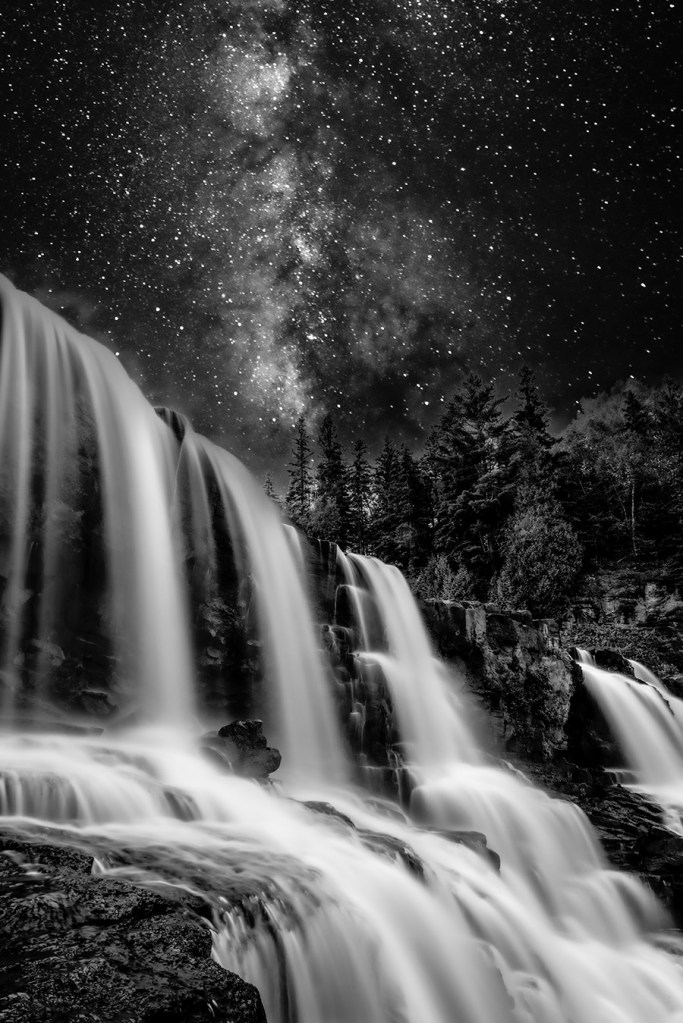
A long-exposure photograph capturing the silent dialogue between motion and stillness — between Earth and infinity.
🌌 Chasing the Northern Lights: A Fun Guide to Aurora Photography Settings
Have you ever looked up at the night sky, seen a shimmering green arc, and thought: Wow, if only I could capture that! Good news—you can! Whether you’re a curious beginner or one of my art collectors who loves the stories behind my images, this guide is designed to make aurora photography approachable, fun, and rewarding.
Let’s walk through how to capture weak, medium, and strong auroras with your camera, your GoPro, and even with sweeping panoramic images.
📷 Camera Settings for Aurora Photography
The aurora is a living, dancing light show. It can be faint and ghostly one minute, then bright and racing across the sky the next. That means your settings need to adapt to its strength.
🌟 Strong Aurora
ISO: 800–1600 Shutter: 2–6 seconds Aperture: f/2.8 (or wider) Why: The lights are bright and fast. Short exposures keep them crisp, not blurry.
✨ Medium Aurora
ISO: 1600–3200 Shutter: 6–10 seconds Aperture: f/2.8 Why: Balanced approach—enough light without smearing the details.
🌙 Weak Aurora
ISO: 3200–6400 Shutter: 10–20 seconds Aperture: f/2.8 Why: Push your settings to pull detail out of the faint glow.
💡 Pro Tip: Check your histogram after each shot—if everything is clumped to the left, it’s too dark!
🎥 GoPro Timelapse Settings
Yes, the humble GoPro is a powerful aurora-capturing machine! It won’t rival a DSLR in low light, but it’s perfect for timelapse videos that bring the aurora’s dance to life.
Mode: Night Lapse Photo ISO Max: 1600–3200 Shutter: Auto, or fixed at 15–20 seconds in very dark skies Interval: 30–60 seconds (longer = smoother timelapse) White Balance: Native or 4000K for natural tones
Mount it on a tripod, aim it north, and let it click away while you enjoy the show.
🖼️ Panorama Aurora Photography
Sometimes the aurora stretches from horizon to horizon—too wide for even your widest lens. That’s when panorama comes to the rescue.
Mount your camera on a sturdy tripod. Lock your settings (ISO, aperture, shutter) for consistency. Start at one edge of the aurora and shoot your first frame. Rotate the camera about 30% overlap and shoot again. Continue across the sky until you’ve covered the whole arc. Stitch the images later using Lightroom, Photoshop, or PTGui.
💡 Pro Tip: Use portrait orientation (vertical shots). You’ll capture more sky and foreground to play with in your stitched panorama.
🎒 Aurora Photography Packing List
Make sure you’re ready when the sky lights up. Here’s what I always bring:
✅ Camera with wide-angle lens (f/2.8 or wider) ✅ Tripod (rock solid is best!) ✅ Intervalometer or remote release ✅ GoPro (for timelapse fun) ✅ Extra batteries (the cold drains them fast!) ✅ Headlamp with red light (to protect night vision) ✅ Warm layers & hot chocolate 😉
✨ Final Thoughts
Aurora photography is half science, half magic. Settings matter, yes—but so does patience, location, and a willingness to stay up past midnight. Some nights the aurora dances wildly; other nights it hides. But when everything aligns—the clear skies, the geomagnetic storm, your camera pointed north—it feels like the universe is painting just for you.
So whether you’re chasing the northern lights in Wisconsin, Iceland, Alaska, or beyond, I hope this guide helps you feel confident to give it a try. Who knows? Maybe you’ll capture an image that becomes your own treasured piece of art.
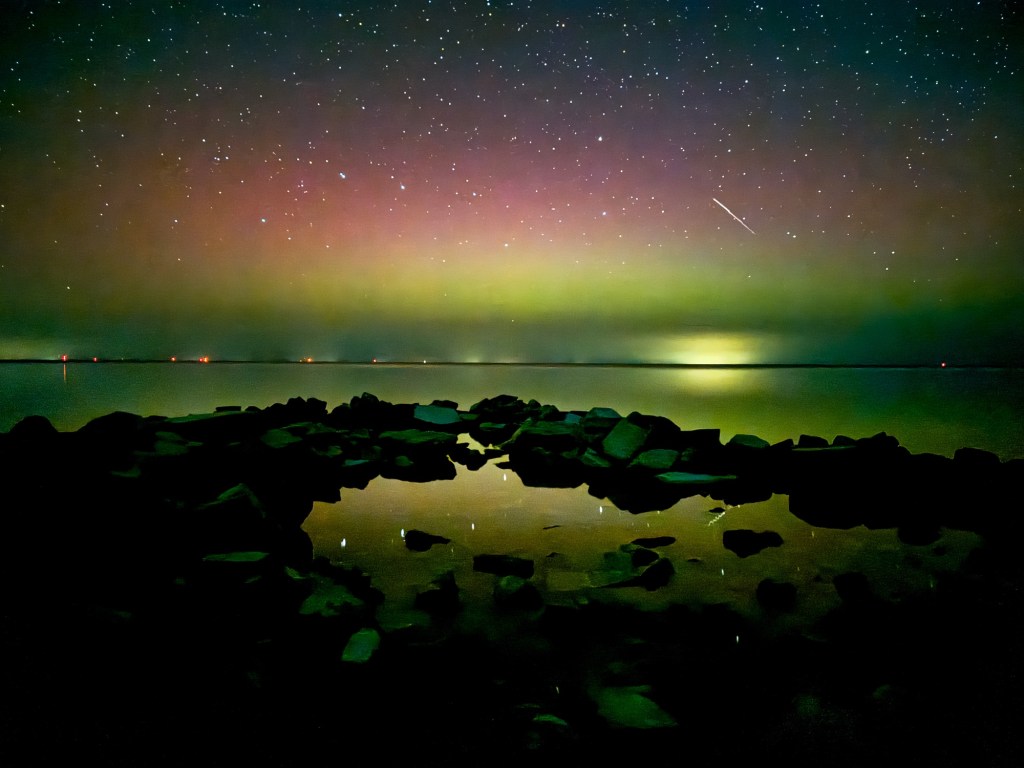
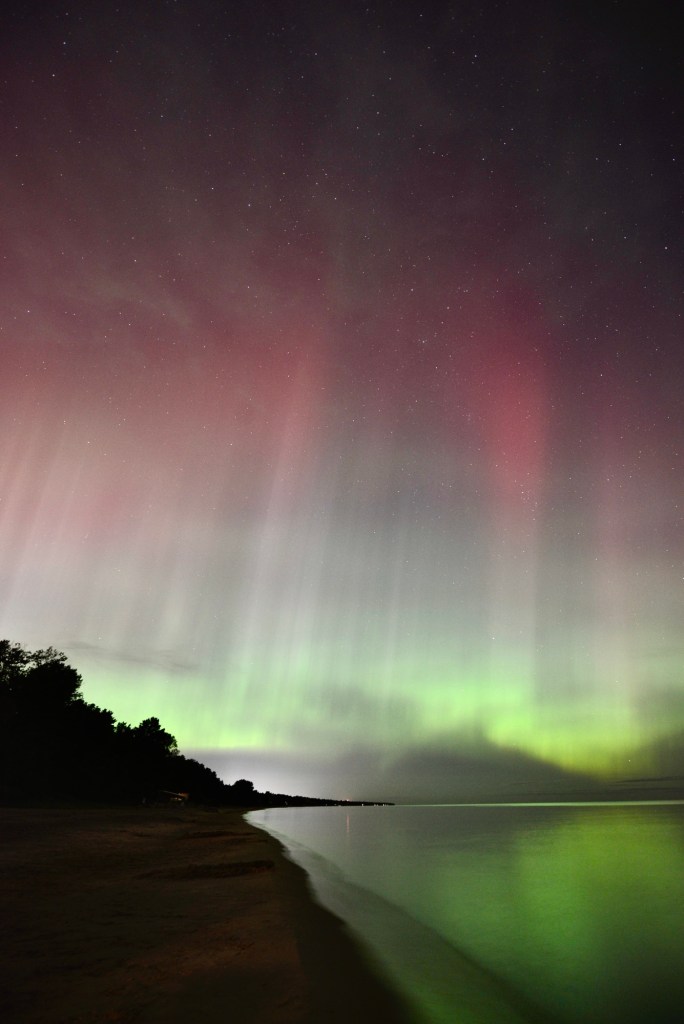
“Aurora Borealis glowing over Peninsula State Park in Door County, Wisconsin – September 1, 2025. A night when the sky turned into a canvas of dancing light, perfectly illustrating the magic that careful settings and patience can reveal.”
🌌 When the Sky Dances: How the Aurora Borealis Affects the Human Body and Mind
By Zsuzsanna Luciano, Fine Art Conservation Photographer
Last Year, I Lost My Direction Beneath the Northern Lights
Last fall, I found myself deep in the Wisconsin woods, bundled in wool and fleece, standing under a sky that shimmered like a celestial ocean. The aurora borealis was directly overhead for several hours – green flames twisting into violet ribbons, pulsing and expanding like some living cosmic entity.
I was there to photograph it. But something strange happened.
I lost my sense of direction. Not poetically. Literally. My inner compass—normally sharp from years of navigating wilderness—just shut off. I walked in the wrong direction for nearly an hour one night, convinced I was heading back to our camper.
I felt euphoric, mesmerized, and oddly disconnected from time. And it turns out, I’m not alone.
What Exactly Is the Aurora Borealis?
The aurora is caused by charged particles from the sun colliding with gases in Earth’s atmosphere. These interactions generate breathtaking light displays—commonly green, but also pink, purple, red, and even blue.
It’s more than just pretty lights. The aurora is an electromagnetic phenomenon, affecting Earth’s magnetic field—and possibly us humans, too.
The Surprising Effects on the Human Body
🧭 1. Magnetic Confusion: Your Internal GPS May Malfunction
Did you know your brain contains tiny magnetic particles called magnetite? Like migratory birds, humans may use Earth’s magnetic field for orientation.
When auroral activity is strong, that magnetic field fluctuates—and that might throw off your sense of direction.
When I was under the aurora for multiple nights, I completely lost my bearings. GPS helped, but something inside me wasn’t working the same. It’s both fascinating and a little spooky.
😵💫 2. Dreamy, Euphoric, and a Bit Foggy
Many aurora-watchers report experiencing:
A dreamlike or timeless state Deep emotional surges—tears, awe, peace Cognitive fog, forgetfulness, or mild confusion
Scientists suggest this could be due to:
Melatonin disruption (the light confuses your sleep-wake cycle) Electromagnetic brainwave interaction, which may influence emotion or perception Sleep deprivation and overstimulation from the experience itself
Personally, I felt like I was floating through a lucid dream I didn’t want to wake from. My camera kept me tethered to reality, but barely.
📸 3. The Photographer’s Experience: Art, Exhaustion, and Ecstasy
Photographing the aurora is a unique blend of technical patience and emotional overwhelm. You wait for hours in the dark, monitor cloud cover, adjust your camera with freezing fingers… and then—boom—the sky explodes.
But it takes a toll:
Extreme cold (I’ve shot in -22°F with a camera battery tucked in my bra!) Sleep deprivation (auroras peak between 10 p.m. and 2 a.m.) Isolation and mental strain, especially during multi-night shoots
During one shoot in Iceland, I lived off trail mix and instant coffee for four days, barely sleeping between bursts of light and wonder. I wasn’t tired at the time—but I crashed hard afterward.
Are There Healing Effects of the Aurora?
Some believe auroras have healing properties, particularly in the realm of energy and bioelectromagnetism. While research is still emerging, anecdotal experiences include:
Vivid dreams and increased intuition Enhanced meditative or spiritual states A sense of deep reconnection with nature and the cosmos
📘 Curious? Explore Bioelectromagnetics Journal
Fascinating Aurora Facts
🌍 Other planets have auroras—Jupiter’s are enormous 👂 Some people hear them—a faint crackling or hissing sound 🐾 Animals, including whales and reindeer, react to auroral shifts 📸 You can photograph auroras in real-time with high ISO and a tripod 📱 Use apps like My Aurora Forecast to plan your night
Final Thoughts: When the Lights Find You
The aurora borealis isn’t just something to see—it’s something that happens to you. It changes your rhythm, your senses, even your perception of time and direction.
As a photographer, I live for these moments. But as a human being, I leave changed each time.
So if you ever find yourself under a sky that glows like a living flame, don’t be surprised if you forget where you are—or even who you are—for just a little while. That’s part of the magic.
About Me
I’m a fine art conservation photographer traveling across North America with my husband and son. When I’m not exhibiting at juried art festivals, I chase storms, wildlife, and the mysteries of the natural world. Follow along on IG or join my newsletter for behind-the-scenes stories and new limited edition art drops.

Chasing Stars and Stories: A Door County Night Under the Milky Way
by a Fine Art Conservation Photographer on the Road
Last night felt like a page torn straight from a dream.
Our little traveling trio—Mike, our son, and I—has been weaving a life full of art, nature, and motion. Weekends are spent showcasing my fine art photography at juried festivals, but weekdays? They’re for wonder. We wander, we search, we listen—for places that speak not only to the lens but to the soul. And Door County, Wisconsin, spoke in poetry.
All day, we had biked along winding trails, hiked rugged forest paths, and breathed in the wild air curling off Lake Michigan’s shore. I’d already filled my mind with compositions—fragments of roots, glimmers of water through trees, the play of light on old wood. But nothing prepared me for what the night had in store.
It was Mike’s idea, of course. “Let’s shoot the lighthouse with the Milky Way,” he said. I immediately reached for my PhotoPills app. I had exactly 57 minutes before the moonrise would wash the stars away. It was a race against time and light.
Back to the campground—gear check, layers on. Quick dinner, quicker frozen custard (because… priorities). Then we drove through the twilight to our secret spot, a little spit of land reaching out toward a forgotten island, where the lighthouse stood like a sentinel under the stars.
The air was crisp. The parking lot was silent. Our breath puffed clouds into the inky night. With each step across the narrow land bridge, waves whispered on both sides. The lake breathed in sync with us. The sky stretched endlessly overhead—dark and glittering, as if the universe was watching.
When we arrived, I instinctively knew the spot. The Milky Way curled right over the lighthouse like it had always belonged there. While I set up the panoramic composition, my fingers felt the chill, but my heart raced. Every frame was a story. The long exposure pulled starlight into the sensor like memory being etched into glass.
Then—magic. The moon began its gentle rise, spilling golden light across the lake in a shimmering ribbon. A path of light, just for us. I followed it down the shoreline, capturing reflections, silhouettes, the glowing bridge between earth and sky. Around every corner was another frame I had to make. It was one of those rare nights where nature gave everything, and asked only that you notice.
Eventually, it was time to go. My body ached. My eyes were dry. But I was filled to the brim. I knew morning meant another journey—another festival, another crowd, another long drive. But the light of the stars had already burned themselves into my soul. And the hush of the water? That’s a sound I’ll carry with me always.
This is why we travel. This is why I photograph. To catch those flickering moments when the world reminds us that we belong to it—and not the other way around.
Until the next story under the stars,
✨📸
—Zsuzsanna Luciano
Csillagok és Történetek Nyomában: Egy Éjszaka Door Countyban a Tejút Alatt
Zsuzsanna, fine art conservation photographer
Tegnap este olyan volt, mint egy álomból tépett lap.
Kis utazó triónk—Mike, a fiunk és én—egy művészetben, természetben és mozgásban gazdag életet sző. A hétvégéket a fine art fotográfiám bemutatásával töltjük a válogatott fesztiválokon, de a hétköznapok? Azok a csodáké. Barangolunk, keresünk, hallgatunk—olyan helyeket, amelyek nemcsak a lencsét, hanem a lelket is megszólítják. Door County, Wisconsin, pedig költészetben szólt.
Egész nap kerékpároztunk kanyargós ösvényeken, túráztunk zord erdei utakon, és beszívva a vad levegőt a Michigan-tó partjáról. Már tele volt a fejem kompozíciókkal—gyökerek töredékei, vízcsillanások a fák között, a fény játéka a régi fán. De semmi sem készített fel arra, amit az este tartogatott.
Természetesen Mike ötlete volt. „Fényképezzük le a világítótornyot a Tejút alatt,” mondta. Azonnal elővettem a PhotoPills alkalmazásomat. Pontosan 57 percem volt, mielőtt a holdfelkelte elmosta volna a csillagokat. Versenyfutás volt az idővel és a fénnyel.
Vissza a kempingbe—felszerelés ellenőrzés, rétegek fel. Gyors vacsora, még gyorsabb fagyasztott puding (mert… prioritások). Aztán a twilighton át hajtottunk a titkos helyünkre, egy kis földnyelvre, amely egy elfeledett sziget felé nyújtózott, ahol a világítótorony állt, mint egy őr a csillagok alatt.
A levegő friss volt. A parkoló csendes. A leheletünk felhőket fújt az inkább fekete éjszakába. Minden lépéssel a keskeny földhídon, a hullámok suttogtak mindkét oldalon. A tó lélegzete szinkronban volt a miénkkel. Az ég végtelenül nyúlt fölöttünk—sötét és csillogó, mintha az univerzum figyelne.
Amikor megérkeztünk, ösztönösen tudtam, hogy hol vagyunk. A Tejút éppen a világítótorony fölé kanyarodott, mintha mindig is ott lett volna. Míg beállítottam a panoráma kompozíciót, az ujjaim érezték a hideget, de a szívem dobogott. Minden egyes felvétel egy történet volt. A hosszú expozíció a csillagfényeket a szenzorba vonta, mint egy emlék, ami üvegbe vésődik.
Aztán—varázslat. A hold szelíden emelkedni kezdett, arany fényt öntve a tóra egy csillogó szalag formájában. Egy fényút, csak nekünk. Követtem a part mentén, rögzítve a visszatükröződéseket, sziluetteket, a föld és az ég közötti fénylő hidat. Minden sarkon egy újabb felvétel várt rám. Olyan ritka éjszaka volt ez, ahol a természet mindent adott, és csak azt kérte, hogy vegyük észre.
Végül elérkezett az idő a távozásra. A testem fájt. A szemeim szárazak voltak. De tele voltam. Tudtam, hogy a reggel újabb utat jelent—újabb fesztivált, újabb tömeget, újabb hosszú utat. De a csillagok fénye már belenehezedett a lelkembe. És a víz csöndje? Az egy olyan hang, amit mindig magammal hordozok.
Ezért utazunk. Ezért fényképezem. Hogy elkapjam azokat a pislákoló pillanatokat, amikor a világ emlékeztet arra, hogy hozzá tartozunk—és nem fordítva.
A következő történetig a csillagok alatt,
✨📸
—Zsuzsanna
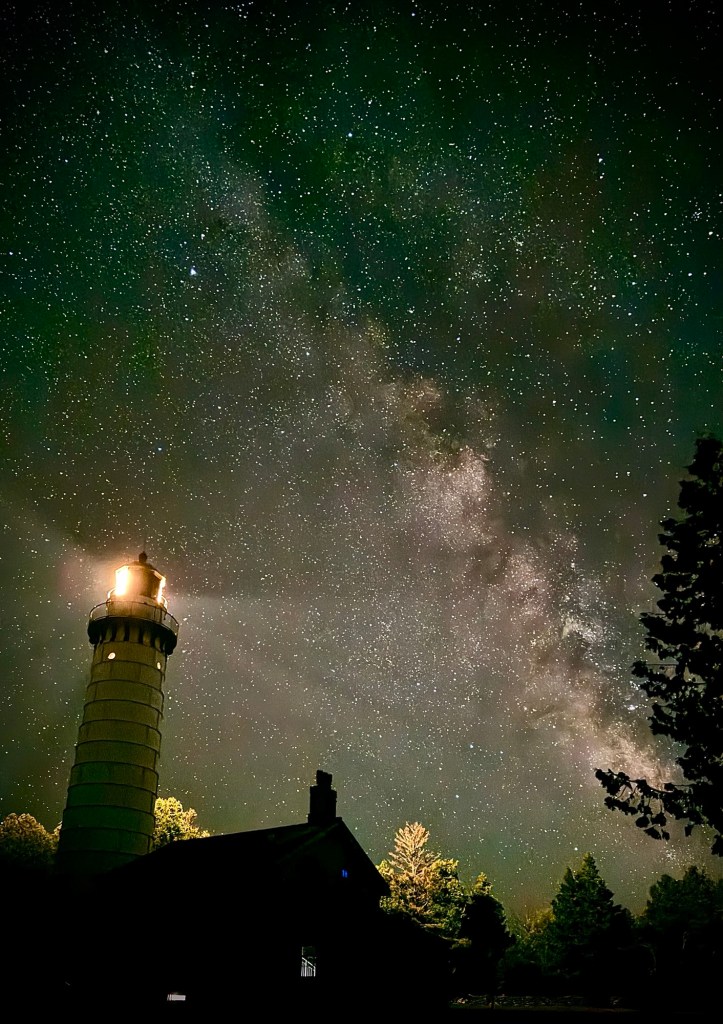
“The lighthouse stood still, cradled by stars, as the Milky Way arched overhead—guiding more than ships, it lit a path straight to the soul.”
Honored to Receive Best in Photography at the Magnificent Mile Art Fair
6/21/25
I am thrilled to share that I was awarded Best in Photography at the Magnificent Mile Art Fair, hosted by Amdur Production in the iconic downtown Chicago! This recognition fills my heart with gratitude, especially as I stand shoulder to shoulder with such a talented group of artists who inspire me daily.
Being part of this vibrant community is truly humbling. Each artist brings their unique perspective and creativity, making the experience incredibly enriching. I feel honored to be recognized in a space that celebrates artistic expression and innovation.
The Importance of Art and Nature
Art serves as a powerful connection between us and the natural world. With every photograph I take, I aim to capture the beauty and fragility of our environment. It’s essential to remind ourselves of this connection and the importance of preserving it for future generations.
As artists, we have a responsibility to convey these messages through our work. Nature’s beauty is not just something to be appreciated but also a call to action. We must educate the younger generations about the significance of protecting our planet, teaching them to take only what they need and to cherish the resources around them.
Empowering Future Generations
By fostering a deep appreciation for art and nature, we can ignite a passion within young minds to become stewards of our environment. Our role as artists extends beyond creating; we are also storytellers and mentors. Through our art, we can instill values of conservation, sustainability, and respect for nature.
As I reflect on this recent achievement, I am more motivated than ever to continue using my photography to advocate for the natural world. Each photograph is a reminder of the beauty we must protect and the narrative we must share.
Thank you to everyone who has supported me on this journey, and to Amdur Production for creating such a meaningful platform for artists. Here’s to celebrating art, nature, and the vital connection between the two. Let’s continue to inspire, educate, and make a difference together!
In conclusion, I hope my journey encourages you to connect with both art and nature. Let’s work together to foster a world where future generations can thrive in a healthy, sustainable environment.
Stay inspired!
Zsuzsanna Luciano
IG/LucianoPhotography
http://www.zsuzsannaluciano.com


 Luciano Photography