Archive for
When Everything Almost Went Wrong — And the Springs Opened Anyway
2/17/26
Some days begin with quiet intention.
Other days begin with a hiss.
Yesterday was the second kind.
We arrived at Crystal River before the sun had fully warmed the water. I had that familiar feeling in my chest — hope mixed with anticipation. Winter manatee season. Low tide approaching. The possibility of something extraordinary.
And then…
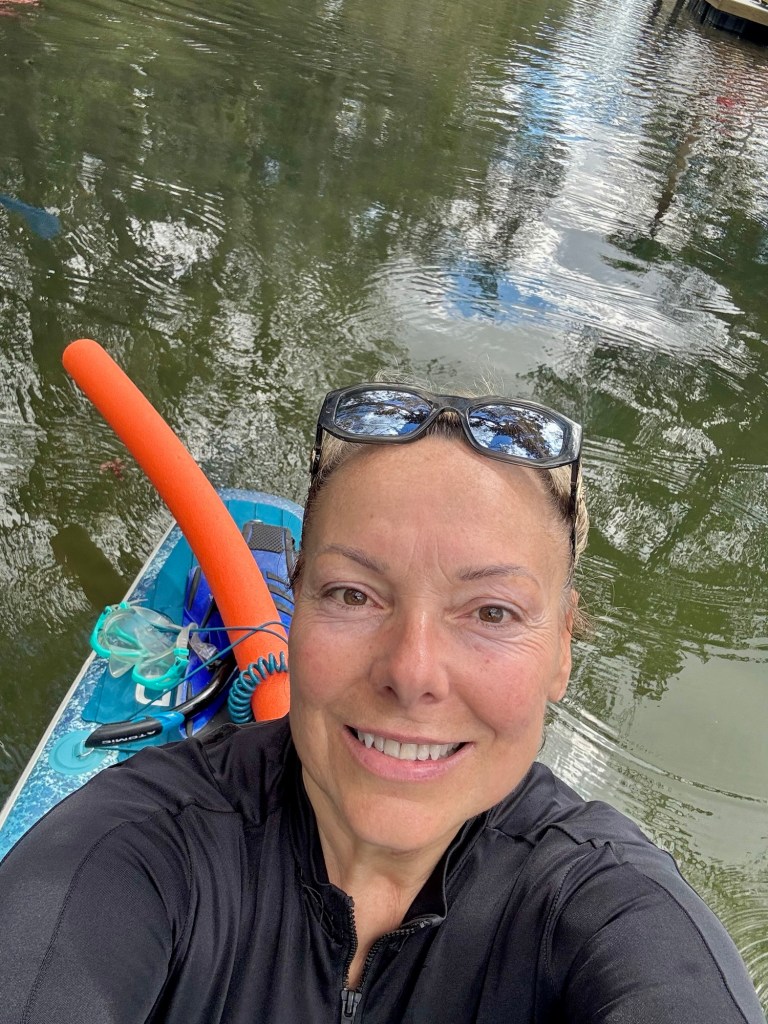
My inflatable paddle board started leaking.
Not a dramatic puncture. Not a catastrophic seam failure. Just that persistent, unsettling hiss near the valve — the kind that makes you question every decision before you even launch.
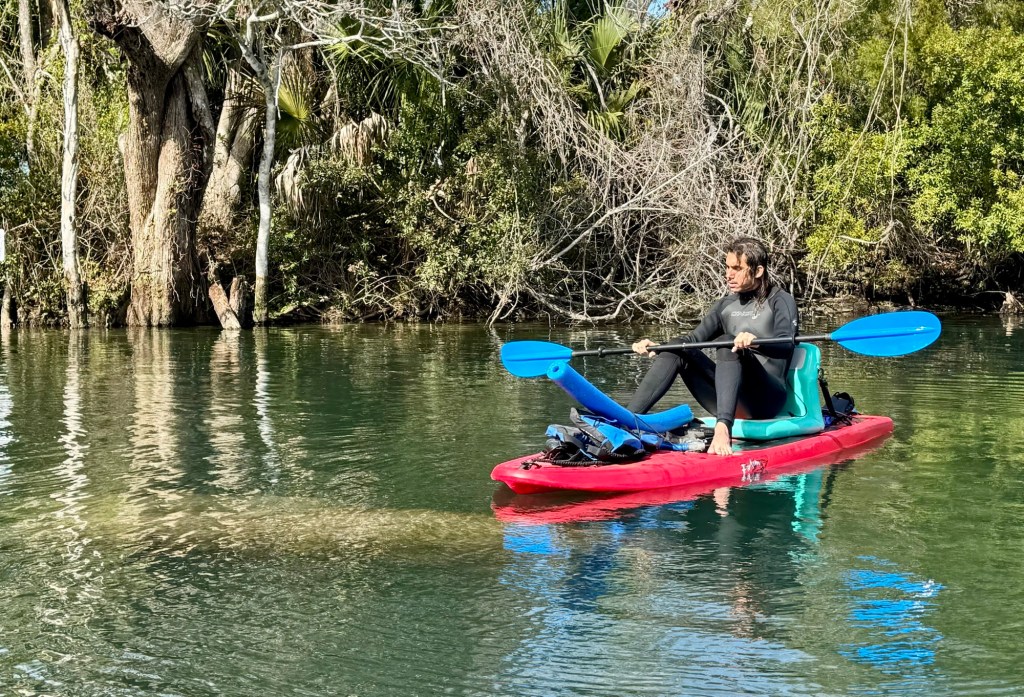
As we were assessing that situation, my son’s board lost its plug.
Yes. The plug.
And just to complete the trifecta, my video setup decided it didn’t want to cooperate. The camera would not record properly underwater. Settings reset. Mode confusion. Technology reminding me who is really in control.
For a moment, it felt like the day was slipping away before it began.
And then something unexpected happened.
The spring was open.
In winter.
During manatee season.
We were allowed to swim in.
That almost never aligns so perfectly. Rangers had the gates open. Manatee numbers were manageable. The water was calm. The air was cool but not harsh. It felt like a quiet gift.
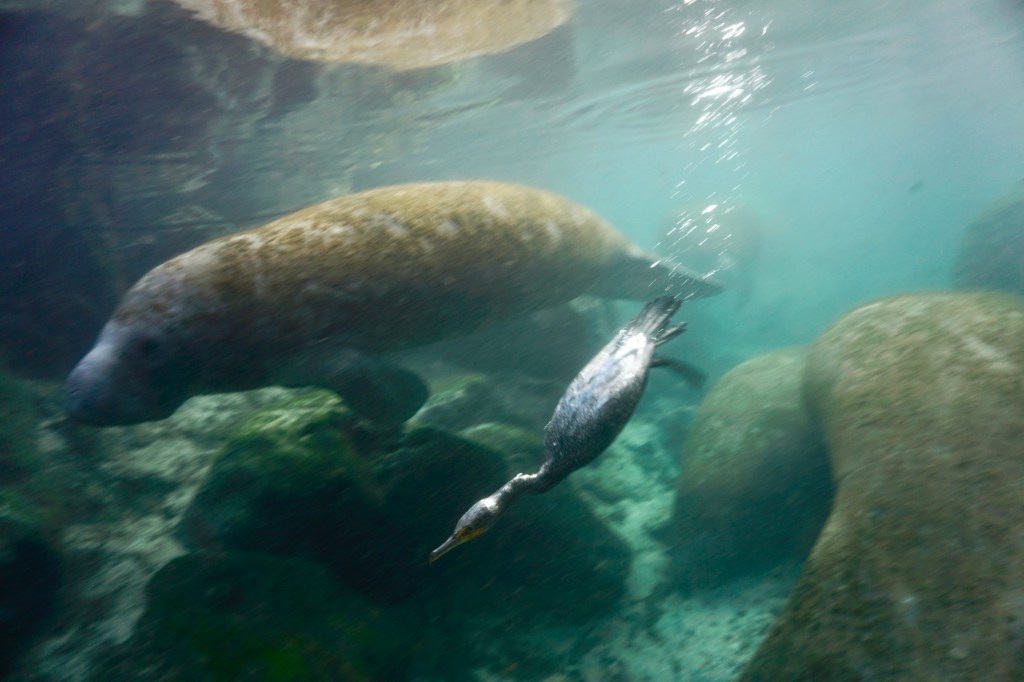
Visibility was incredible. Blue water stretched clean and luminous beneath the surface. The kind of clarity that makes the limestone glow and the animals appear almost suspended in glass.

And there weren’t many people.
No tour flotillas circling. No chaotic splashing. Just stillness.
The manatees moved with the falling tide, just as I had hoped. Slow, deliberate, ancient. Some cruised past in open blue water. Others drifted near the surface, their reflections creating perfect mirrored portals.

One frame stopped me completely — an underwater moment with an anhinga cutting through the water column. Bird above, hunter below, fish flashing silver. It was raw Florida. Not curated. Not posed. Real.
The leaking board hissed quietly in the background all morning. It never failed. It simply reminded me that field work is never perfectly controlled.
The missing plug became a story we’ll laugh about.
The non-working video? It forced me to be present. To photograph instead of chase footage. To observe instead of troubleshoot.
Sometimes the problems strip away the distraction.
What remained was water. Light. Breath. Blue.

And a reminder:
Nature does not reward perfect planning.
It rewards patience.
Tomorrow we go again.
Because when the springs open in winter, and the tide pulls life inward, and the water turns that impossible shade of blue — you show up.
Even if something is hissing.
What We Are Being Told — And What We Still Need to Ask
Today, the City of Dunnellon released an official statement regarding the railroad tie fire.
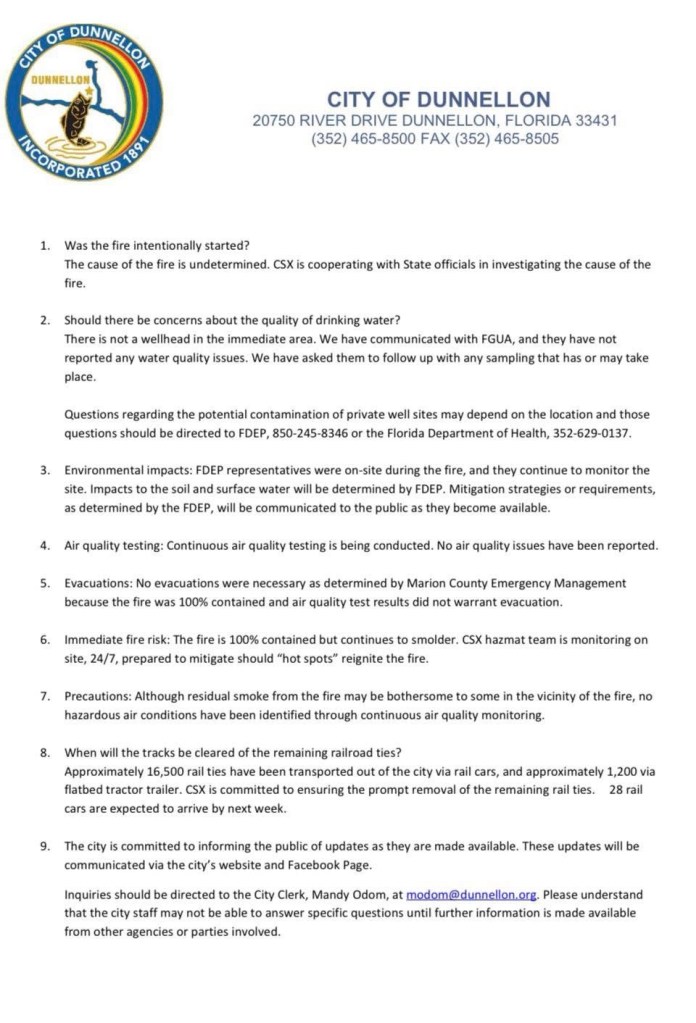
The message is measured. Reassuring in tone. It tells us that the cause of the fire is undetermined, that state agencies were present, that air and water testing have not shown immediate concerns, and that large numbers of railroad ties are in the process of being removed.
This information matters. It should be read carefully.
It also deserves context.
According to the statement:
The fire is contained, though it continues to smolder. Continuous air quality monitoring has not identified hazardous conditions. No immediate drinking water issues have been reported by utilities. Environmental impacts to soil and surface water are still being evaluated. Tens of thousands of treated railroad ties are being transported out of the area. The public will be updated as information becomes available.
These are facts as currently presented.
But environmental stewardship requires us to ask not only what is known today, but also what is not yet known—and who has, or has not, been brought into the conversation.
The Question of Proximity
After reading the statement, I went to Rainbow Springs State Park.
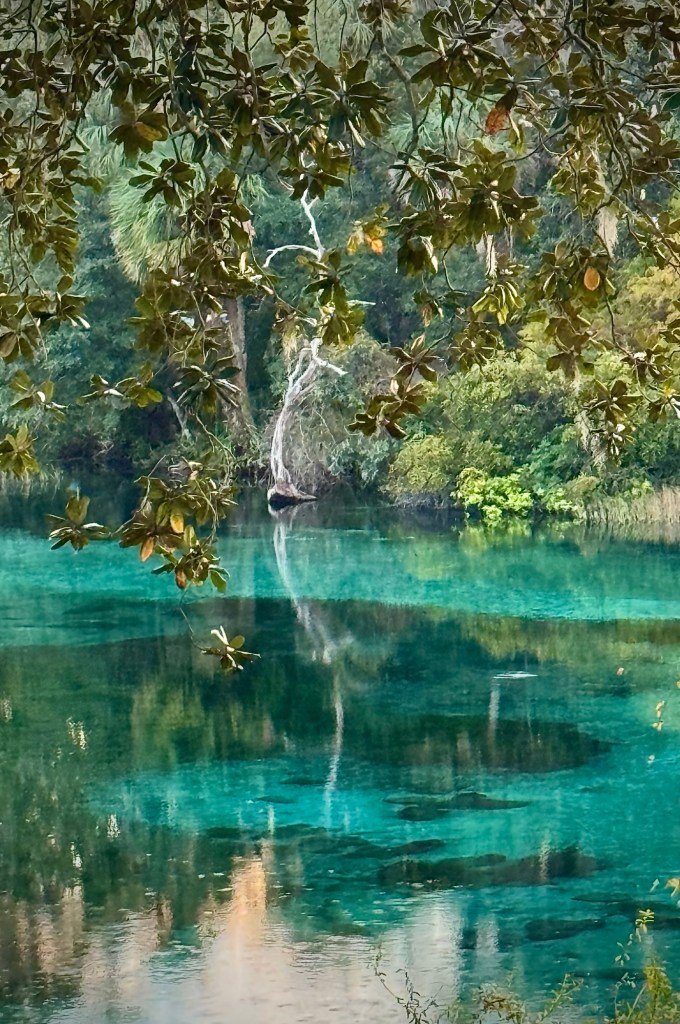
I swam in the head spring.
Before entering the water, I asked a ranger a simple question:
Has anyone contacted the park about the fire next door?
Her answer was just as simple.
No.
No outreach.
No briefing.
No communication.
This is not an accusation. Rangers are not decision-makers. They are stewards of a place that exists to protect water, wildlife, and public trust.
But the absence of communication matters.
Rainbow Springs is not an abstract neighbor. It is hydrologically connected land. It is habitat. It is recreation. It is a window into the aquifer itself.
Water does not wait for press releases.
What Monitoring Can—and Cannot—Tell Us
The statement emphasizes that no air or water quality issues have been identified so far. That distinction is important.
Environmental contamination is often slow, not immediate.
It can take time for compounds to move through soil.
It can take years for patterns to appear in groundwater.
Monitoring tells us what instruments detect at the moment of testing. It does not eliminate the need for transparency, independent verification, and long-term follow-up—especially when the material involved is chemically treated wood designed to resist decay.
This is not fear.
This is how environmental science works.
What Remains on the Ground
The most important line in the statement may be the one that receives the least attention:
the acknowledgment that many railroad ties remain and that removal is ongoing.
That matters because the fire itself was not the only risk.
The stockpile was.
And until the site is fully cleared, stabilized, and assessed—not just for air, but for soil and water pathways—the story is not finished.
Why I Photographed the Springs
I photographed the landscape and water at Rainbow Springs not to suggest contamination, and not to alarm.
I photographed it to remind us what is being protected.
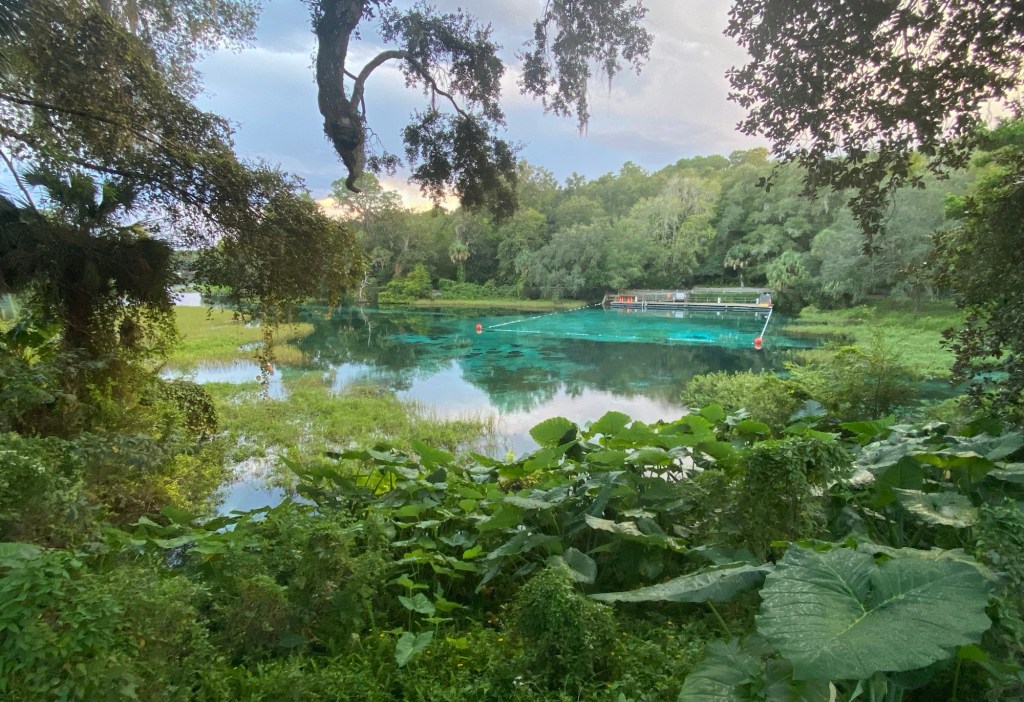
Clear water.
Submerged grasses.
Reflections of forest and sky.
These are not luxuries. They are indicators of ecological health that took centuries to form and could be altered far more quickly than we realize.
Hope begins with attention.
A Call for Connection, Not Conflict
This is not a call for panic.
It is a call for coordination.
State agencies, city officials, utilities, and land managers all have roles to play. Communication between them—and with the public—is not optional when shared resources are involved.
Transparency builds trust.
Silence invites speculation.
The people who live here, swim here, drink this water, and raise families here deserve to be part of the conversation—not after decisions are complete, but while they are being made.
We Are Still Here
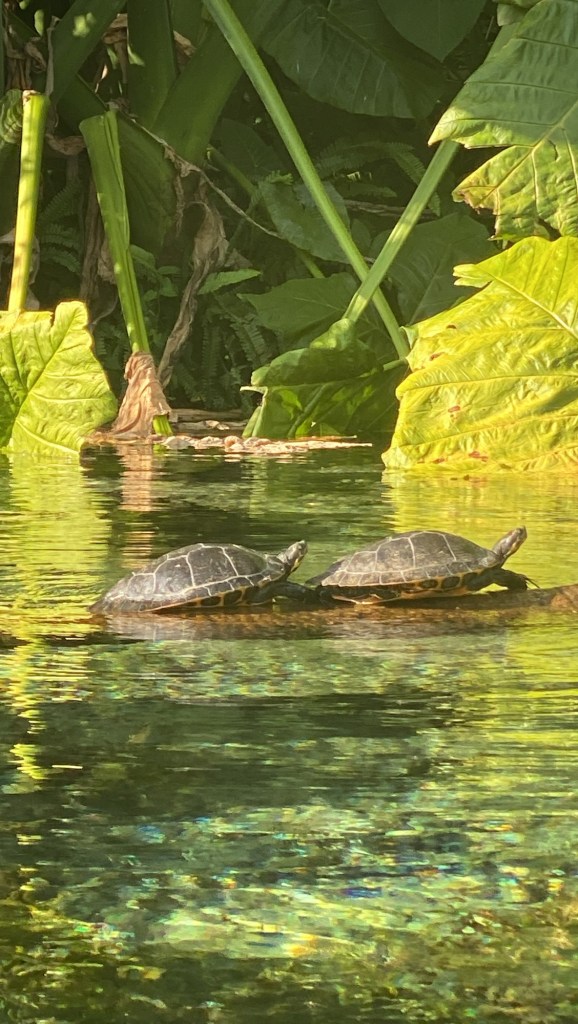
I will continue to document what I see.
I will continue to read what is released.
And I will continue to believe that caring, asking, and paying attention are acts of hope—not opposition.
This place matters.
And what we do now will shape how it looks, feels, and sustains life long after the smoke has cleared.
This Is My Backyard
Today I drove into downtown Dunnellon for ordinary reasons.
The post office.
My family doctor.
Groceries at Walmart.
Nothing about the day suggested disaster.
And yet, before I even parked, I saw the smoke.
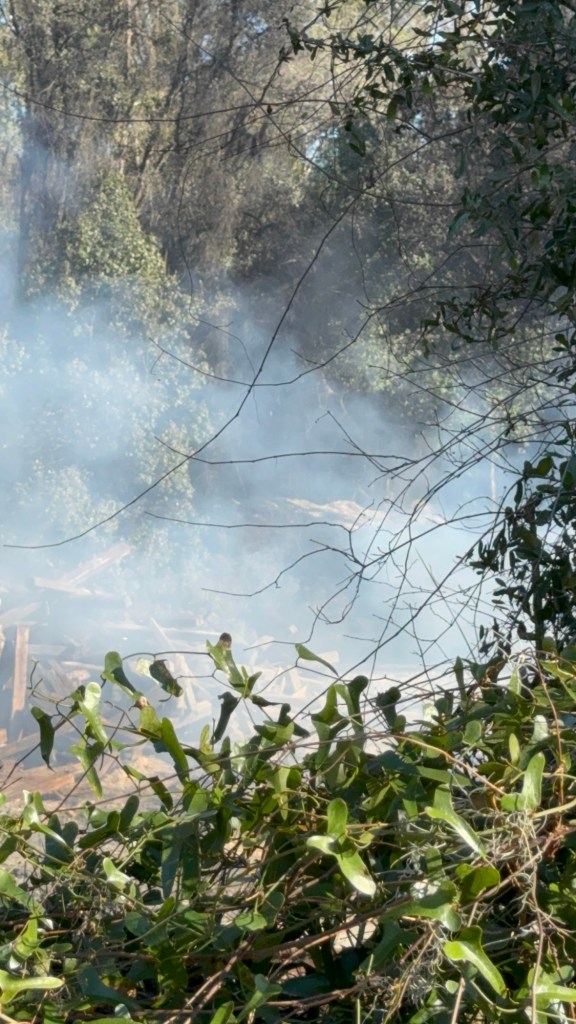
Smoke drifting through the trees. Even from a distance, it burned the eyes and followed me indoors.
By the time I reached the doctor’s office, I could smell it. The air burned my eyes. It followed me indoors. This was not something happening “somewhere else.”
After the post office, I drove closer.
I parked near the smoke and saw several trucks from Hull’s Environmental Services. A woman stood nearby. I asked questions. She was kind. Focused. Doing her job. I took photographs, though branches blocked much of the view.
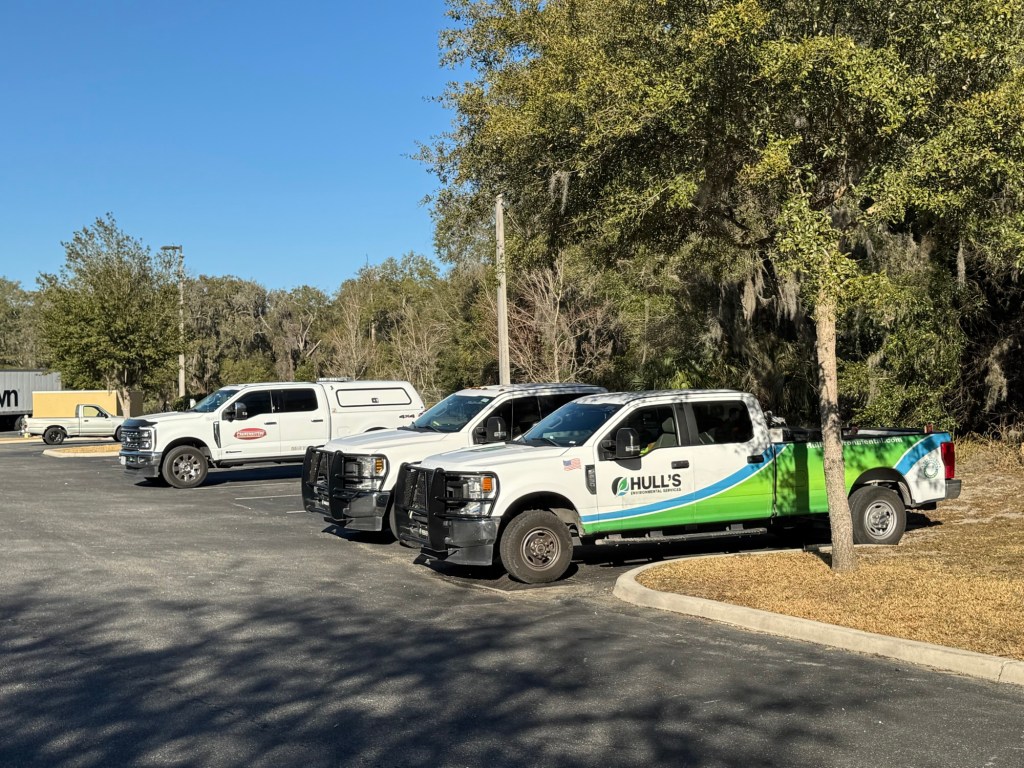
Cleanup begins at the edge of Dunnellon. Environmental response vehicles staged near the site where treated railroad ties burned—and where far more remain.
I went back to my car and gathered what I had—water bottles and a six-pack of Coke—and brought them to the workers. Cleanup work is exhausting. Care matters. She showed me where to place them, on a bench already holding donated drinks. Others had felt the same concern.
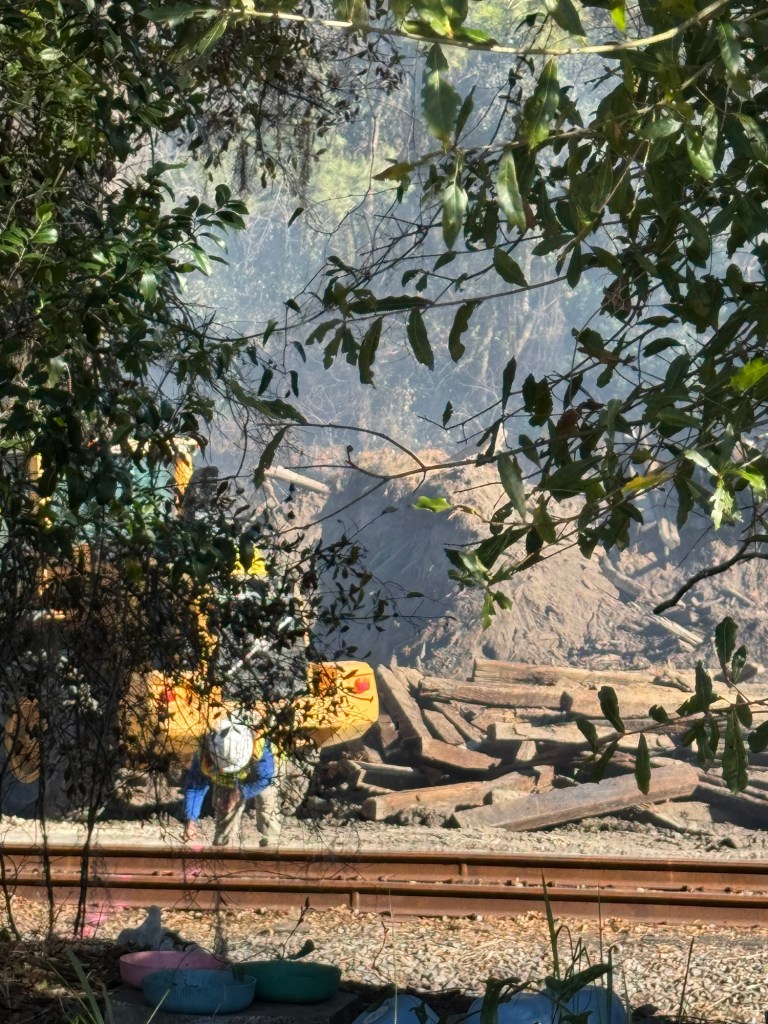
Crews working among smoke, debris, and railroad ties. A reminder that cleanup is difficult, dangerous, and human.
I asked if I could photograph from a little closer.
“Yes,” she said. “I’ll take you there so you don’t get hurt.”
She led me to the edge of the woods. There was a slope leading down toward the railroad. She warned me not to get closer than fifteen feet. As I climbed down, I turned to reassure her that I understood.
She was gone.
I stood there alone, with the rising smoke.
And then I saw it.
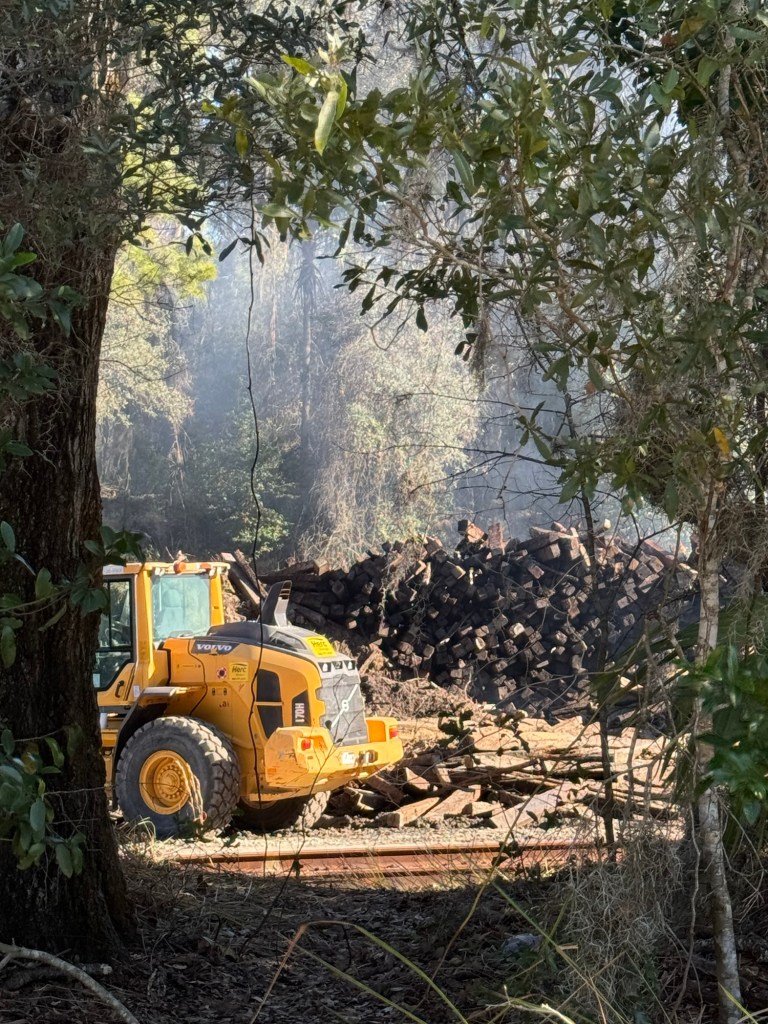
Untouched by fire, yet still infused with toxic preservatives. These piles remain.
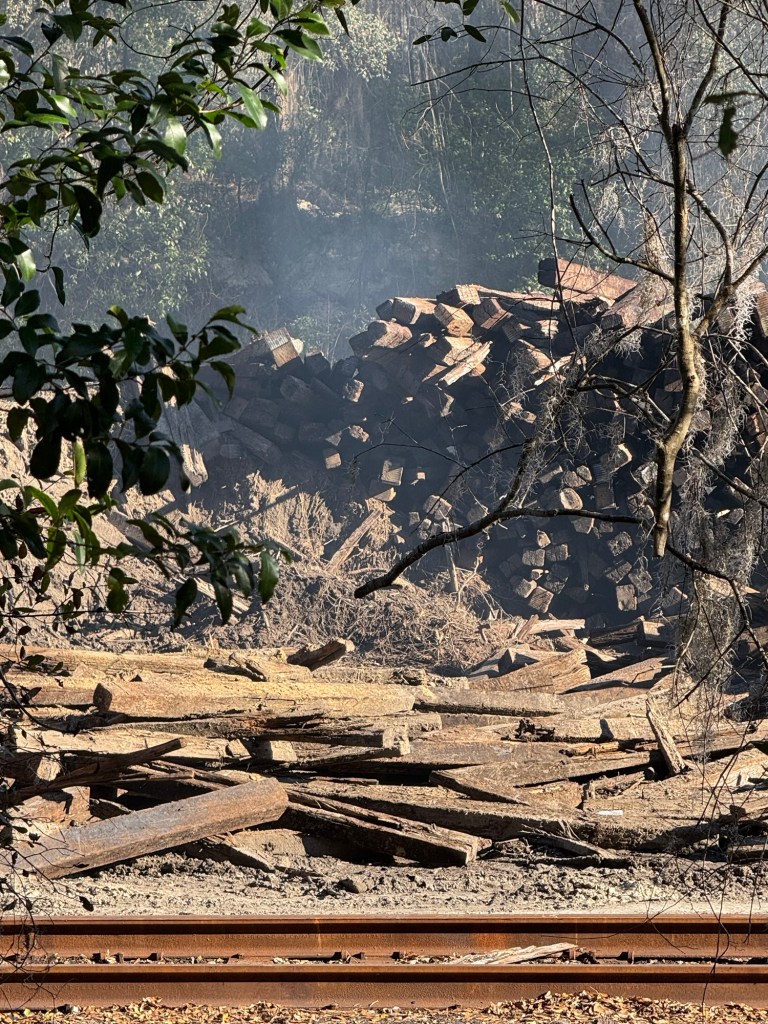
One of many piles of treated railroad ties. Some burned. Many did not.
Not just burned debris—but mountains.
Piles of railroad ties that had not burned.
Still intact.
Still toxic.
Still dangerous.
They sat there quietly, waiting.
If the fire this weekend felt catastrophic, then understand this: what remains is far worse. Multiply that destruction by ten. That is how much treated wood—wood infused with creosote and other toxic chemicals—is still sitting there.
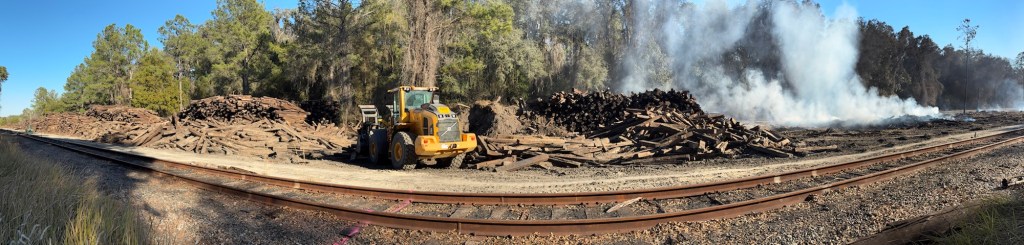
Scale matters. If the weekend fire felt catastrophic, this shows what still remains.
And as I took photographs, anger rose—not reckless anger, but the kind that comes from realizing something deeply wrong has been allowed to exist.
Because this is my town.
This is my backyard.
Rainbow Springs State Park lies just beyond this site. The Rainbow River flows there. Wildlife depends on it. And beneath it all is the aquifer that provides drinking water for our community.
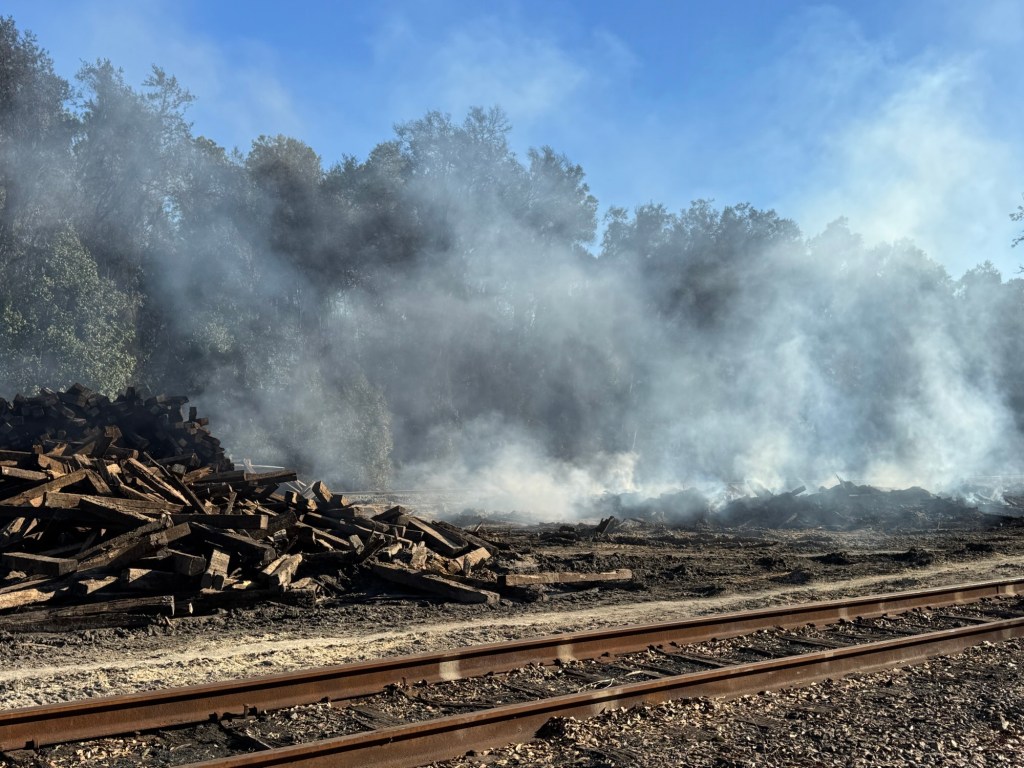
The fire has passed here. Its effects have not.
Toxins do not respect fences.
They do not stay where they are placed.
They seep. They move. They accumulate.
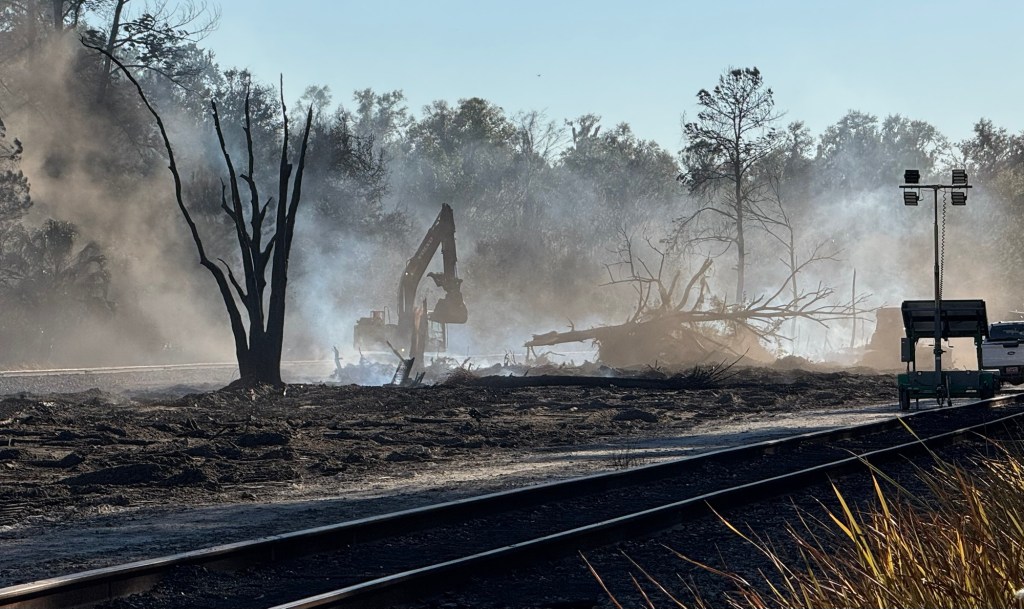
A landscape altered in a matter of days. Recovery will take far longer
So I ask the questions that must be asked.
Who is going to clean this up?
Where will this material be taken?
How will it be handled safely—when it is toxic no matter where it goes?
How long will it take for the surrounding land to recover?
When will contaminants appear in well water—five years, twenty, fifty?
Can we safely swim in the springs again?
What about the communities southeast of this site—downwind, downstream?
Environmental disasters rarely announce themselves all at once. More often, they unfold quietly. Years later, patterns emerge—illnesses, losses—without clear answers because no one wanted to connect the dots.
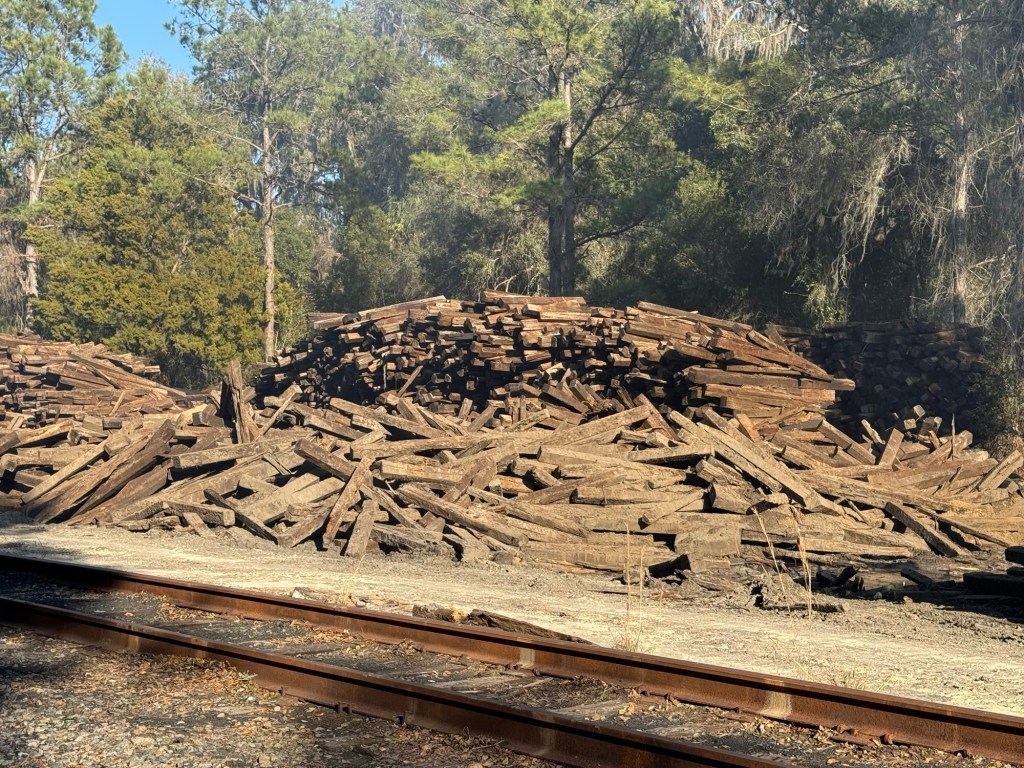
More treated railroad ties. Quiet. Waiting.
This is why silence is dangerous.
This is not about panic.
It is about responsibility.
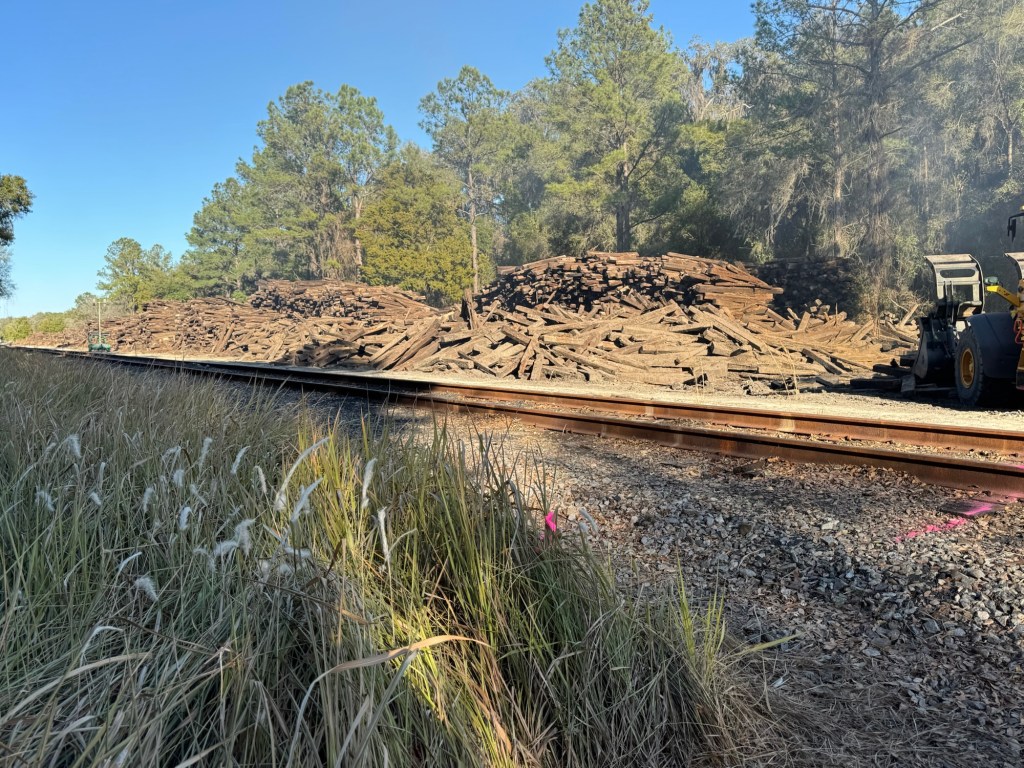
This site sits near forest, river, and aquifer. What happens here does not stay here.
Someone decided that treated railroad ties could be stored here—on the edge of a forest, beside a river, above an aquifer. That decision affects all of us. It affects our children. It affects our grandchildren.
To the people of Dunnellon: this is a moment to wake up—not in fear, but in awareness.
We have the right to ask questions.
We have the responsibility to demand transparency.
We have the ability to protect what sustains us.
Hope does not mean looking away.
Hope means standing still long enough to see what is truly there.
I will continue to document what I witness.
I will continue to ask difficult questions.
And I will continue to believe that this land, this water, this life is worth defending.
Because this is not just a place.
It is home.
All photographs © Zsuzsanna Luciano. Captured on site in Dunnellon, Florida.
Dunnellon railroad-tie fire: what happened, what’s burning, and what it could mean for air and water near Rainbow Lakes Estates
In the early morning hours of Feb. 1, 2026, a large stockpile of chemically treated railroad ties caught fire in Dunnellon near E. McKinney Street and N. Williams Street. Local officials said the fire began around 2:45 a.m. and strong winds helped spread the fire along the rail line.
The ties involved were treated with creosote, a wood preservative commonly used for railroad ties. Crews and emergency managers have emphasized that burning creosote-treated wood can create heavy, irritating smoke and raises environmental concerns.
Officials later reported the fire was contained, though smoke and odors may linger.
What we know (verified facts so far)
What burned
A large stockpile of railroad ties treated with creosote. Creosote is a pesticide/wood preservative used outdoors (railroad ties, utility poles) and is derived from tar distillation.
Where and when
Near E. McKinney St. and N. Williams St. in Dunnellon. Reported start time: ~2:45 a.m. Feb. 1, 2026.
Official response & current status
Marion County Fire Rescue Marion County Fire Rescue responded and worked the incident as a public-safety and potential environmental issue because of smoke and contamination risks. The fire was reported contained, with ongoing attention to air testing first, then other environmental concerns including water pollution.
What caused it
As of the latest reporting, the cause has not been released / remains undetermined.
Why creosote smoke and runoff matter
When creosote-treated wood burns, it can produce thick, irritating smoke and release harmful combustion byproducts. That is why responders urged residents to avoid the area and keep doors/windows closed.
Separately, creosote behaves more like an oily, tar-like material than ordinary wood. A key risk in suppression is contaminated runoff—water used to fight the fire can pick up pollutants and move them into stormwater systems, wetlands, soil, and waterways if not contained. Concerns about runoff reaching the Rainbow River watershed Rainbow River were explicitly raised in public reporting and prior fire-service warnings.
What water could be affected (based on the site and known drainage concerns)
No agency has publicly confirmed water contamination yet (testing and assessment are part of the ongoing response).
But based on what officials and reporting flagged as plausible pathways, here are the most relevant water resources to watch:
Nearby stormwater ditches/culverts and low-lying wetlands near the rail corridor (these can move runoff quickly during suppression or rain). The Rainbow River watershed (named in warnings as a concern if contaminated runoff is generated). Connected local surface waters around Dunnellon, including areas tied to recreation (e.g., Rainbow Springs State Park Rainbow Springs State Park) and the broader river system.
What this means for Rainbow Lakes Estates (practically):
If you’re on a private well, immediate risk is usually lower than for surface water, but not zero over time—groundwater impacts (if any) tend to be delayed and depend on whether contaminants reach soils that connect to the aquifer. The near-term concern is more about smoke exposure and keeping children/pets away from soot/ash fallout, plus watching for any official advisories about waterways used for swimming/kayaking/fishing.
Which towns/neighborhoods could be affected by smoke (based on wind)
Smoke impact depends heavily on wind direction and speed at the time and can shift hour to hour.
What the wind was doing today (most defensible, sourced)
The National Weather Service National Weather Service forecast for Dunnellon on Feb. 1 showed breezy northwest winds (about 11–15 mph with higher gusts) during the day.
A wind from the northwest generally pushes smoke toward the southeast/east-southeast of the fire.
Likely downwind areas (directional, not a guarantee)
If winds are NW → SE, the places most likely to see smoke drift are:
Dunnellon (especially areas southeast/east of the rail corridor) Neighborhoods and rural areas SE/ESE of Dunnellon, potentially reaching parts of the broader Marion County corridor depending on plume height and mixing.
What about Rainbow Lakes Estates?
Rainbow Lakes Estates is not necessarily in the primary downwind line under NW winds; however:
Smoke can still reach you during wind shifts, calm periods (smoke settling), or when winds turn more westerly/southwesterly. Because responders noted strong winds helped spread the fire, smoke could have been blown in varying directions during the incident.
If you’re smelling strong odor or seeing haze, treat that as a real exposure signal even if you’re “upwind on paper.”
What residents can do right now (high-signal, low-regret steps)
These match or extend official guidance without speculating:
Reduce smoke exposure Keep windows/doors closed. Run HVAC on recirculate if possible; consider a HEPA air purifier in a main room if smoke is noticeable. Limit contact with soot/ash Keep kids/pets from playing in visible ash. If ash is on outdoor furniture/vehicles, wet-wipe or hose gently (don’t dry-sweep into the air). Be cautious with nearby waterways If you recreate on the Rainbow River or connected waters, consider postponing until agencies report results of their environmental checks. Track official updates Marion County Fire Rescue and the Marion County Sheriff’s Office posts have carried public-safety messages and updates. The Florida Department of Environmental Protection Florida Department of Environmental Protection presence on-scene was reported as part of the post-containment assessment.
Bottom line
This was not a train derailment in current reporting; it was a fire involving a stockpile of creosote-treated railroad ties. Cause has not been released as of the latest updates. The two big concerns are toxic/irritating smoke and potential contaminated runoff, with officials indicating air testing first and then evaluating water/environmental impacts. With northwest winds reported in the forecast, smoke would most often drift southeast/east-southeast, but local shifts can still affect Rainbow Lakes Estates.

 Luciano Photography